Sightlines · a mini film course
The Case That Won't Close: Crime Films Where Looking Replaces Doing
Every crime picture makes a promise: someone will figure it out. The detective will crack the case, the criminal will pull off the score or pay for it, the cop will get his man. The twelve films in this set are all crime films — noirs, gangster epics, procedurals, thrillers — but each one, in its own way, breaks that promise on purpose. In these movies, the protagonist perceives everything and controls almost nothing. The camera watches rather than chases. Plots swell past what any one person can hold in their head. Time stretches, loops, or runs backward through memory. What you're left with isn't frustration — it's a stranger, richer pleasure: films that trade the satisfaction of resolution for the deeper fascination of watching someone watch, as the world moves past them, around them, and sometimes right through them.
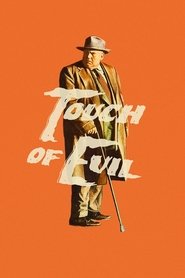
Touch of Evil (1958)
Start here, at the end of classical noir, with its most famous opening: a car with a bomb in its trunk, followed by a single unbroken crane shot that binds a whole border town — traffic, neon, a strolling couple, music bleeding from doorway to doorway — into one breathing motion. Watch how Welles refuses conventional cutting throughout: scenes are built in sustained wide-angle takes where actors move toward and away from the lens, and Hank Quinlan is shot from floor level with the ceiling pressing down on his head, his corruption made physical. The whole film lives in the tension between a camera that can't stop telling the truth and a cop who can't stop bending it.
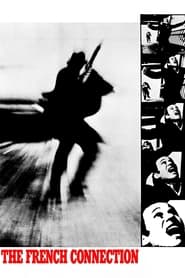
The French Connection (1971)
Friedkin shoots New York like a hostile environment: winter greys and browns, telephoto lenses that flatten surveillance into voyeurism, a handheld camera descended from documentary crews hiding in sound trucks. Watch the scene where Doyle stands freezing on a sidewalk eating cold pizza while his elegant French quarry dines behind restaurant glass — no dialogue explains it; you just stand on the cold side of the glass and feel the asymmetry. Notice how the detective work is all small acts — a tail, a frisk, a hunch — each one lighting up one more inch of a system too big to see whole.
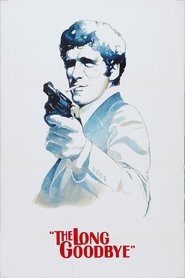
The Long Goodbye (1973)
Altman opens a murder mystery with ten minutes about cat food, and that errand is the whole film folded small: a loyal, careful man moving through a Los Angeles that has quietly stopped keeping score. Watch the camera — it never sits still, always drifting, zooming, repositioning, behaving like a curious bystander rather than a storyteller with a point to make. This is the film that inverts the classic private-eye picture from the inside (Leigh Brackett wrote both this and Hawks's The Big Sleep), and half the films below are in conversation with it.
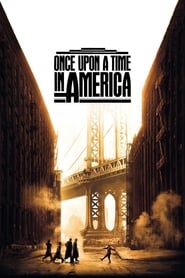
Once Upon a Time in America (1984)
Leone's four-hour gangster epic begins where most films end, and its real subject is memory itself. Watch how Delli Colli's cinematography color-codes the decades — honeyed amber for childhood and Prohibition, cooler tones for later years — and how Morricone's music, composed before shooting, dictates the rhythm of whole sequences. De Niro plays the older Noodles as, in the production's own phrase, "a study in passivity": a man who mostly looks — through peepholes, into lockers, across banquet tables. Hold onto the opium-den smile early on; the whole film curls back toward it like smoke.
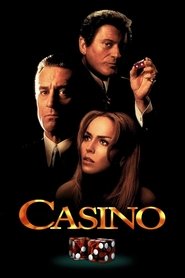
Casino (1995)
Scorsese switches off the suspense engine in the first minute — a man, a car, a fireball — and replaces "what happens next" with "how did this machine work." Watch Richardson's photography organize everything around excess: amber and gold on the casino floor, harsh overlit pools, a swirl of warm backlight announcing Ginger as both desire and danger. Then watch how the long Steadicam glides through the casino and the calm, clerical voice-over turn the crime epic into something like an autopsy narrated by the body.
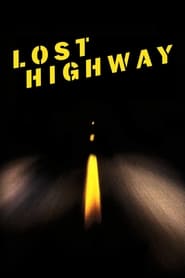
Lost Highway (1997)
Lynch takes the neo-noir kit — femme fatale, gangster, murder, surveillance, doomed L.A. — and strips out motive, explanation, and detection entirely. Deming photographs the Madison house as engulfing darkness; characters walk into blackness and simply dematerialize, and that murk is set against bleached, sun-struck exteriors. Watch how the film treats identity as unstable — one actress, two women, or maybe one woman dreamed twice — and how it refuses the clarifying cut that would tell you which. Time here is a loop, not a line; let it disorient you.
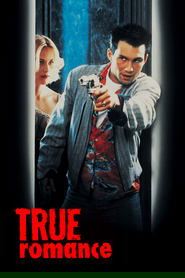
True Romance (1993)
The warm heart of the set. Tony Scott shoots Tarantino's script in bruised blues and molten ambers, saturated to the edge of abstraction — image as pure sensation, with music-video DNA. Watch Clarence's apartment: comic books, posters, action figures — an autobiography written in merchandise. He's a man assembled from other people's movies (a direct descendant of Godard's Bogart-worshipping hero in Breathless), and the film's daring wager is that a self built from pop culture can still love for real. Notice how Scott shoots even the impossible — an Elvis in a bathroom mirror — dead literal, completely unembarrassed.
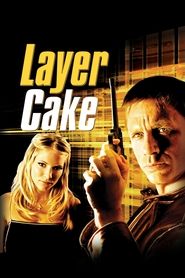
Layer Cake (2004)
Daniel Craig's nameless dealer opens by telling you he isn't a gangster, he's a businessman — and the film spends its running time taking that composure apart, layer by layer, while he keeps narrating as if still in charge. Watch Ben Davis's conspicuously controlled surfaces: reflective glass, polished bars, a London that looks expensive rather than squalid — a visual system as immaculate as the protagonist's self-image, and just as deceptive. Descended from Get Carter and The Long Good Friday, it's a British gangster picture that quietly dismantles the fantasy of the rational criminal.
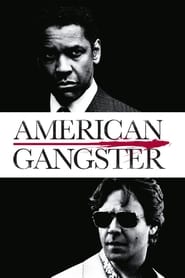
American Gangster (2007)
Ridley Scott, the informed outsider, examines the American Dream rather than celebrating it. Watch Savides's chromatic opposition: the amber warmth of Frank Lucas's world of furs and family tables against the institutional grey cold of the detective's. And watch the clothes — a grey suit that says my survival depends on not being looked at, and a chinchilla coat that says the opposite. The film's entire moral argument lives in the gap between those two garments, and in how the camera finds the watchers before the watched knows he's been seen.
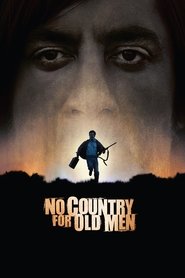
No Country for Old Men (2007)
Deakins at his most restrained: long lenses compress human figures against featureless desert, making the landscape a participant rather than a backdrop, and the film uses ambient sound — the rustle, the drone, the hum of fluorescent light — where other thrillers use music. Watch the gas-station scene early on: a coin, a counter, a conversation, and a tension with nowhere to go. This is a chase film that honors every mechanic of the chase and quietly asks what happens when the machinery of pursuit meets something that behaves less like a villain and more like weather.
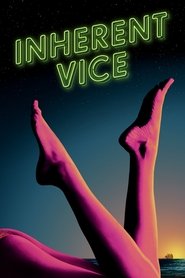
Inherent Vice (2014)
Anderson's stoner-noir is the direct heir of The Long Goodbye — a Chandler detective drifting bemused through a case he never masters, where mood and milieu outrank plot. Watch how Elswit shoots through doorways, windows, and smoke, keeping Doc's baffled face at the center while the conspiracy swells past anything he (or you) can hold at once. Watch for the little gesture of Doc scrawling a note to himself — not hallucinating — because he can no longer trust the difference between a clue and a contact high. Don't try to solve it; float in it. That's the design.
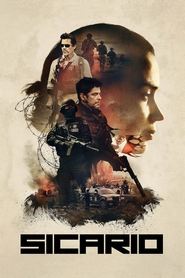
Sicario (2015)
Villeneuve's border thriller stages the whole set's preoccupation in its blocking: watch where the camera keeps putting Kate Macer. In a doorway as shooting starts. In the back seat of a convoy that won't say where it's going. At the edge of briefings where the real decisions are made elsewhere. Deakins shoots the desert geologically — vast frames dwarfing human figures, the Western's landscapes stripped of the Western's myth. She is a good agent who perceives clearly and can change nothing, and the film makes you feel institutional complicity from inside her skin.
Watch these together and a hidden history of the crime film comes into focus — a lineage passed hand to hand: Welles's roaming camera into Altman's drifting one, Altman's baffled Marlowe into Anderson's Doc, the vérité streets of The French Connection into the cold institutional greys of American Gangster and Sicario, Godard's movie-made lovers into True Romance. But the deeper reward is a shift in how you watch. These films train you off the question "what happens next?" and onto better ones: Who is looking? What can they actually do about what they see? What does the camera know that they don't? Once you start noticing the gap between seeing and doing — the detective who can't convert clues into control, the criminal whose system fails him, the agent held at the threshold — you'll see it everywhere, and you'll never watch a crime film quite the same way again.