Sightlines · a mini film course
Watching, Waiting, Wanting: The Crime Film Slowed Down and Cracked Open
Every film in this set is, on paper, a crime picture — heists, gangsters, dealers, cops, revenge. But none of them behaves the way crime pictures are supposed to. In the standard model, a character sees a problem and acts on it: the shootout settles things, the plan comes together, the fist answers the insult. These twelve films keep interrupting that machinery. Some make the hero a watcher who can barely act at all. Some let raw appetite churn under the polished surface until the story becomes a study in hunger. Some fold time back on itself so past and present blur like a reflection in glass. What connects them is a shared conviction that the most interesting thing in a crime film isn't the crime — it's the person standing at the edge of it, watching, waiting, or wanting, while the camera holds a beat longer than you expect.
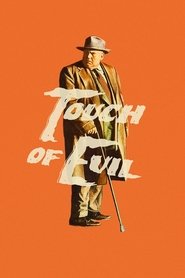
Touch of Evil (1958) — dir. Orson Welles
The film opens with one of the most famous shots ever made: a bomb goes into a car trunk, and the camera lifts off the ground and follows the car through three unbroken minutes of border-town streets, neon, and drifting music — no cut, the whole town breathing as one. Watch how Welles builds scenes without conventional back-and-forth cutting: wide-angle lenses, low angles with ceilings pressing down, actors moving toward and away from the camera so that proximity, not editing, tells you who has power. The result is a night-world where the space itself feels morally loaded — where a corrupt cop can look like a monster simply by how the lens sits under him.
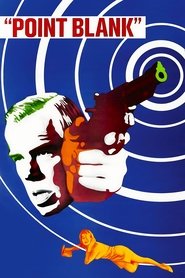
Point Blank (1967) — dir. John Boorman
Listen before you look: hard footsteps ringing down an airport corridor, cut against other places, other moments, until you can't quite say which is happening now. Boorman took a pulp revenge novel and shot it with the fractured-memory grammar of the French art film — flashbacks that intrude mid-scene with no dissolve, no warning, sound carrying across cuts between timeframes. Notice too how Los Angeles is photographed: cold, geometric, sunlit concrete and glass that dwarf Lee Marvin's small hard figure. Revenge here isn't catharsis; it's a man demanding something concrete from a world that has gone entirely abstract.
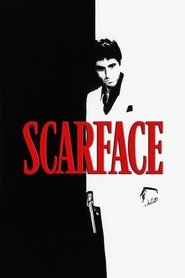
Scarface (1983) — dir. Brian De Palma
Neon pinks, tropical glare, white-on-white luxury — the surfaces are gorgeous, and that's the point. Watch how the visible world of Miami nightclubs and mansions functions as a thin skin over something more primitive: not a man pursuing goals, but appetite wearing a man like a suit. De Palma stages the immigrant rise-and-fall in widescreen geometry borrowed from the 1932 original, and the film's grotesque excess is deliberate — the American Dream taken so literally it becomes a feeding frenzy.
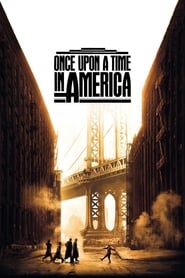
Once Upon a Time in America (1984) — dir. Sergio Leone
Leone distinguishes his time periods by light itself: the childhood and Prohibition years glow amber and honeyed, sunlight through dust, while other eras run cooler. Morricone's music was composed before shooting, and the great set pieces are staged to it — the images stretched to fit the score, not the other way around. Watch De Niro's remarkable stillness: he plays much of the film as a man who mostly looks — through a peephole, across a table, into the past — and that looking, not action, is the film's engine. Let the four hours be long. The length is the meaning.
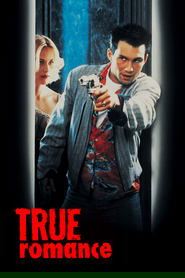
True Romance (1993) — dir. Tony Scott
Here's a hero literally assembled out of pop culture — comic books, Elvis, kung-fu matinees — descended directly from Godard's Bogart-worshipping hustler in Breathless. Watch how Tony Scott shoots even the film's strangest moments (a certain bathroom-mirror conversation) dead literal, no dreamy dissolves, lit in bruised blues and molten ambers saturated to the edge of abstraction. The film's wager is startlingly sincere: that a love built entirely from borrowed movie gestures can still be real. Notice how comedy and sudden violence sit in the same frame without apologizing to each other.
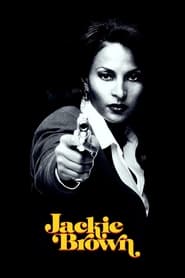
Jackie Brown (1997) — dir. Quentin Tarantino
The opening shot is a thesis: Pam Grier gliding on an airport travelator, doing nothing, while Bobby Womack sings — and the shot just holds, far past where a thriller would give her something to do. This is Tarantino at his most restrained: the camera observational rather than showy, patiently tracking characters through the corridors of an unglamorous L.A. shopping mall. Watch for how the film's heroine survives by being underestimated — the accumulated skill of a woman navigating systems built to consume her. The blaxploitation echoes (Grier, the funk soundtrack) are homage, not parody.
Lost Highway (1997) — dir. David Lynch
Peter Deming photographs the Madison house as engulfing darkness — rooms defined by what you can't see, characters walking into blackness and dematerializing — set against bleached, sun-struck exteriors. Watch how Lynch keeps a noir's full furniture (femme fatale, gangster, murder, surveillance) while removing the things noir uses to explain itself: motive, detection, a stable line of time. One actress plays two women, brunette then blonde, and the film refuses the cut that would tell you whether they're the same person. Don't fight the disorientation; it's the design.
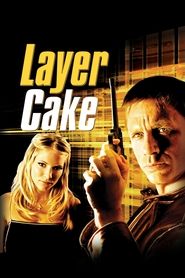
Layer Cake (2004) — dir. Matthew Vaughn
Daniel Craig's nameless dealer narrates like a CFO presenting a deck — stay invisible, treat it as commerce, retire clean — and the cinematography agrees with him: crisp, symmetrical frames, reflective glass, a London that looks expensive rather than squalid. Watch the gap open between the composure of the voice-over and what's actually happening around it: a man who believes intelligence and a clear exit plan will insulate him, narrating as if he's still in charge. The layer-cake metaphor is the film's real subject — everyone is someone's subordinate, and autonomy is a luxury granted from above.
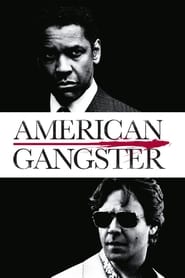
American Gangster (2007) — dir. Ridley Scott
Two visual worlds, deliberately opposed: the amber warmth of Frank Lucas's self-made luxury against the institutional grey and street-level cold of the detective's world. Watch the clothes — they're the film's whole argument. A conservative grey suit that says my survival depends on not being looked at; a chinchilla coat that says I have become someone who needs to be seen. Scott stages the drug trade in frankly entrepreneurial language — branding, market share, product quality — not as satire but as analysis: capitalism and the trade sharing the same structure.
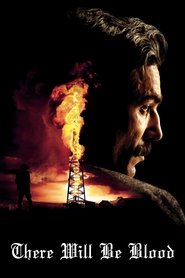
There Will Be Blood (2007) — dir. Paul Thomas Anderson
The film opens with roughly fifteen minutes of nearly wordless cinema: a man alone in a landscape, prospecting by hand, dragging his broken body across rock, with only Jonny Greenwood's unsettling score for company. You learn Daniel Plainview the way you learn an animal — by watching what it does to survive. Watch how Anderson keeps two worlds in the same frame: the surveyed, dated, bought-and-sold social world of leases and church socials, and the older, feral zone of pure wanting underneath it. The film proposes that the oilman and the preacher are doubles — two performance systems competing for the same territory.
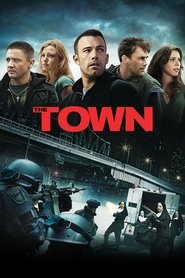
The Town (2010) — dir. Ben Affleck
It opens not with swagger but with housekeeping: the crew pouring bleach over every surface they touched. Crime here is a job done well, and doing it well is the only glamour on offer. Robert Elswit (who shot Heat, and it shows) calibrates two registers — granular handheld immediacy for the robberies, something steadier elsewhere — and keeps the geography of the action legible so you're always tracking decisions, not noise. Watch how Charlestown itself functions as a pressure system: a square mile where loyalty is enforced by proximity and leaving is treated as betrayal.
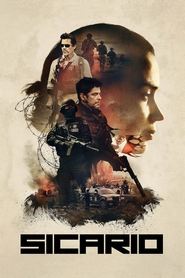
Sicario (2015) — dir. Denis Villeneuve
Watch where Villeneuve keeps putting Emily Blunt: in a doorway, in the back seat, at the edge of the briefing where the real plan is decided somewhere she is not. She is a good agent who perceives clearly — and the film's entire argument lives in that blocking. Roger Deakins shoots the border landscape geologically rather than picturesquely, dwarfing human figures in wide desert frames that quote the Western while refusing its myth. This is a genre thriller that quietly tears up the genre's contract — the competent investigator who acts and resolves — and replaces it with something colder: an anatomy of how institutions recruit people into things they'd refuse if told the truth.
Why watch them together? Because in sequence, they teach you to see the crime film's hidden hierarchy of verbs. The Town shows you the machine running at full power — perceive, act, resolve. Sicario, Jackie Brown, and Once Upon a Time in America show you what happens when the hero can only watch and wait, and how much moral weight pure patience can carry. Scarface and There Will Be Blood dig under action to appetite. Point Blank and Lost Highway dissolve the line between now and memory until the story itself becomes uncertain terrain. And Touch of Evil — the oldest film here — already contains all of it: the camera that binds a whole town into one breathing shot, and the man whose corruption the lens can see before anyone says a word. Watched together, these films stop being twelve crime stories and become one long argument about attention: who gets to act, who is forced to watch, and what the camera does with the difference.