Sightlines · a mini film course
The Watchers: A Century of French Cinema Where Looking Becomes the Drama
Most movies run on a simple engine: a character sees a problem and does something about it. The films on this list — spanning from a country house in 1939 to a Paris apartment in 2012 — all, in one way or another, unplug that engine. Their heroes watch, hesitate, remember, perform, endure. The camera doesn't chase the action; it holds still, or glides, or lingers on a face a beat longer than politeness allows. Rooms become stages, mirrors, even traps. Time is allowed to stretch. Watched together, these films tell a story about French cinema discovering that the most powerful thing a movie can show isn't a deed — it's a person to whom things happen as images, and who can only look.
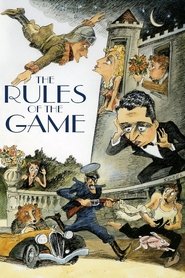
The Rules of the Game (1939)
Watch how Renoir keeps foreground and background alive at once — a flirtation up front, a quarrel in the depths, both legible, the camera drifting down corridors as if the house itself were choreographing everyone. Notice the mirroring: what the masters do upstairs, the servants do downstairs, until you lose track of which is the copy and which the original. And watch for the Marquis and his mechanical music-boxes — a man showing off a machine that performs joy on command, and knowing it.
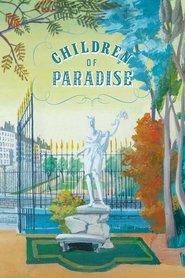
Children of Paradise (1945)
The heart of this immense studio-built epic is a mime — a man in whiteface who says nothing, and whose held posture tells the gallery everything words would ruin. Watch the film set two kinds of performance against each other: the actor who conquers through torrential speech, and the silent man whose body must simply be read. Roger Hubert's burnished, candle-and-gaslight photography treats the teeming Boulevard du Temple like a living painting — a whole world staged for our watching.
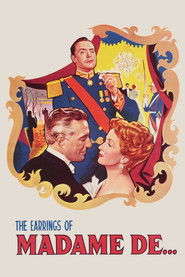
The Earrings of Madame de... (1953)
Watch the very first minutes: a woman at her mirror, and the camera gliding with her through her own reflection — so we meet her not as a face but as an image of a face, appraising the surface she has been taught to be. Ophüls's camera is in nearly perpetual, purposeful motion, following characters through doorways and across ballrooms as if tracing a fate. Keep your eye on a pair of earrings as they travel: a small object becomes the thread on which an entire sealed, mirror-lined world hangs.
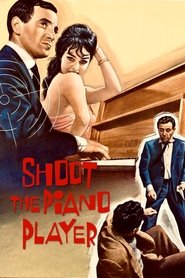
Shoot the Piano Player (1960)
Truffaut takes the crime film's machinery — gangsters, a man on the run — and quietly refuses to let his hero drive it. Watch how Coutard's camera isolates Charlie: caught in doorways, reflected in windows, framed behind the bar's counter as though behind a screen, observed with sympathy but never sentimentality. And watch the tones collide — a joke and a wound in the same breath — inherited from American B-pictures the New Wave adored, where tenderness and violence share a single scene.
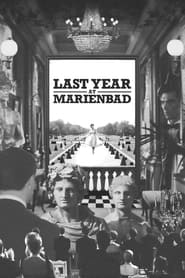
Last Year at Marienbad (1961)
Stand in the garden and look at the shadows: the hedges and statues cast them; the people don't. This is a film that tells you, without a word, that the image itself may not be a record of anything. Watch Sacha Vierny's long, gliding tracks through ornate corridors that never quite add up to a map, and watch how a gown, a room, a remembered moment keeps correcting itself between shots. A man insists on a shared past; a woman doesn't remember; the film presents time directly, unmoored from any action that could settle it.
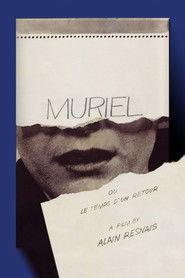
Muriel, or the Time of Return (1963)
Resnais opens by shattering an ordinary scene into a hail of two-second shots — a hand on a latch, a teacup, a glance that never lands — and you feel the disorientation before you can name a character. Watch how the editing itself carries the theme: people summoning the past and finding they can do nothing with it when it arrives. Notice, too, what the film refuses to show — its title names an absence, a center the images circle without ever picturing.

Band of Outsiders (1964)
Watch the famous café dance — and listen. Godard cuts the world's sound, leaving three people moving through a pocket of silence that belongs to no real café, while his own dry voice tells us what each is thinking. Coutard photographs Paris deliberately unglamorously — fluorescent cafés, wet suburban streets — so the gap between the characters' movie-fed daydreams and the plain rooms they inhabit becomes the film's true subject. A heist is on the table; watch how long everyone finds better things to do — an English class, a sprint through the Louvre — than pick it up.
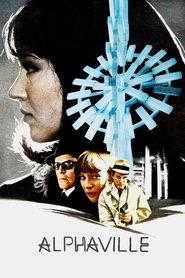
Alphaville (1965)
The great joke here is that there is no special effect. Godard points the camera at real 1965 Paris — office lobbies, parking structures, hotel corridors — under their own fluorescent tubes, and lets the present stand, unaltered, as a totalitarian future. Watch how Coutard's available-light photography blows the whites out and lets faces surface from near-total black, wide lenses stretching the rooms until the human figure shrinks against the institution. And listen for the film's real battlefield: vocabulary itself, and poetry as the one weapon a dictatorship of logic cannot parse.

Masculin Féminin (1966)
Watch the long handheld interviews — a boy questioning a girl in a café, the camera holding her face while she not-quite-answers with a smile, a glance away, a cigarette lit to buy time. Godard borrows the tools of documentary — the on-camera questionnaire, direct sound — to make a portrait of a generation caught, as the film famously puts it, between Marx and Coca-Cola. Notice how violence keeps happening at the edge of the frame, unexplained, while the questions go on: seeing everything and being able to do nothing with it is the film's whole condition.
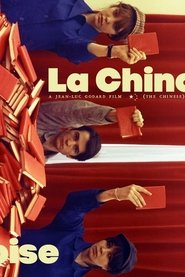
La Chinoise (1967)
Don't watch this apartment as a place where people live; watch it as a poster. Coutard shoots the room frontally and bright, depth flattened, walls painted flat red, hundreds of Little Red Books stacked like bricks — the images announce themselves as images, and ask to be read like a page. Watch for the Brechtian machinery — chapter titles that interrupt, slogans chalked and erased, people addressing the lens — and for the film's real question: the distance between reciting a revolution and enacting one.
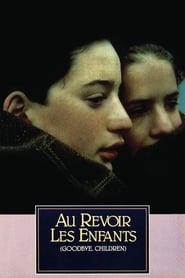
Au Revoir les Enfants (1987)
Malle films his own boyhood memory of the Occupation with a model of disciplined restraint: cold winter light, grays and browns, the rhythms of dormitory and refectory observed at a watchful distance. Watch the young lead — he acts almost entirely through watchfulness, rarely through deed, a boy perceiving something far too large for any child's action to answer. The film's power lives in what a look can hold, and in what it cannot do.
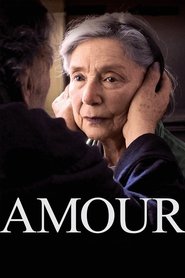
Amour (2012)
Watch the early recital scene: Haneke points the camera the wrong way, at the audience instead of the stage, and makes you hunt through a hall of strangers for the two people who matter. In agreeing to look, you've accepted the only job the film will give you. Khondji's camera is overwhelmingly static, held at a respectful middle distance, and the shots run long enough that waiting inside a room — a meal prepared, a body lifted — acquires real weight. It is a love story built almost entirely out of watching, and it earns every held second.
Watch these together and you'll see a conversation across seventy years. Renoir, Carné, and Ophüls build gleaming, sealed worlds where every gesture is a performance and the camera moves like a guest who sees too much. The New Wave generation — Truffaut, Godard, Resnais — inherits those worlds and breaks the machinery open: heroes who don't act, images that correct themselves, rooms that must be read rather than entered. Malle and Haneke carry the discovery into memory and mortality, where looking is all that remains. The reward of this set isn't plot — it's learning to notice how you're being asked to look: at a shadow that shouldn't be missing, a dance gone silent, a mirror that won't give a face back. These films trust your attention completely. Bring all of it.