Sightlines · a mini film course
The Cinema of Watching: When Films Stop Chasing and Start Seeing
Most movies run on a simple engine: a character sees a problem, acts on it, and the story moves. The twelve films on this list are what happens when that engine is quietly switched off. Their people are faced with situations too large, too diffuse, or too final for any deed to fix — old age, grief, faith without answer, a world grown strange — and so they do the only thing left: they look, they wait, they endure. And the films look with them. The camera watches rather than chases. Shots outlast their usefulness. Time is allowed to stretch until you can feel it. This isn't slowness for its own sake; it's a different kind of drama, one where the deepest events happen in a held gaze, an empty street corner, a candle flame. Watch these films together and you'll learn a whole second language of cinema.
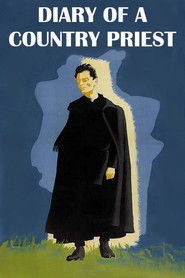
Diary of a Country Priest (1951)
Begin with the smallest gestures. Bresson opens with a hand writing in a diary, a voice reading the words, and then the image showing what was just named — nothing dramatized, everything recorded. He directed his cast (including first-timer Claude Laydu) not as actors but as what he called "models": performance emptied out, feeling driven inward until it registers only as fatigue. Watch how the grey, even light — no dramatic shadows, no visual rhetoric — makes the inner life the only place anything can happen.
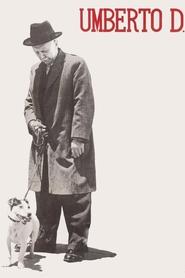
Umberto D. (1952)
De Sica and his screenwriter Zavattini strip away even the clear narrative motor of Bicycle Thieves — no stolen object, no search, just a retired man with a pension that won't cover his rent and a dog he loves. Watch for a famous sequence in which a maid simply wakes up and goes about her morning, filmed at full length with no plot justification: pure everyday time, given the screen as if it mattered. Because it does. And watch the hands — the film's whole study of dignity and shame lives in small physical gestures.
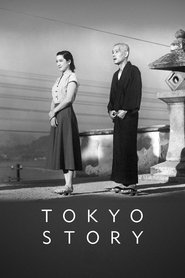
Tokyo Story (1953)
Ozu's camera sits about fifty centimetres off the floor — the eyeline of someone kneeling on a tatami mat — and it almost never moves. Watch for the "pillow shots": cutaways to chimneys, laundry, a passing train, images with no one in them and no job to do, held a few seconds past any use. They tell you nothing, and that's the point — they let the film breathe, and let transience itself become the subject. The story of elderly parents visiting their grown children is drawn partly from the American film Make Way for Tomorrow, but the stillness is entirely Ozu's.
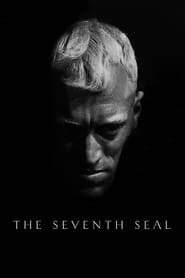
The Seventh Seal (1957)
A knight returns from the Crusades wanting one meaningful act before he dies, and keeps asking questions the sky won't answer. Gunnar Fischer shoots it with a severity to match: faces against overexposed skies, figures against deep shadow — a visual style descended from Murnau's Faust and Dreyer's The Passion of Joan of Arc. Watch how Bergman stages the supernatural with total matter-of-factness — Death simply walks among the living, as in the old Swedish tradition of Sjöström's The Phantom Carriage — and how much of the film's power lives in looks that have no action behind them.
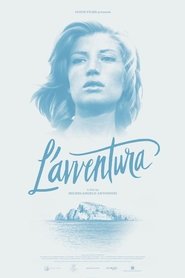
L'Avventura (1960)
A woman vanishes from a volcanic island; a search begins — and then Antonioni does something no mystery had done before. Watch what the frame does to people: they drift to its edges, get blocked by walls and columns, are dwarfed by rock and sea until they read as marks on stone. Notice how often two characters stand near enough to touch and remain utterly unreachable. Space itself becomes the drama; the landscape says what nobody can bring themselves to say.

L'Eclisse (1962)
Antonioni again, now in Rome's coldly modern EUR district, where architecture does the emotional work. Watch how Di Venanzo's compositions divide people from each other with windows, walls, and reflections — a woman inside a car, a man outside it. The film's subject isn't heartbreak in the usual sense but something stranger: the inability to hold a feeling in place long enough for it to become what you hoped. And stay alert in the final stretch, when the film makes its boldest formal move — one of the most discussed passages in all of cinema, built entirely from watching and waiting.
Red Desert (1964)
Antonioni's first color film, and he treats color as a tool of psychology: he literally had the grass painted grey so nothing growing could look alive. Monica Vitti plays a woman flooded by an industrial world her nerves can't process — and the film presents her distress not as private illness but as an accurate response to a genuinely altered environment. Watch how Di Palma's telephoto lenses flatten Ravenna's refineries into abstract fields of pipe and steam, so that you see the world the way she feels it.
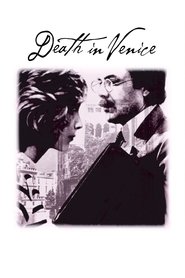
Death in Venice (1971)
Visconti's man never crosses the room — it's the camera that reaches for him, De Santis's slow zoom drifting across a hotel dining room toward a beautiful face that stays as distant as another country. Watch that zoom: it is desire that has given up on action, folded into a single camera movement. The whole film is bathed in haze and milky lagoon light, an atmosphere of dissolution, and Visconti lets scenes play out in near-real time — a technique he'd perfected in The Leopard — so that decline is something you feel in your body, not something you're told.
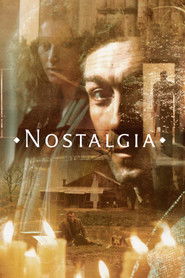
Nostalgia (1983)
Tarkovsky's film about exile — made by a Soviet director working in Italy, its displacement built into its very production. Watch the color shifts: one register for the present, another for memory, a technique carried over from his Mirror. And prepare for the film's centerpiece: a nine-minute unbroken shot of a man trying to carry a lit candle across a drained pool, the flame guttering, the attempt starting over. Nothing is "happening"; everything is at stake. It's the purest example here of duration itself becoming an act of faith.
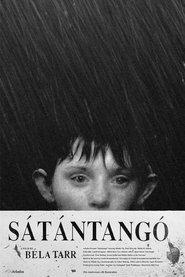
Satantango (1994)
Seven hours, and the opening shot — cows shuffling out of a collapsing farmyard for several wordless minutes — teaches you how to watch all of them. Tarr builds the film from extreme long takes, five and eight and ten minutes at a stretch, inheriting Tarkovsky's sense of the shot as accumulated time and Jancsó's choreographed wide-angle landscapes. Watch how the mud, the rain, and the waiting become the story: a dead collective farm, villagers who can only drink and watch each other, and a doctor at his window observing everything. Don't fight the length. The length is the film.
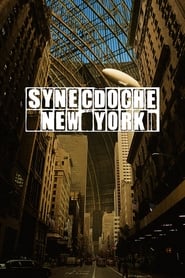
Synecdoche, New York (2008)
Kaufman's boldest move is tonal: the impossible is photographed as if it were ordinary. Frederick Elmes — who shot Eraserhead and Blue Velvet — gives a house that is perpetually on fire the same calm, autumnal naturalism he'd give a kitchen sink, and nobody onscreen blinks. Watch the doubling: a theater director builds a full-scale replica of his own life inside a warehouse, hires an actor to play himself, then an actor to play that actor — and the boundary between the life and the model quietly stops existing. Its lineage runs straight back through Fellini's 8½ and Bergman's Wild Strawberries and Persona.
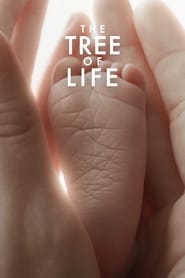
The Tree of Life (2011)
Malick gives you perception before he gives you facts: light through a curtain, water, the undersides of leaves, seen from a low, child's-eye vantage before you know whose eyes these are. Lubezki's camera never settles — it floats and drifts on natural light, following impulse rather than plot. Watch how memory, grief, and cosmic scale are braided together without connective explanation; the wordless creation sequence, made with photochemical effects by the same artist behind 2001: A Space Odyssey's cosmic passages, asks the oldest question — where were you when the foundations were laid? — in pure image and music.
Why watch them together? Because each film trains you for the next. Ozu's empty cutaways teach you to find meaning in Antonioni's vacant plazas; Bresson's withheld faces prepare you for Tarr's seven-hour patience; De Sica's maid making coffee is the seed of Malick's drifting curtain. Watched in sequence, these films reveal a hidden tradition running under a century of cinema — from postwar Japan and Italy through Sweden, Hungary, and America — in which the most radical thing a movie can do is stop, hold still, and truly look. By the end, you won't just have seen twelve masterpieces. You'll have acquired a new patience, and with it a new kind of pleasure: the pleasure of an image that asks nothing of you except your full attention, and gives you time itself in return.