Sightlines · a mini film course
When Seeing Becomes the Whole Story: Twelve Films That Learn to Wait
Most movies run on a simple engine: a character sees a problem, does something about it, and the editing hurries the deed along. The films on your list all, in their different ways, switch that engine off. Each one puts a person in front of something too large, too strange, or too far gone to be acted upon — history, grief, God, the past, a whole vanished home — and then does the boldest thing a film can do: it lets them (and you) simply look. The camera watches rather than chases. Shots outstay their obvious usefulness. Time is allowed to stretch until you can feel its weight. Watched together, these twelve films become a course in what cinema can do when nobody can do anything.
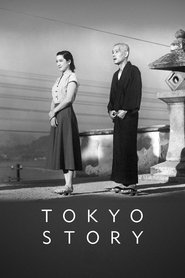
Tokyo Story (1953)
Watch the camera's height: Ozu mounts it about knee-level, roughly the sightline of someone seated on a tatami mat, and he almost never moves it. Notice, too, the shots of nothing — chimneys, laundry, a passing train — placed between scenes like breaths, telling you no information at all. That's the design: a family drama where the deepest sorrows can't be fixed by anyone, so the film gives you stillness instead of confrontation, and asks you to feel time passing through ordinary rooms.
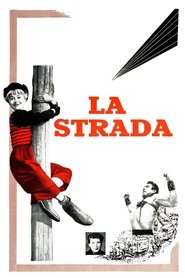
La Strada (1954)
Keep your eyes on Giulietta Masina's face, held in plain, even light that refuses to tell you whether to laugh or ache. Where another film would cut from a close-up to what the character does next, Fellini simply lets the expression persist — wonder, hurt, a kind of holy attention — and trusts you to read a whole inner life off the surface. Her physical vocabulary comes straight from Chaplin's silent comedy, loaded with pathos; notice how a single deadpan look can carry both at once.
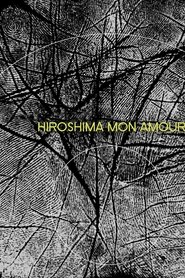
Hiroshima Mon Amour (1959)
The film opens on bodies shot so close they stop being bodies, dusted with something you can't identify — and that uncertainty is deliberate. Listen to the argument between what the voices say and what the images show: a woman insists she has seen everything in Hiroshima; a man answers that she has seen nothing. Two cinematographers split the film between countries and registers, precise studio control against on-location grain, so the very texture of the image keeps asking whether personal memory and historical catastrophe can ever truly meet.
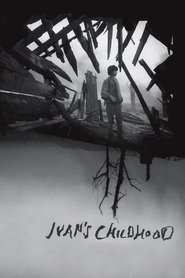
Ivan's Childhood (1962)
Tarkovsky's first feature is built across a fault line: taut, deep-focus wartime scenes — reeds, mist, river crossings rowed in near-silence — welded to luminous dream passages of birch trees and falling light. Notice that he joins them with hard, flat cuts: no dissolve, no consoling music. The dreams explain nothing about the plot; they exist so you can feel exactly what the war has taken, and the seam between the two worlds is the film's real subject.
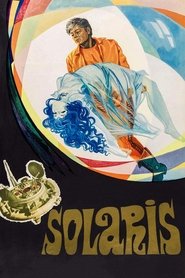
Solaris (1972)
Before you ever see a space station, the camera sits with weeds shivering in a stream, a horse in the rain — long past any practical reason. That patience is the argument: this is science fiction that refuses to treat its mystery as a puzzle to solve. Notice how the alien ocean is only ever glimpsed through portholes, swirling and withheld, while the lighting borrows the warm pools and deep darks of Old Master paintings. The genre promises answers; Tarkovsky offers conscience, memory, and duration instead.
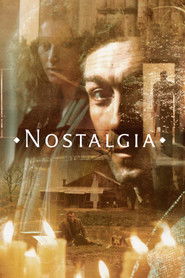
Nostalgia (1983)
The signature here is the long take as an act of faith — most famously a nine-minute shot involving a man, a candle, and a drained pool, where nothing "happens" and everything is at stake. Watch how slowly the camera moves, building pressure through sheer duration, and how the lead performance is constructed almost entirely from withholding: a man walking as if underwater. It's a film about exile in which displacement produces not drama but a kind of ache you're invited to inhabit in real time.
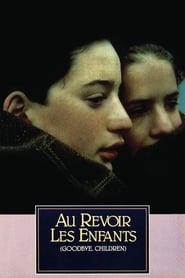
Au Revoir les Enfants (1987)
Malle films his own boyhood memory of the Occupation with disciplined restraint: cold winter grays, a watchful distance, the rhythms of a boarding school observed like a documentary. Notice that the young lead acts almost entirely through looking — watchfulness rather than deed — because the film is about a child perceiving something enormous that no child could possibly act upon. The quietness is the point; it makes every glance carry terrible weight.
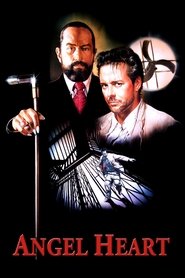
Angel Heart (1987)
Here's the counter-example that proves the rule: a film that keeps the detective-movie engine running while quietly sabotaging it. Watch the atmosphere — smoke, dust, blooming highlights, ceiling fans chopping the light — and notice how the images seem to know more than the man inside them. Harry Angel does everything a gumshoe should, yet pay attention to whether his actions ever actually resolve anything, or whether the investigation itself is the trap. A noir where the visual world is one step ahead of its hero.
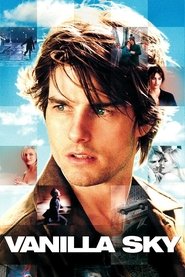
Vanilla Sky (2001)
John Toll shoots this with a lush, glamorous sheen — and the beauty itself is a clue. From an early, astonishing image of a completely emptied Times Square, the film trains you to distrust gorgeousness: when the surface is too perfect, something is wrong underneath. Watch for the moments where present and memory, the lived and the dreamed, seem to trade places within a single scene, and listen to Crowe's song choices, which work as a second layer of narration.
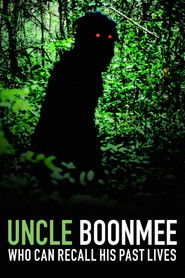
Uncle Boonmee Who Can Recall His Past Lives (2010)
The most magical thing here is how unmagical everyone is about the magic. Interiors are lit to preserve real darkness — oil-lamp and dusk — and when the uncanny arrives at the dinner table, it surfaces by slow degrees, greeted with the mild courtesy you'd give an early guest. Nobody screams; the camera doesn't flinch. Watch how the held, patient frame turns wonder into something domestic, and let the ambient sound of the forest work on you the way a score would in another film.
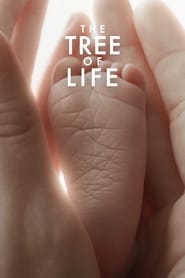
The Tree of Life (2011)
You're inside someone's looking before you're given a single fact: a low, child's-eye camera drifting after light through curtains, water, the undersides of leaves, all in natural light. Notice how faces arrive in oblique fragments and how the whispered voiceover floats free of the image rather than explaining it. Malick builds a family memoir — and then, astonishingly, a cosmic one — out of pure perception, in the lineage of 2001's wordless interludes set to classical music.
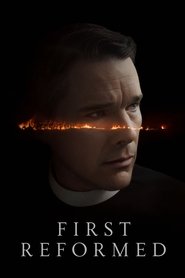
First Reformed (2018)
Schrader — who literally wrote the book on this austere spiritual tradition — makes stillness the rule so absolutely that when the camera finally moves, it lands like an event. Watch the frontal, symmetrical framing, almost liturgical; watch a long two-person counseling scene held without the usual back-and-forth cutting. A man perceives everything — a dying planet, a compromised church, his own failing body — and can act on none of it, and the film's rigid form makes you feel that pressure build shot by shot.
Why watch these together? Because they teach each other. Ozu's empty shots prepare you for Tarkovsky's grass and Malick's curtains; Masina's held face prepares you for the watchful boys of Malle's schoolyard; and the two genre films — Angel Heart and Vanilla Sky — show what happens when the machinery of plot keeps grinding after the world has stopped cooperating with it. By the third or fourth film, you'll notice your own attention changing: you'll stop waiting for the next event and start reading light, duration, and faces the way these directors intend. That shift — from watching for something to simply watching — is the real curriculum here, and it's a skill that, once learned, changes every film you see afterward.