Sightlines · a mini film course
When Action Fails: War, Witness, and the Watching Eye
Here is a set of films that, on paper, should be full of doing — wars, revolutions, heists, manhunts, escapes. And yet the deepest current running through all eleven is the opposite of action. These are films about what happens when a person confronts something so large — an occupation, a collapse, a regime, an atrocity — that there is nothing their body can do about it. They can only look. So the filmmakers build their whole grammar around looking: the camera watches rather than chases, time is allowed to stretch, and images stop being windows you glance through and become surfaces you have to read. Watch these films with that in mind and they begin to speak to each other across decades, countries, and genres.
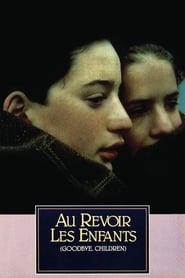
Au Revoir les Enfants (1987)
Louis Malle rebuilds his own wartime boyhood in a cold French boarding school, and the whole film runs on watchfulness rather than deeds. Notice how Renato Berta's disciplined, wintry palette — grays, browns, the bluish white of winter light — makes even the light feel unheated, and notice how young Gabriel Manesse plays Julien almost entirely through his eyes. The film descends from The 400 Blows and Zéro de conduite — boys observed as an ensemble through dorm and refectory rhythms — but Malle sharpens that observational mode toward a single terrible truth: sometimes a glance is the only act available, and it is still an act. Everything is built to make you feel the weight of looking.
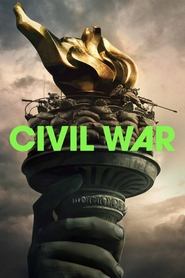
Civil War (2024)
Alex Garland's near-future road movie follows a press team across a fractured America, and its boldest device is one you'll feel in your body: in the middle of chaotic, handheld violence, the motion suddenly stops — a single high-contrast still, a shutter click — then resumes as if nothing were taken. Something was. Watch how Rob Hardy's camera behaves like a fifth member of the crew, reactive, sometimes caught flat-footed, and watch what the freeze-frames do to your nerves. The film sits in the lineage of Under Fire and The Killing Fields, asking whether photographing suffering is moral seriousness or a sublimated thrill — and it makes you complicit in the question every time it clicks.
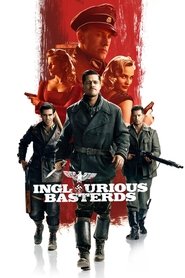
Inglourious Basterds (2009)
Tarantino's WWII fantasia is built on scenes where everyone is performing and everyone is reading the performance — and where the tiniest gesture carries mortal weight. Watch how Robert Richardson's patient wide and medium shots let scenes run unhurried for twenty minutes, suspense generated not by chases but by micro-behavior: a pause, an accent held like a breath, which fingers you raise to order three drinks. The method comes straight from Clouzot's The Wages of Fear — confined rooms where a concealed lie can kill. Also notice the languages: spoken in three tongues more than English, this is a film where fluency itself is a weapon and a trap.
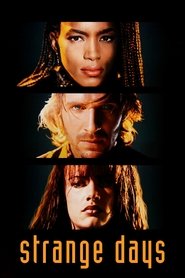
Strange Days (1995)
Kathryn Bigelow's neon-soaked LA neo-noir opens by putting you inside someone else's eyes — sight, sound, adrenaline, all of it — before telling you whose. The film's great formal invention is a split between two ways of seeing: Matthew Leonetti's grimy, sodium-lit "real world" versus the seamless first-person clips of the SQUID device, a black-market technology for reliving other people's recorded experience. Watch how the film treats those clips as addiction — Lenny Nero as a junkie of stolen feeling — and know that it built this rig years before GoPro, VR, or bodycam footage existed. Its ancestors are Peeping Tom and Lady in the Lake; its questions about watching are entirely ours.
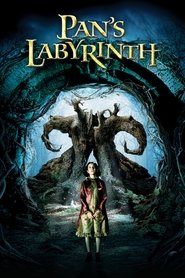
Pan's Labyrinth (2006)
Del Toro tells two stories at once — a war picture about a Falangist captain hunting guerrillas in the Spanish hills of 1944, and a fairy tale about the captain's stepdaughter and her three tests — and refuses to rank them or tell you which is true. Watch Guillermo Navarro's Oscar-winning color logic: cold steel blues for the captain's world, warm ambers and golds for Ofelia's thresholds. And watch the film's quietest, deepest theme: disobedience as moral virtue, tested by prohibition more than by danger. Its essential ancestor is The Spirit of the Beehive — a solitary girl answering fascist reality with a movie-born monster — and the doubleness is the point, not a puzzle to be solved.
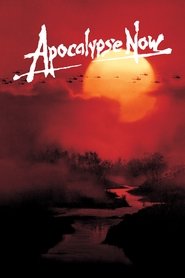
Apocalypse Now (1979)
Stop watching for a plot; you're going to get a state of mind. Coppola's Vietnam epic replaces the war film's usual engine — see threat, shoot threat — with a man who drifts, reads, narrates, and watches while the river does the moving. Martin Sheen's famous flatness is deliberate: Willard is a seer, not a doer. Track Vittorio Storaro's chromatic arc as it goes: amber-orange Saigon rot draining into blue-grey murk and finally near-total darkness. And listen from the very first seconds — a ceiling fan becoming a helicopter rotor, a rock song bleeding into jungle hiss — for how sound and superimposition fold the whole film into ten seconds.
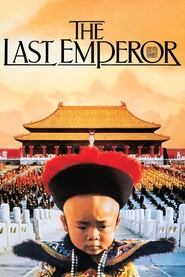
The Last Emperor (1987)
Bertolucci builds this not like a life but like the memory of a life, narrated by a man unsure the life was his. Watch two things. First, Storaro again: historical epoch rendered as temperature, the amber-gold unreality of the Forbidden City cooling as the decades pass. Second, editor Gabriella Cristiani's dissolves — she almost never cuts hard between eras, so prison bleeds into palace and you lose your grip on which time is the real one. Small objects fold decades together and let two dates touch. It's a portrait of power as environment: a man shaped entirely by proximity to authority he never actually holds.
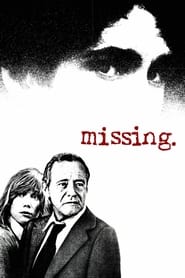
Missing (1982)
Costa-Gavras essentially invented the modern political thriller, and here he brings that European sensibility to a Hollywood production about an American father searching for his son in an unnamed Latin American country under military crackdown. Watch how Ricardo Aronovich's camera works two registers — mobile and handheld in the crowds and stadiums of the present-tense search, more composed elsewhere — and how suspense is built entirely from dogged disclosure: an interview, a document, a demand, each act uncovering a piece of a hidden situation. It's the procedural engine of All the President's Men pointed at the machinery of state betrayal, and it grinds forward with terrible patience.
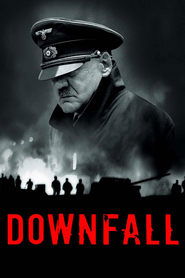
Downfall (2004)
In the bunker beneath Berlin, a hand moves across a map and armies move with it — except the armies aren't there. Hirschbiegel's film is a study of a closed system issuing commands into a void: conferences proceed, orders go to units that no longer exist, and the machinery of decision grinds on with nothing left to connect to. Watch Rainer Klausmann's handheld camera trap faces in shallow focus and narrow corridors — proximity as pressure, the influence of Come and See's locked-to-the-face intensity. This is German cinema's post-reunification reckoning with its own history, staged almost entirely in one suffocating space.
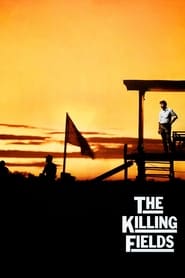
The Killing Fields (1984)
Chris Menges's Oscar-winning photography is the film's spine: handheld camera in the crowd, available light, long lenses, the documentary naturalism he learned on British social-realist films like Kes transplanted into the fall of Cambodia. Watch how the film runs in two gears. The first hour is pure momentum — the journalist Schanberg working phones, checkpoints, embassies, action flowing from perception. Then attend to what happens when that machinery stops being available to Dith Pran, the local interpreter who bears the risks the foreigners can leave behind. The film's most devastating images are shot flat, unemphasized, from the height of a person just trying to keep walking — atrocity registered by a man for whom stopping is not an option.
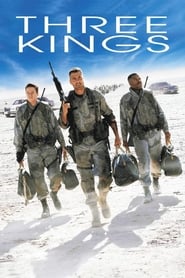
Three Kings (1999)
Russell's Gulf War heist movie hands you all the swagger of a caper — a map, a treasure, a crew, Clooney's competence — and then keeps freezing its own action to make you read what action costs. Watch Newton Thomas Sigel's deliberately abused image: sickly greens, bleached yellows, grain pushed until the desert seems to vibrate, glare flattening the landscape into abstraction. And watch for the film's signature move: cutting inside a body to show what a bullet actually does, a medical diagram dropped into a genre picture. It inherits its architecture from Kelly's Heroes and its irreverence from MASH*, but its anger — at an uprising encouraged and then abandoned — is entirely its own.
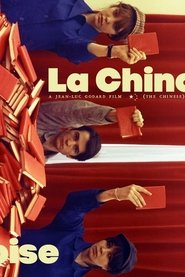
La Chinoise (1967)
Godard's portrait of young Parisian Maoists spending a summer in a borrowed apartment is the set's purest case of images that must be read rather than watched. Raoul Coutard shoots the room frontally and bright — no softening shadow, depth flattened toward the graphic — with slogans chalked on walls, hundreds of Little Red Books stacked like bricks, and reds and whites quoting the French tricolor and Maoist iconography at once. Nothing pretends to be a place where people live; it's a stage, a classroom, a poster, and Godard wants you to notice. The devices come from Brecht by way of Kuhle Wampe — interruption, direct address, the film announcing itself as a film — in service of one question: what does it cost to turn theory into action?
Why watch these together? Because each one, in its own idiom, stages the same confrontation: a person face-to-face with history, and a camera deciding what to do about it. Malle holds on a boy's eyes; Garland freezes the frame; Bigelow puts you inside a borrowed skull; Godard flattens the image into a page. Watched in sequence, you'll start to notice a shared conviction — that when action fails, seeing becomes the drama, and that how a film looks at catastrophe is itself a moral choice. War movies, thrillers, fairy tales, essays: eleven very different answers to the question of what an image owes the suffering it records. Pay attention to the watching, and every one of these films gets richer.