Sightlines · a mini film course
When Looking Becomes the Whole Story
The eleven films on your list come from six decades, four continents, and every budget level imaginable — a French boarding school, a Hungarian mud plain, a neon-drenched future Los Angeles. But they share a secret preoccupation: each one is fascinated by the gap between seeing and doing. In these films, characters watch things they cannot change — a wagon train's fate decided out of earshot, a future crime scrubbed across a glass wall, a village dissolving in the rain. And the filmmaking follows suit: the camera watches rather than chases, time is allowed to stretch, and the most charged moments are often the quietest ones — a glance, an object on a shelf, a coat worn to a prizefight. Watch for how each director builds meaning out of stillness, attention, and the things a frame refuses to show you.
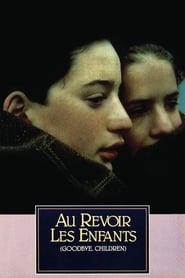
Au Revoir les Enfants (1987)
Renato Berta shoots this wartime boarding school in a cold, narrow palette — grays, browns, the bluish white of winter light — so the chill is something you feel before anyone names it. Notice how young Gaspard Manesse plays Julien almost entirely through watchfulness rather than deeds: this is a film built on the weight a single look can carry. Malle inherits the tradition of Forbidden Games and The 400 Blows — history registered through a child's uncomprehending eyes, the camera holding at a respectful, observational distance — and drew here on his own boyhood memory, which gives every small classroom ritual an almost unbearable attentiveness.
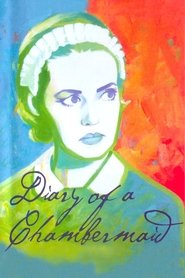
Diary of a Chambermaid (1964)
Buñuel's late style is a kind of poker face: eye-level framing, flat gray light, no music telling you how to feel — a meal, a fetish, a scandal all lit exactly the same. That refusal to be surprised is his sharpest weapon; the evenness lets the strangeness of this bourgeois Normandy household expose itself. Watch how objects — boots, especially — carry meanings the camera declines to explain, a habit Buñuel has kept polished since his Surrealist days.
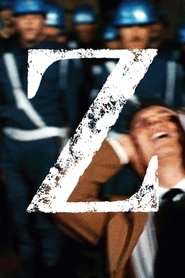
Z (1969)
When violence erupts in a crowd, Costa-Gavras puts Raoul Coutard's handheld camera down in the legs and the panic, cutting so fast you never get the clean overhead view — because officially, no one saw anything, and the image withholds the overview the way the state withholds the truth. This is the film that proved the political thriller could be both furious and popular. Watch how it borrows Rashomon's trick of replaying a single violent event through successive witnesses, turning editing itself into an investigation.
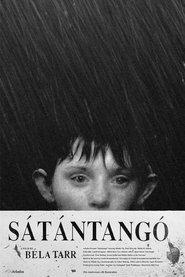
Satantango (1994)
The opening shot follows a herd of cows through a ruined farmyard for several unbroken minutes, and by the end of it Tarr has taught you how to watch the next seven hours: not for events, but for time itself moving through a place. Shots run five, eight, ten minutes; the black-and-white images of mud and rain accumulate rather than advance. The villagers here can mostly only wait and watch each other wait — and so do you, which turns out to be strangely hypnotic rather than punishing. Give it a full afternoon and no phone.
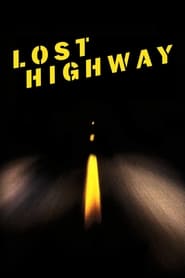
Lost Highway (1997)
Peter Deming photographs the Madison house as near-abstract darkness — rooms defined by what cannot be seen, characters walking into blackness and dissolving. Lynch builds the film on doubles and repetitions (one actress, two women? two men, one guilt?) and steadfastly refuses the cut that would sort dream from reality, memory from present. Don't try to solve it on first viewing; watch instead how the film uses shadow, sound, and echoed images to make uncertainty itself the subject.
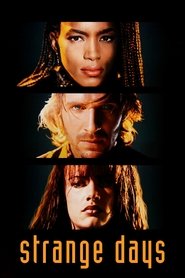
Strange Days (1995)
Bigelow opens by putting you inside someone else's eyes — a full-sensory recording played back through a rig called SQUID — using custom first-person camera work years before GoPros and bodycams made that vision ordinary. Notice the film's two distinct ways of looking: the grimy, neon-soaked "real" Los Angeles versus the seamless subjective clips, and how the film keeps asking what it costs to watch someone else's experience as entertainment. It's a thriller about mediated seeing that makes you complicit in it.
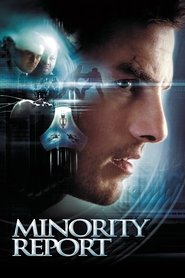
Minority Report (2002)
Kaminski drains the color through a silver-retention process, crushing the future into cold blues and steel grays — noir texture applied to science fiction. The film's signature image is its strangest: a man conducting fragments of an unhappened crime across a glass wall, doing everything to an image except acting on it. Watch how Spielberg turns detection into reading — visions arrive out of order, like raw time, and must be deciphered rather than chased. It's Hitchcock's innocent-man engine bolted to a question about whether the future is ever truly fixed.
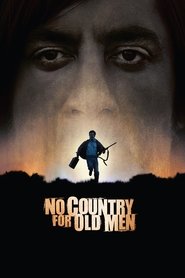
No Country for Old Men (2007)
Roger Deakins works by strategic restraint: long lenses compress figures against featureless desert, emphasizing distance and exposure, landscape as participant rather than backdrop. Listen as much as you look — the film inherits from The Conversation a faith in ambient sound (a rustle, a fluorescent hum, room tone) as its instrument of dread. Its most celebrated scene is two men talking across a gas-station counter while nothing visibly happens; watch how the Coens honor every mechanic of the crime thriller while quietly withholding the satisfactions the genre promises.
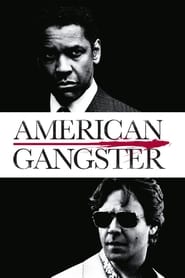
American Gangster (2007)
Harris Savides builds the film on a chromatic opposition — the amber warmth of Frank Lucas's world of self-made wealth against the institutional gray of the detective's — and lights interiors with practical sources so rooms feel inhabited, not staged. Watch the wardrobe: a gray suit and a chinchilla coat aren't costume choices but arguments, two opposed attitudes toward power and visibility. Scott, a British outsider fluent in American mythology, treats the drug trade with the analytical vocabulary of business — branding, market share, quality control — and lets the parallel speak for itself.
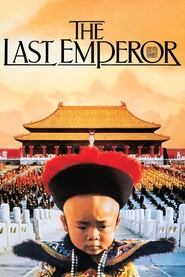
The Last Emperor (1987)
Storaro renders history as color temperature: the Forbidden City glows amber and ochre — warmth, confinement, unreality — while later decades cool toward gray. Editor Gabriella Cristiani almost never cuts hard between eras; she dissolves, so past and present bleed into each other until you can't quite say which is the real time and which the remembered one. Watch for small objects that travel across decades and fold distant years together. This is a life built like a memory of a life, and the film's grandest sets serve its most intimate argument: a man shaped entirely by proximity to power he never actually held.

Meek's Cutoff (2011)
Reichardt shrinks the Western into a boxy, old-fashioned frame that refuses the genre's romance with panoramic landscape — you get partial views, natural light, terrain that hems rather than beckons. Her masterstroke is perspective: we hear what the women hear, standing apart while the men decide the party's fate, their bonnets literally bordering what they're permitted to see. Every ingredient of the classic Western is here — desert, wagons, a guide, a captured man whose speech goes untranslated — but the machine of decisive action seizes up, and the film becomes about acting on terrifyingly insufficient knowledge.
Watched together, these films train a single muscle: patience with the image. Start with the loud ones — Z, Minority Report, Strange Days — and notice how even at thriller velocity they keep returning to figures who can only look. Then let Satantango and Meek's Cutoff slow you down until watching itself becomes the drama. By the end, you'll find the group talking to each other constantly: Z is named in The Seed of the Sacred Fig's family tree of influences via the political thriller it invented; The Last Emperor and Lost Highway both melt the wall between now and then; Buñuel's level gaze and the Coens' echo each other's refusal to flinch. Eleven films, one lesson: sometimes the most powerful thing a camera can do is hold still and see.