Sightlines · a mini film course
When the Body Can't Act: Five Centuries of People Who Can Only Watch
There is a shared heartbeat running through these films, from a wartime French boarding school to a Milanese boxing gym to a corporate ritual on raked gravel in Edo-period Japan. In each of them, someone faces a situation so large, so wrong, or so beautiful that there is nothing useful their body can do with it. They cannot fight their way out, love their way through, or reform their way around it. They can only look — and the camera, with great patience and discipline, looks with them. This is not passivity on the filmmakers' part. It is a precise artistic decision: to let us feel the full weight of a moment by refusing to cut away from it before the weight lands.
Two of these films — Pacific Rim: Uprising and Inglourious Basterds — work in the opposite direction, building worlds where action is still possible and watching that engine run. Placing them alongside the others makes the contrast instructive rather than merely decorative. And three films — Harakiri, The Human Condition, and Rome, Open City — form their own tighter constellation around historical catastrophe and the lone conscience that cannot stop it. Watch them in any order. But watch them close.
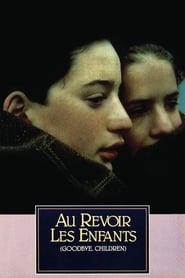
Au Revoir les Enfants (1987)
Renato Berta's camera gives you a winter that feels genuinely cold: narrow grays and browns, the bluish-white of daylight that has given up. Watch how the light in this school refuses to be cozy — even the candlelit scenes feel exposed. The film is constructed around one child's watchfulness, and newcomer Gaspard Manesse plays young Julien almost entirely through his eyes: not through what he says or does, but through the micro-adjustments of a boy learning to read a world that is keeping secrets from him. Pay attention to how Malle holds on a face a beat longer than comfort requires. That hesitation is the film's whole argument.
Hiroshima Mon Amour (1959)
Two cinematographers divided the work here by geography and emotional register, and the join is part of the meaning: the Japanese sequences are lit with a cool, documentary roughness; the French sequences are framed with a more deliberate compositional care. Resnais splices them together without apology, asking you to hold both registers simultaneously. Notice how Marguerite Duras's voiceover and the image sometimes confirm each other — and sometimes flatly contradict. The film is genuinely interested in whether pictures can prove that a person has understood something, and it keeps returning that question to you unanswered.
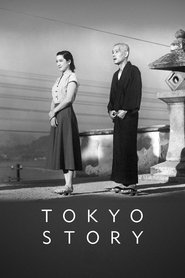
Tokyo Story (1953)
Ozu's camera is placed roughly fifty centimeters from the floor — the sightline of someone seated on a tatami mat — and it almost never moves from that position. Between scenes, he cuts to shots of chimneys, laundry, a train passing through empty space: shots with nobody in them and nothing to advance. Resist the urge to read these as pauses. They are the film's subject as much as its characters are. Watch also how Ozu films conversation: rather than placing two people in the same frame, he tends to give each person their own shot, looking in matched directions. The people are together and separate at once, and the camera knows it.
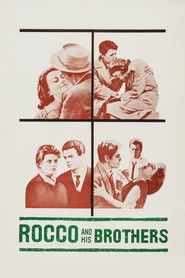
Rocco and His Brothers (1960)
Giuseppe Rotunno moves between two visual modes in the same film, and noticing when he shifts is the key to the whole experience. For much of the early section, the photography is close to newsreel: wet pavements, fog, the unromantic geometry of half-built Milanese suburbs. Then something changes, and the lighting goes high-contrast and operatic — faces lit from below, shadows turning architectural. Visconti is grafting two traditions together: the documentary weight of Italian neorealism and the charged atmosphere of nineteenth-century melodrama. Watch for the point where the seams show, and ask yourself what that means for the story's moral.
Children of Paradise (1945)
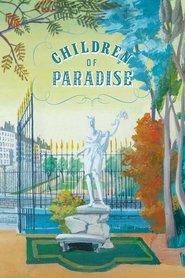
Alexandre Trauner built the entire Boulevard du Temple on a studio lot — thousands of extras, two theaters, the whole teeming world of 1820s Paris, constructed in secret during the German Occupation. Watch how Carné and his cinematographer Roger Hubert treat the crowd: not as background, but as a living organism with its own pulse and direction, as kinetic as any individual character. Then watch Jean-Louis Barrault, who was a trained mime before he was an actor. Notice how much information he transmits without a word — a held posture, a tilt of the head — and notice how the film keeps setting this wordless eloquence against the magnificent verbal bravura of the actors around him. Theater and silence are in genuine competition here.

Rome, Open City (1945)
Ubaldo Arata shot this film on whatever raw stock Rossellini could scavenge in 1944–45 Rome, and the footage has a grain and an instability that studio photography of the period deliberately avoided. Framings are frequently off-center; figures are caught mid-gesture; focus shifts in ways that feel like discovery rather than planning. This is not technical failure — it is a method. The film wants to feel like it was found rather than made. Pay close attention to the alliance at the center of the story, between a Communist partisan and a Catholic priest: Rossellini refuses to sentimentalize it or resolve the tension between their worldviews. They stand for different things and help each other anyway. That refusal of easy solidarity is the film's most radical move.
Amarcord (1973)
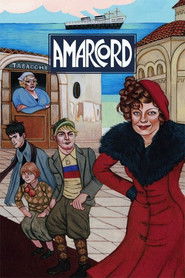
Fellini rebuilt his hometown of Rimini entirely on the Cinecittà soundstage — the piazza, the tobacconist's shop, the Grand Hotel, even the sea. The snow is manufactured. The fog is theatrical. This is not a confession of limitation; it is the film's central claim: that memory is always a construction, and that the beautiful things we remember most vividly may be the ones we half-invented. Watch how Rotunno holds tonal consistency across scenes that have nothing in common — a broad adolescent farce followed immediately by a moment of genuine lyrical stillness — without letting either register tip over into parody or sentimentality. The film is performing an argument about how recollection works, and the photography is the argument.

The Last Samurai (2003)
John Toll shot much of this film in natural or near-natural light, in the New Zealand landscape standing in for 1870s Japan, and his images have a painterly depth and warmth that situates the film firmly in the tradition of the prestige historical epic. Watch how he frames the village sequences: the space is composed with a stillness borrowed from Japanese painting, figures placed against landscape in ways that emphasize proportion and scale rather than urgency. Then watch what happens to that stillness when the battle sequences arrive. The film is genuinely interested in the gap between a beautiful way of living and a world that has decided to end it, and Toll's camera takes that gap seriously rather than rushing past it.
Harakiri (1962)
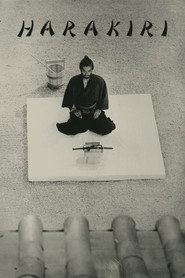
Yoshio Miyajima's deep-focus anamorphic compositions make the architecture of the Iyi compound a character in its own right. The raked gravel, the receding screens, the ranked rows of retainers — these are not background. They are the visual language of institutional power, and Miyajima places one kneeling man inside all that geometry very deliberately. Notice how long the film asks you to sit with stillness and speech before anything physical occurs: the pleasure on offer here is prosecutorial, built through testimony and accumulation rather than action. Let your patience build alongside Hanshirō's, and the film will reward it with something devastating.
Pacific Rim: Uprising (2018)
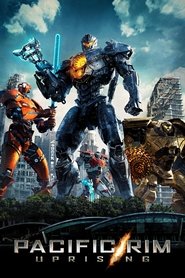
Dan Mindel's cinematography is bright, clean, and spatially legible: at any given moment you can tell exactly where the Jaegers are relative to the Kaiju, and the editing keeps that spatial logic intact through even the most elaborate combat sequences. This is a deliberate craft choice, not a default. Watch how the film handles the Drift — the neural bridge that fuses two pilots into one — as a visual and dramatic conceit: it is trying to make the connection between human intention and mechanical action visible, to show you the mind driving the body. Place this alongside Harakiri or Tokyo Story and the contrast becomes illuminating: here action is still possible, and the film celebrates that possibility without embarrassment.
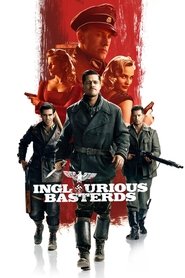
Inglourious Basterds (2009)
Robert Richardson's camera favors long, sustained wide shots that allow scenes to breathe at their own pace — the famous opening dairy-farm sequence runs nearly twenty unhurried minutes. Watch how Tarantino uses language itself as a weapon and a trap: characters lie through performance, and other characters read those performances for hairline cracks. The film's most tense sequences have almost no physical action in them; everything happens in the micro-behaviors of speech, in which finger you raise to order three glasses of wine, in the pause before an answer. Richardson's camera knows where to wait, and it waits with enormous patience for the moment a performance slips.
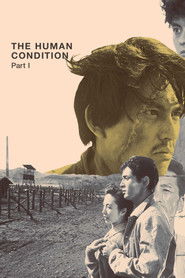
The Human Condition I: No Greater Love (1959)
Miyajima's GrandScope compositions — he shot Harakiri as well, and the two films reward comparison — use the extreme width of the anamorphic frame to make one man look cosmically small inside a system that was designed without him in mind. Watch the geometry of confinement: fence lines, watchtowers, the ruled rows of assembled laborers, the receding corridors of authority. The film is nearly three and a half hours long, and Kobayashi does not rush it. The length is part of the argument: endurance is the subject, and the film asks you to practice a version of it alongside its protagonist. Notice also how Tatsuya Nakadai — who appears in Harakiri as well — plays conscience not as defiance but as something quieter and more costly: a man who keeps insisting on decency past the point where decency makes practical sense.
Why Watch These Together
The reward of placing these films in dialogue is that they clarify each other's choices. Ozu's still camera and Kobayashi's long takes and Malle's watchful faces all emerge from a shared recognition: that some situations are too large for action to resolve, and that the most honest thing a film can do is let you feel that largeness without flinching. Rome, Open City arrives at this recognition through shock and rupture; Tokyo Story arrives through quiet accumulation; Harakiri arrives through the slow assembly of a legal case that is also a moral indictment.
Pacific Rim: Uprising and Inglourious Basterds offer the counter-argument — worlds in which the sensory-motor circuit still runs, where perception leads to action and action changes things — and that counter-argument is not trivial. Watching Tarantino's meticulous tension-building or the Drift sequence's elegant externalizing of human will, you understand what has been given up in the films that refuse those satisfactions, and why the refusal was worth making.
What connects all of them, even in their differences, is a seriousness about what the camera is doing when it holds on a face, or a landscape, or an empty street a beat longer than the story strictly requires. These are films that believe the surplus moment — the held breath after the obvious cut-point — is where cinema earns its keep. Come to them slowly, and let them teach you the same patience they practice.