Sightlines · a mini film course
The Watchers: Growing Up Where Action Fails
Here is a set of films — spanning six decades, five continents, wildly different budgets and tones — that all circle the same quiet discovery: what it feels like to be young inside a world too large to change. In each of these films, the camera doesn't chase heroes toward solutions. It stays close to bodies — a boy's glance, a girl's throat, the back of a teenager's neck — and lets watching, enduring, and carrying become the drama. These are films where the world presses in and the protagonist's only real power is attention. That sounds bleak. It isn't. It's where some of cinema's most tender, most inventive filmmaking lives.
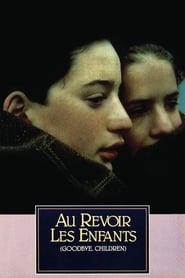
Au Revoir les Enfants (1987)
Louis Malle rebuilt his own wartime boyhood at a French boarding school, and everything hinges on how his young lead is directed: almost entirely through watchfulness, rarely through deed. Renato Berta's cinematography keeps the palette cold and narrow — grays, browns, the bluish white of winter light in an unheated school — a disciplined naturalism that refuses to prettify memory. Watch how the film trains you to read faces and glances, because a look here can carry more weight than any action. It inherits the boarding-school rhythms of Zéro de conduite and the watchful boyhood realism of The 400 Blows, and turns them toward history.

The Young and the Damned (1950)
Buñuel, the great Surrealist in Mexican exile, takes a slum melodrama and lets something stranger burn through it. Watch the famous tension between director and cameraman: Gabriel Figueroa's instinct for pictorial grandeur, deliberately flattened by Buñuel into something harder and less consoling. Then watch what erupts anyway — a slow-motion dream of a mother, floating raw meat, appetite and tenderness fused into a single hunger. The ordinary city keeps cracking open to reveal something raw and prehistoric underneath, and the film refuses the easy sympathy its genre usually offers.
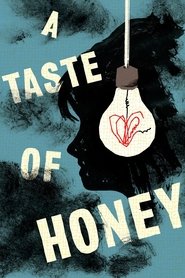
A Taste of Honey (1961)
The jewel of Britain's Kitchen Sink cycle, and a lesson in how a film can be about walking. Watch Jo's aimless drifts through Salford — canal reflections, latticed ironwork, fairground neon smearing against grey sky. Walter Lassally finds genuine beauty in industrial desolation without ever sentimentalizing it, and the beauty pointedly leads nowhere; that refusal is the film in miniature. Rita Tushingham plays Jo as "an intelligence making continuous small adjustments to conditions she did not choose" — one of the great performances of watchful endurance.
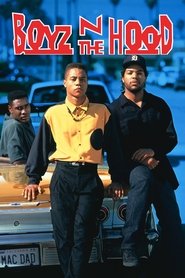
Boyz n the Hood (1991)
Before anyone acts, listen: a helicopter drones overhead, its searchlight raking the lawns, audible under barbecues and porch talk. Singleton's sky is policed. Charles Mills's camera is restrained and legible — warm sunlight on the daytime streets, a steadiness that gives weight to ordinary domestic moments and refuses to turn violence into spectacle. Watch how bodies are framed inside the architecture of the neighborhood — corners, yards, fences — until the geography itself becomes a character pressing on everyone in it.
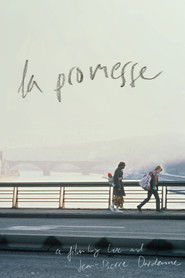
La Promesse (1996)
The Dardenne brothers' breakthrough keeps the handheld camera inches behind a fifteen-year-old's neck, and that position is the film's whole argument: you see only what the boy is near enough to see, never the comforting overview. Watch how the drama lives in tiny physical adjustments — a glance held a beat too long, a hand hesitating over banknotes. No score consoles you; no backstory explains. This is moral suspense built entirely from proximity to a body.

American Beauty (1999)
The mainstream outlier here, and the one that makes the pattern explicit. A plastic bag turns in the wind, filmed far too long by a boy's camcorder, and the film dares you to find it beautiful. Conrad Hall's Oscar-winning photography boxes characters into doorframes, blinds, and banisters — suburban geometry as a cage — while the film's tagline, "look closer," announces its real subject: attention itself. Watch how it runs two speeds at once, a man frantically acting to change his life alongside a boy who only ever watches.
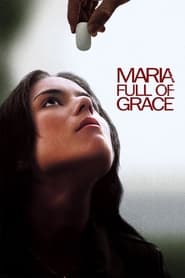
Maria Full of Grace (2004)
A drug-trafficking film with the action drained out, leaving only a body carrying its cargo. Watch her throat — the film is genuinely organized around the muscular act of swallowing and keeping still. Jim Denault's handheld camera stays close to faces in cramped, unglamorous spaces: greenhouse rows, a sealed airplane cabin, a fluorescent customs hold. Marston relocates the genre to its lowest, most expendable rung and treats smuggling as labor — suspense wrung from stillness rather than chases.
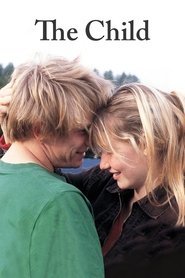
The Child (2005)
The Dardennes again, refined further. The camera rides behind Bruno's shoulders through the streets of Seraing, never far enough ahead to read his face — so watch the hands instead, because this film has decided on principle not to tell you what its protagonist is thinking. Its lineage runs straight through Bresson's Pickpocket and L'Argent: ethical drama built from fragments, money passed palm to palm, gestures that force you to reconstruct the world that produced them.
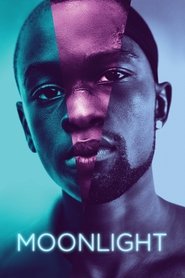
Moonlight (2016)
Jenkins inherits the hood film's milieu — the drug corner, the addicted parent — and removes its motor, replacing violence-as-spectacle with quiet. Watch the opening Steadicam orbit a street-corner conversation instead of cutting through it, and watch the ocean scene where a man teaches a boy to float: nothing is decided, no plot turns, and the holding becomes the whole meaning. The visual grammar borrows from Wong Kar-wai's saturated yearning and Beau Travail's circling camera — eloquence carried by gesture rather than dialogue.

The Florida Project (2017)
Alexis Zabe parks the camera at a six-year-old's eye level and keeps it there, so stairwells and parking lots loom at a child's scale. Shot on 35mm, the motel strip's violet walls and cotton-candy dusks glow like a storybook — and the same golden light that makes it enchanted shows you it's falling apart. Baker never reconciles the wonder and the precarity; he holds them in one frame. Watch scenes that seem like nothing as plot and everything as texture.
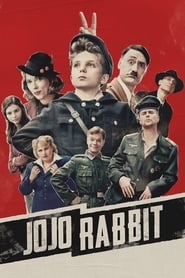
Jojo Rabbit (2019)
Waititi's dark comedy joins the lineage of Chaplin and Lubitsch — shrinking the tyrant into a buffoon — but its real invention is filming a child's inner world. The imaginary Hitler bums cigarettes and delivers pep talks a ten-year-old could have written, because a ten-year-old did: watch how the film shows an ideology assembled from posters, radio, and playground rumor into a friendly imaginary companion. Mihai Mălaimare Jr.'s bright, symmetrical, picture-book framing renders the boy's world as toy-like and orderly — which is exactly the point.
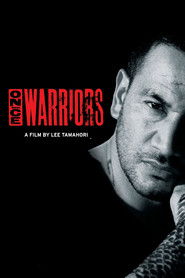
Once Were Warriors (1994)
Tamahori's landmark of Māori cinema opens with a postcard vista of blue mountains — then pulls back to reveal it's a billboard bolted above a roaring motorway. Hold that image: the whole film lives in the gap between the painted paradise and the concrete beneath it. Stuart Dryburgh (fresh off The Piano, in a completely different register) gives the pub and party scenes an amber-and-neon glow against cooler domestic spaces, and Temuera Morrison channels the raw magnetism of Brando's Stanley Kowalski. Watch how the film refuses to cut away from a family under pressure.
Why watch these together? Because they teach each other. Once you've felt the Dardennes' camera glued to a boy's shoulders, you'll notice how Malle holds on Julien's face, how Marston watches Maria's throat, how Jenkins lets the ocean scene simply stay. Once you've seen Baker's camera crouch to a child's height, you'll catch Waititi doing it inside a child's head, and Buñuel doing it inside a child's dream. These are twelve variations on one radical idea: that a film's deepest drama can live not in what characters do, but in what they see, carry, and survive — and that a camera patient enough to watch alongside them can make attention itself feel like an act of love. Watch in any order. But watch closely; that's the whole curriculum.