Sightlines · a mini film course
What the Eye Can Bear: Seeing, Witnessing, and the Limits of Looking
There is a question running through every film on this list, asked in different accents and under wildly different circumstances: what does it cost a person to see what they are seeing? A boy's sideways glance in a cold classroom. A teenager's face turned to grey leather by what he has watched. A sniper's eye pressed to a scope for hours without end. A family eating breakfast while smoke drifts over the garden wall. These films are not all equally bleak, nor equally ambitious, nor even equally successful — but they share a strange preoccupation with the act of witnessing itself: what it does to the watcher, what the camera owes to the watched, and where the honest image has to stop.

Rome, Open City (1945)
Begin here, because in a real sense everything else on this list follows from it. Watch how Rossellini uses the actual streets of a just-liberated Rome — not a studio reconstruction but the real rubble, real faces, real winter light — and notice what that choice does to the story's rhythm. Things happen at the wrong moment, without preparation or permission. A performer you have come to trust can be taken from the film with the sudden arbitrariness of actual violence. Rossellini's camera doesn't chase or editorialize; it observes, and then it stays with the space the event has left behind. Pay attention to the way scenes end — not with a resolving cut, but with a kind of prolonged stillness, as if the film is absorbing a shock. That willingness to sit with aftermath rather than hurrying to the next beat is the founding gesture of everything we now call European art cinema.
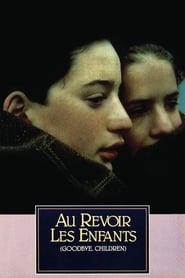
Au Revoir les Enfants (1987)
Louis Malle returned forty years after a real event to reconstruct it almost from memory, and the film is saturated with that belatedness — a man trying to recover, precisely, what he did with his eyes at a particular moment. Watch the young actor Gaspard Manesse, who plays the Malle surrogate Julien: almost everything he does is watching. He watches his new friend, watches the priests, watches the soldiers. Renato Berta's cinematography keeps the palette narrow and cold — grays and bluish whites, the light of an unheated building in winter — so the film always feels like it is holding something back. Notice how dramatic irony works here: you will often know things, or sense things, that Julien does not, and the gap between his watchfulness and his understanding is exactly where the film lives. There is a moment when watching and doing are forced apart in a way that cannot be undone. The whole film is building, quietly, toward that.
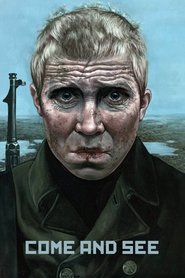
Come and See (1985)
Where Malle works in restraint, Klimov works in total immersion — and the instrument is the camera's proximity to a single face. Aleksei Kravchenko, the teenage actor playing Florya, was reportedly subjected to months of psychological stress during the shoot, and you can see it lodged in his features as the film progresses. Watch his face at the beginning, then watch it near the end: no years pass in the story, but the aging is physically real. Aleksandr Rodionov's camera presses close, using wide-angle lenses that distort and crowd the frame, so that the world around Florya feels both oppressively near and somehow wrong. The film is structured as a series of things witnessed — Florya sees, and sees, and sees — and the cumulative weight of that witnessing becomes the film's subject. This is not a war film about combat; it is a war film about what looking does to a person who cannot look away.
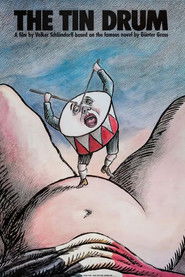
The Tin Drum (1979)
Here the witness is unreliable — perhaps insane, perhaps a calculating survivor — and Volker Schlöndorff uses that unreliability to make the whole of the Nazi era feel like a grotesque shared hallucination. Igor Luther's camera is placed at Oskar's diminutive height for much of the film, which turns ordinary adults into looming, slightly ridiculous figures and domestic interiors into theaters of appetite and self-deception. Watch how the film handles food, bodies, and objects — everything is presented with an earthy, slightly queasy physicality, as if Günter Grass's original novel is insisting that history is made of flesh and grease and longing rather than ideology and speeches. The drum itself is the key instrument to follow: notice what it does, and when Oskar deploys it, and what it costs him. The film asks whether refusing to grow up is an act of resistance or an act of cowardice — and it is careful never to settle the question.

Life Is Beautiful (1997)
This is the most contested film in the group — critics have argued fiercely about whether its central conceit is a humane act of imagination or an evasion of historical reality — and watching it with that argument in mind sharpens everything. Tonino Delli Colli, one of the great Italian cinematographers, divides the film in two registers: the warm, golden, Fellini-esque light of the pre-war sequences, and the colder, harder palette of the camp. Watch how Benigni performs the act of translation — the moment when one spoken language is made to carry a completely different meaning — and notice what the film requires you, the viewer, to hold simultaneously. You are in the position of the prisoners who understand both versions. The film is not asking whether Guido's story is true. It is asking what it means to choose a story, and what a story costs the person who tells it.
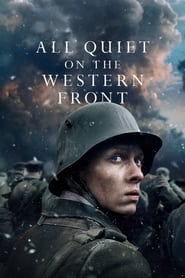
All Quiet on the Western Front (2022)
Edward Berger begins with an act of attention that almost no war film bothers with: he follows a dead soldier's uniform through laundering, mending, and reissue. No music, no drama — just the rhythm of industrial process. This is what to watch for throughout: James Friend's cinematography treats the Western Front as a system, cold and efficient, and Paul Bäumer as a component moving through it. The film is structured around the gap between what the high command experiences and what the men in the trenches experience, and Berger cuts between those two worlds with a precision that starts to feel surgical. Notice the armistice sequence particularly — the film knows you know the date, and it uses that knowledge against you. The desaturated palette, all steel and mud and ash, is not simply a stylistic choice; it is an argument about what this war looked like from inside it.

Son of Saul (2015)
László Nemes makes a formal decision so radical it takes a few minutes to accept: the camera will stay close to the back of Saul's head, on a shallow focus that keeps the surrounding horror blurred and peripheral, for almost the entire film. This is a film theory argument disguised as a cinematographic choice. Nemes is refusing to give you the image of mass murder — not out of squeamishness, but out of a kind of ethical precision: to show it clearly would be to make it comprehensible, and he does not believe it should be comprehensible. You will hear nearly everything. Watch how your eye compensates, straining toward the blurred edges of the frame, trying to resolve what the film will not resolve for you. The sound design — dense, layered, never cushioned by music — is doing the work that the image refuses. Pay attention to Géza Röhrig's face in the rare moments when the camera comes around to find it.
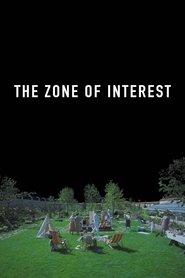
The Zone of Interest (2023)
Where Son of Saul keeps the camera close and withholds the wide view, Glazer does the opposite: Łukasz Żal's camera holds back at a cool documentary distance, symmetrical and flat, watching a family go about their days in a beautiful garden. The film has a wall, and the wall is everything. On the near side: flowers, children, a swimming pool, domestic comfort. On the far side, just visible at the top of the frame, a guard tower; on the soundtrack, continuous and low, something the image never shows. Watch what Glazer does with sound and picture as separate channels — they are almost never telling the same story. The image says ordinary life; the sound says something else entirely. Notice also how the film handles the act of not-looking: the characters have perfected it, and the camera, with its clean wide frames and even light, does not judge them. It simply keeps watching, and lets you feel the cost of the garden's beauty.
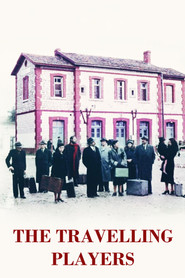
The Travelling Players (1975)
Theo Angelopoulos works at the opposite extreme of scale — four hours, roughly eighty shots, a camera that moves slowly and thinks in minutes rather than seconds. The foundational thing to notice is what happens inside a single unbroken take: the camera drifts down a street, and when the people it has been following return to frame, they are carrying different banners, wearing different clothes, existing in a different year. Angelopoulos does not cut between periods of Greek history; he dissolves them into each other inside the same continuous space. Giorgos Arvanitis's grey, rain-soaked provincial vistas — railway platforms, empty squares, a grey sea — become a kind of palimpsest, history layered on top of itself without the courtesy of a transition. Give yourself time to adjust to the tempo. The long takes are not slow for slowness's sake; they are insisting that duration — actual, experienced time — is the only honest measure of what these people endured.
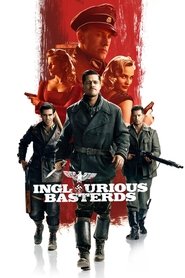
Inglourious Basterds (2009)
Tarantino is the only filmmaker here who makes his love of cinema the explicit subject of his film, and noticing that changes everything. Watch what he does in the long dialogue scenes — particularly the opening dairy farm sequence and the tavern scene in Chapter Four — where Robert Richardson's camera holds wide and patient, allowing actors to occupy space over sustained stretches of time without being rescued by a cut. The film is built on performance within performance: almost every scene involves someone playing a role in front of someone who is trying to read whether the performance is real. Pay attention to micro-behaviors — the way a character holds a glass, what language they choose when startled, the pause before answering a simple question. Tarantino is interested in cinema as a weapon, literally and structurally: in what a darkened room full of people watching images can be made to do. That idea, which sounds like a provocation, turns out to be one of the film's most serious arguments.
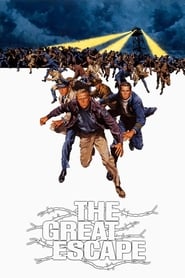
The Great Escape (1963)
The tonal relief in this company is intentional — The Great Escape is a film that believes, genuinely and without irony, that ingenuity is its own reward and that men organized around a collective purpose are capable of extraordinary things. But notice what Sturges and cinematographer Daniel Fapp do with confinement: the geometry of the camp — the warning wire, the watchtowers, the huts elevated to prevent tunneling — is established with almost architectural care before anyone lifts a shovel, so that every subsequent act of digging feels like an argument with the space itself. The film is a masterclass in ensemble storytelling, parceling out specialist competencies across a large cast and trusting the audience to track multiple simultaneous threads. Watch how the procedural elements — the forgery, the tailoring, the tunnel engineering — are given the same weight and screen time as the emotional beats. The escape is shown to be hard, specific work, and the film respects it.
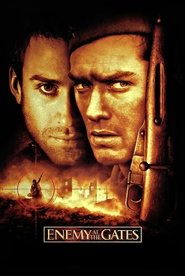
Enemy at the Gates (2001)
The film is most useful to this group as a demonstration of what happens when the visual language of immersive, witness-based war cinema is applied to a story that is also, somewhat uneasily, a conventional romantic thriller. Watch the sniper sequences with particular attention to how they are photographed: Robert Fraisse's camera holds on a man whose entire existence has narrowed to a single eye at a lens, waiting without motion for an interval that the film allows to stretch. In these moments Enemy at the Gates is doing something genuinely interesting — suspense built not from movement but from its complete absence, the dread of stillness. Notice the contrast between those sequences and the scenes involving Danilov and the propaganda apparatus, which are shot in a more conventional, kinetic register. The film knows, at its best, that the sniper is a figure of pure watching, and it finds a visual language for that.
Watching these films together, you start to see a pattern that none of them individually makes explicit. The great war films keep returning to a specific figure: the person who sees clearly, who understands what is happening, and who cannot act adequately on that understanding. The boy whose eyes move without permission. The teenager whose face is destroyed by what he watches. The man lying motionless, eye to a scope. The family that has learned not to look over the wall. These are not passive characters — they are intensely, agonizingly present — but they are trapped in a gap between perception and action that the films refuse to close with false resolution. That refusal is what makes them honest, and what makes them, watched in sequence, feel less like individual films than like a single extended argument about what cinema owes to history, and what history costs the people inside it.