Sightlines · a mini film course
The Camera That Watches: Twelve Films About War as Something Seen
The war movie has a classic engine: a soldier sees a problem, acts, and the world changes. Every film in this set tampers with that engine — slows it, jams it, or removes it entirely. Again and again you'll meet people who can only look: children at the edges of catastrophe, prisoners at windows, men caught inside systems too large to fight. And when acting fails, something else takes over — watching, enduring, inventing, pretending. Made across six decades and half a dozen national cinemas, these films together ask the same question: when you can't change what's happening, what does it mean to witness it?
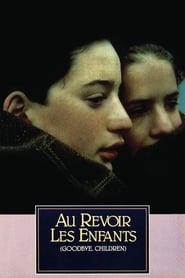
Au Revoir les Enfants (1987)
Malle builds his boarding-school winter out of cold grays and browns and bluish window light — Renato Berta's photography feels unheated, like the rooms themselves. Watch how the young lead is directed: almost entirely through watchfulness, rarely through deed. This is a film about a boy slowly discovering that history is real, and the camera holds at a careful, observing distance — inherited from the great French films of childhood — rather than pushing for drama.
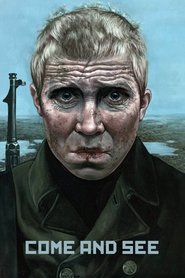
Come and See (1985)
Klimov shoots the war almost entirely through one boy's face: wide-angle lenses pressed within centimeters, so that atrocity often reaches you through his reactions before you see the thing itself. Watch what happens to that face across the film — the change is real, shot into the actor's body over months of grueling production. Where the classic Soviet war film redeemed suffering with meaning, this one keeps the catastrophe and removes the consolation. A boy who set out to act becomes someone who can only see.
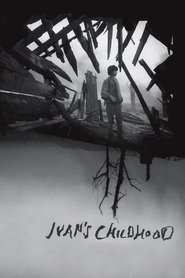
Ivan's Childhood (1962)
Tarkovsky welds two films together with the hardest cuts he can make: the boy's waking war — night missions, river crossings, deep-focus blacks — and his sunlit dreams of birches, water, and his mother. No dissolves, no consoling music at the seam. The dreams explain nothing about the plot; that's the point. Watch how the film lets time stretch inside them, and how brutal the return to the war feels each time.
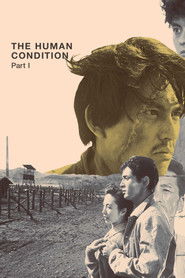
The Human Condition I: No Greater Love (1959)
Watch the widescreen frame do the arguing. Miyajima's compositions turn the Manchurian labor camp into grids of confinement — fence lines, watchtowers, rows of workers — and place one conscientious man inside them, often dwarfed by a horizon too wide for any single person to fill. Kobayashi's question is whether decency can survive inside a coercive system, and he stages it spatially: the image keeps showing you how small one man's good intentions look against the machinery around him.
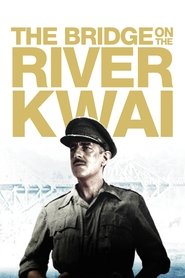
The Bridge on the River Kwai (1957)
On the surface, the cleanest engine in cinema: a situation, a clash of wills, a decisive plan. Watch how Lean lets the machine run perfectly — the geometric formations, the whistled march, the jungle pressing in on all that imposed order — while quietly filling it with doubt. Hildyard's Oscar-winning photography makes even the widescreen jungle feel like enclosure. The real drama is how professional pride and institutional loyalty can slide, invisibly, into moral catastrophe.
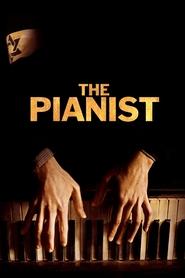
The Pianist (2002)
Start with the windows. Again and again the protagonist is at one — pressed back into the dark of a room, looking down at a street he cannot enter. Polanski, who had made great films about minds besieged inside apartments, transposes that architecture of confinement onto the literal act of hiding. Edelman's cool, desaturated images refuse both nostalgia and melodrama; survival here is presented without heroism, as luck and endurance, and the film feels time itself passing.
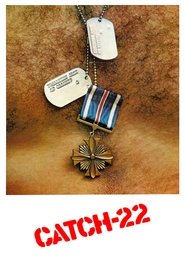
Catch-22 (1970)
The signature image is the long-held wide shot: a dawn airfield, engines droning, men tiny inside the frame, and nothing you could call an event. Nichols films Heller's famous paradox — you can be grounded for insanity, but asking proves you're sane — as a world with no exit, a system that answers every move in advance. Watch the deadpan: apocalyptic absurdity played as straight procedure, in the lineage of Dr. Strangelove.
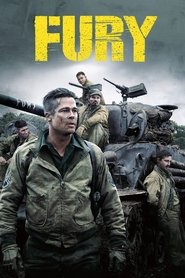
Fury (2014)
One production fact tells you everything: the tracer rounds in the night battle are real, live fire photographed in real dark — the light that kills is the only light to see by. Vasyanov's camera shares the tank crew's confinement, pressed into corners, shooting around bodies. Watch how the film's action-movie engine — see threat, traverse turret, fire — runs at full power outside the tank, while inside, the real subject is what surviving does to a person.

Life Is Beautiful (1997)
Benigni attempts something almost nobody had dared: he makes fabrication an act of love. Watch the film's split personality — Delli Colli's warm, fable-bright photography holding steady as the story darkens — and watch how a father's improvised storytelling lays a second, invented world over the real one, two incompatible accounts running across the same frame. The lineage is Chaplin: the clown's body and voice deployed against terror.
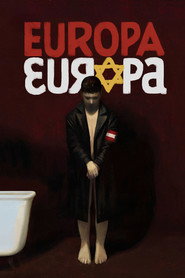
Europa Europa (1990)
Holland's subject is identity as performance: a Jewish teenager who survives by serially becoming other people, each self real enough to keep him alive and false enough to destroy him if seen through. Watch how Petrycki's grounded, documentary-textured images anchor a story of wild improbability — cold Eastern light, institutional surfaces — and how the film dares irony and even comedy where solemnity is the rule. The body, the film keeps insisting, is the one thing no costume covers.
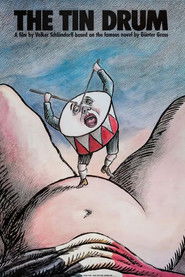
The Tin Drum (1979)
Watch the camera height. Luther shoots much of the film from a child's eye-line, turning adults into looming, faintly monstrous figures and family life into a theater of grown-up folly. Oskar's refusal to grow up is Schlöndorff's diagnosis of a whole society that chose destructive infantilism over adult responsibility. Notice how appetite runs through everything — eating, coupling, grasping — the raw drives seething just under the lace curtains of respectability.

Salò, or the 120 Days of Sodom (1976)
Approach with care: this is the most demanding film here, and its severity is deliberate. Delli Colli lights the villa cool and even, like an official document — measured, undramatic framings that hold power and its victims in the same composed image. Pasolini's argument is that fascism is appetite given furniture and good manners: a polished, rational surface over pure consuming drive. Watch how much of the horror is staged as watching — distance, connoisseurship, arrangement.
Seen together, these films teach each other. Kwai's perfect machine makes Catch-22's jammed one funnier and more frightening; Ivan's dreams deepen Come and See's waking nightmare; the loving forgery of Life Is Beautiful and the survival-forgeries of Europa Europa answer each other across the decade; the child's-eye camera of The Tin Drum prepares you for the watchful boy of Au Revoir les Enfants; the windows of The Pianist and the frames-within-frames of Salò pose the hardest question of all — what the act of looking is worth, and what it costs. Watch for the moments when a character stops doing and simply sees. That's where each of these films does its real thinking, and where, if you're paying attention, it will do its thinking in you.