Sightlines · a mini film course
When Looking Becomes the Story: Twelve French Films Where the Camera Watches
There's an old rule that carries most movies: a character sees a problem, then does something about it. The chase, the rescue, the scheme that pays off. The films on this list — mostly French, mostly circling the New Wave, spanning from 1958 to 2012 — are what happens when that rule quietly stops working. Their protagonists are watchers, hesitators, men in traps, women whose faces the camera studies like paintings. Their plots hand out perfectly good crime stories, love stories, heist stories — and then let the characters drift, talk, dance, and observe instead. What replaces the engine of action is something rarer: the pleasure and ache of pure attention. Time is allowed to stretch. Space becomes a trap or a stage. Faces become events. Watching these films means learning to notice how they look, not just what they show.
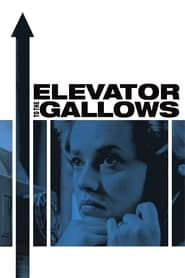
Elevator to the Gallows (1958) — dir. Louis Malle
Start here, at the hinge. Malle's debut begins as a perfect crime machine — a murder planned like a military operation, shot with clinical efficiency — and then a stopped elevator turns the doer into a man who can only wait. Watch the two visual registers cinematographer Henri Decaë builds: hard-shadowed, tight interiors for the confined spaces, and something looser and nocturnal outside, where the night dismantles a careful man's plans. Notice how every modern convenience — the car, the elevator, the camera — turns on its user.
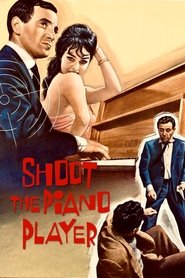
Shoot the Piano Player (1960) — dir. François Truffaut
Truffaut takes a hard-boiled American crime novel and keeps every piece of the gangster scaffolding while unplugging its motor: the plot keeps handing Charlie reasons to act, and he keeps not acting. Watch how Coutard frames Aznavour — in corners, doorways, behind the bar as though behind a screen — and how Aznavour plays him with almost nothing: a dip of the head, a beat of hesitation. Watch too how the film refuses to stay one thing, snapping between violence and tenderness within a single scene. Passivity, here, is the tragedy.
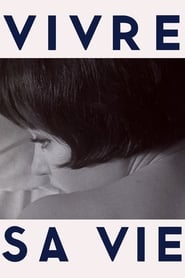
Vivre Sa Vie (1962) — dir. Jean-Luc Godard
The opening conversation is shot from behind the speakers' heads — a film about a woman's face that begins by withholding it. That rationing is the whole design: notice when Godard finally grants you Karina's face in close-up, and how nothing "happens" in those moments except feeling itself. The touchstone is the scene where Nana weeps in a cinema at Dreyer's Passion of Joan of Arc, her face cut against Falconetti's across thirty years of film history. The feeling is the event.
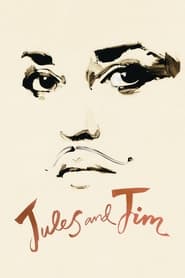
Jules and Jim (1962) — dir. François Truffaut
The most famous image is a face that stops: Catherine caught mid-laugh, held in a freeze frame while Delerue's music swells — not at an ending, but in the middle of happiness, for no reason except love. Watch how the film keeps returning to stillness inside motion: before the two friends ever meet Catherine, they make a pilgrimage to a photograph of a stone statue whose smile haunts them. Coutard's photography here is warmer and more controlled than his work with Godard — river light, period softness, beauty that makes transient happiness ache more.

Band of Outsiders (1964) — dir. Jean-Luc Godard
Three would-be criminals are handed a perfect heist setup — house, aunt, rumored cash — and spend the film doing everything else: an English class, a sprint through the Louvre, a dance in a café. Watch the Madison sequence closely: Godard cuts the world's sound, not the music, and drops his own voice in to tell you what each dancer is thinking. Notice too how Coutard shoots Paris deliberately plain — fluorescent cafés, wet suburban streets — so the gap between the kids' movie-fed dreams and their actual surroundings becomes the film's real subject.
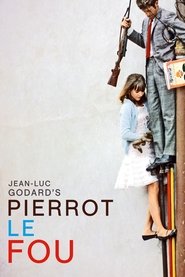
Pierrot le Fou (1965) — dir. Jean-Luc Godard
The first true image of Ferdinand: a man in a bathtub reading art history aloud to a daughter who isn't listening — someone who'd rather narrate life than live it. The film pairs him with Marianne, who is all instinct and act, and refuses to say which mode is right. Watch the color: saturated reds and blues that carry emotion rather than describe space (a trick learned from Nicholas Ray's Johnny Guitar), and a camera that drifts across faces mid-sentence, then locks off into static shots held long enough to feel like paintings being consulted.

Masculin Féminin (1966) — dir. Jean-Luc Godard
Built around interviews — literally: Godard borrows the on-camera sociological questionnaire from documentary filmmakers like Jean Rouch, and lets his fiction absorb it. Watch the long handheld café takes where the camera holds a face longer than politeness allows while a question goes unanswered; watch how violence erupts at the edges of the frame and nobody reacts. Léaud, once the New Wave's running, scheming boy, is here mostly a recorder — earnest, stalled, taking notes on a generation caught between "Marx and Coca-Cola."
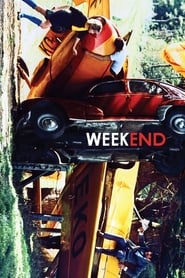
Weekend (1967) — dir. Jean-Luc Godard
Home of one of the most famous shots in cinema: a sideways tracking shot that glides for seven or eight minutes along a country traffic jam — stalled cars, picnickers, a sailboat, a zoo cage, wreckage — all filmed with the same even, indifferent glide, scored by car horns. Nobody's honking changes anything, and that's the point. Watch how a perfectly classical crime plot (drive to the country, collect an inheritance) is set up and then openly discarded, as the film mutates through road movie, black comedy, political essay, and something close to horror.
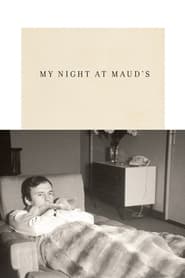
My Night at Maud's (1969) — dir. Éric Rohmer
Proof that a film can be built almost entirely from conversation and lose nothing. A man makes a private vow — silently, in church, to a woman he's never spoken to — and the whole film unfolds under its weight, mostly across one long snowbound night in an apartment. Watch Almendros's soft-gray photography and the patient framing that makes Maud's white bed the room's quiet center of gravity. The suspense here is entirely moral and intellectual: what a person says versus what they do, chance versus providence, and whether principle can shade into vanity.
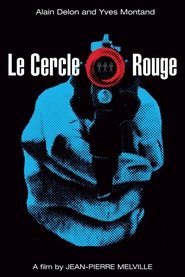
Le Cercle Rouge (1970) — dir. Jean-Pierre Melville
The anti–New Wave answer from the same tradition: classical compositions, no subjective camera tricks, shots held long past where anyone else would cut. Watch the opening movements — a man leaves prison and finds the plot has already moved before he has, staged with near-balletic economy, no dialogue, everything legible from spatial arrangement alone. Then the centerpiece: a heist of roughly twenty-five minutes with no dialogue and no score, only creaking metal and controlled breathing, extending the silent-robbery tradition of Rififi. Melville watches craft, ritual, and fate with documentary patience.
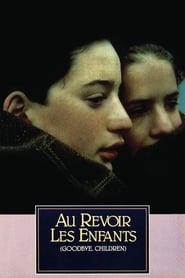
Au Revoir les Enfants (1987) — dir. Louis Malle
Malle returns, thirty years later, to film a memory from his own boyhood in an Occupation-era boarding school. Renato Berta's photography is disciplined naturalism — grays, browns, the bluish white of winter light, the literal chill of unheated rooms. Watch how young Gabriel Manesse plays Julien almost entirely through watchfulness rather than deed: the film's whole architecture is built to deliver a single glance, and to make sure a child's look can do nothing against the machinery of history. It belongs to the great lineage of war seen through children's eyes — Forbidden Games, The 400 Blows — catastrophe registered in dormitory rhythms and small rituals rather than combat.
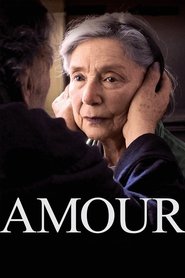
Amour (2012) — dir. Michael Haneke
The endpoint and the summation. Early on, at a piano recital, Haneke points the camera at the audience instead of the stage, and makes you hunt for Georges and Anne in the crowd — assigning you the only job the film offers: to watch. Khondji's camera is overwhelmingly static, at a respectful middle distance, and the cutting is slow enough that you wait inside rooms in something close to real time — a meal prepared, a body lifted. The lineage is Tokyo Story and Umberto D.: aging and love rendered as a patient inventory of small gestures, without euphemism and without uplift.
Watched together, these films teach you a different way of sitting in front of a screen. You'll start to feel the moment in each one where the plot machinery goes quiet and something else takes over — a held face, a stretched silence, a room observed past the point of comfort. You'll notice how the same cinematographers (Coutard, Decaë) and the same gestures (the long take, the withheld cut, the camera that watches rather than chases) pass between directors like a shared vocabulary. And you'll find the through-line runs from a stopped elevator in 1958 to a Paris apartment in 2012: cinema discovering, over and over, that attention itself — patient, helpless, loving attention — can be the most dramatic thing on screen.