Sightlines · a mini film course
Big Sky, Small Figures: The Frontier Film Learns to Watch
Every film in this set descends, one way or another, from the Western — even the ones set in Boston diners, Danish soundstages, or the Five Points of old New York. And every one of them is fascinated by the same tension: the gap between seeing and doing. The classical frontier story runs like an engine — a person sees trouble, acts, and the world changes. These twelve films either run that engine at full, beautiful power, or slow it down, or quietly take it apart to show you what's inside. Watch them together and you'll start noticing how much of cinema lives in a body's posture, in a landscape that doesn't care, in the long pause before anyone reaches for anything. The suggested order below moves from the engine purring to the engine held up to the light.
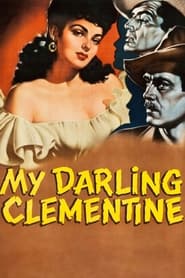
My Darling Clementine (1946)
Start here, with the form at its cleanest. Watch Henry Fonda tilt a barber's chair back on two legs and prop his boots on a porch post: Ford gives you the whole man — idle, watchful, quietly in command — before a word is spoken. Notice how the film thinks in postures and in the Monument Valley landscape behind them, and how a town's disorder seems to summon action out of a man rather than the reverse. This is the grammar everything else in this course will bend.
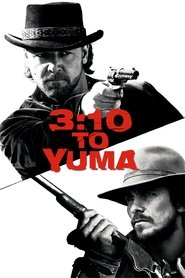
3:10 to Yuma (2007)
Mangold runs the classical machine at full power but makes you feel it working. Phedon Papamichael's widescreen frames use their width for geometry, not spectacle — a tiny rider under an enormous, indifferent sky, the moral stakes established before anyone speaks. Watch how the film inherits the pressure-cooker staging of the 1957 original and the countdown structure of High Noon: a charismatic prisoner, a struggling rancher, and a train that will not wait.
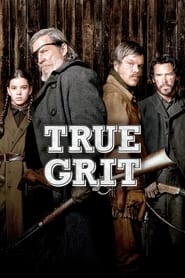
True Grit (2010)
A revenge errand told as memory: notice that the whole story arrives through the voice of a woman recalling the year she was fourteen, which colors every frame with the sense that this is already the past. Roger Deakins strips away the golden-hour sentimentality the genre usually leans on — dusty ochres, grey winter light, a West before its myth was polished. Listen, too, to the formal, archaic dialogue rhythms lifted straight from the novel: the film's music is in its speech.
Pat Garrett & Billy the Kid (1973)
Here the manhunt engine is deliberately allowed to idle. Peckinpah gives you a lawman who understands everything about his situation and lets you watch that knowledge refuse to become simple action; the film moves like a slow, mournful procession, nearly always at dusk. Notice how Bob Dylan's sparse acoustic score works as an instrument of grief rather than excitement — a choice The Proposition would borrow directly thirty years later.
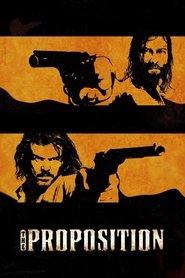
The Proposition (2005)
Delhomme's camera refuses to prettify the Australian outback — watch for the insects, the sweat, the crusted skin, the small busy life the land runs on. The land has already won; the humans are settling scores inside it. Notice the contrast between that furnace outside and the whitewashed homestead with its lace curtains and planted flowers: civility photographed with a doomed prettiness, a thin skin stretched over something savage.
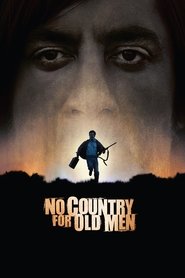
No Country for Old Men (2007)
A thriller built on strategic restraint. Deakins uses long lenses to press figures flat against featureless desert — distance and exposure as constant conditions — and the Coens all but abandon score, letting rustle, drone, and room tone do the work of an orchestra. Watch the celebrated gas-station scene: nothing moves but talk and fluorescent light, and you experience the tension exactly as the man behind the counter does — watching, unable to act.
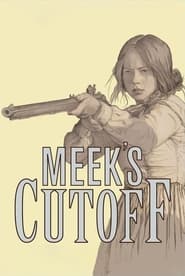
Meek's Cutoff (2011)
Reichardt shoots a wagon-train Western in a boxy, almost square frame — no sweeping panoramas, no mastery of the terrain, only partial views. Notice the brilliant use of the women's bonnets: period-true objects that also draw the exact border of what a person is permitted to see and hear, and the camera stands where the women stand. Every ingredient of the classical Western is present; watch what happens when nobody can trust what they know.
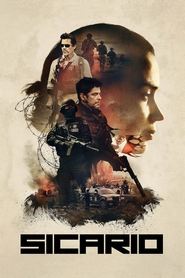
Sicario (2015)
Watch where Villeneuve keeps placing Emily Blunt: in doorways, in back seats, at the edge of briefings where the real decisions happen elsewhere. Her position in the frame is the film's argument — a competent professional held at the threshold of her own story. Deakins photographs the borderland as geology rather than scenery, and Jóhannsson's score turns dread into something you feel in your chest before anything visibly goes wrong.
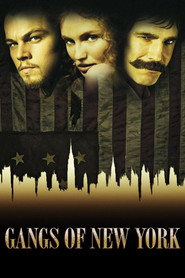
Gangs of New York (2002)
Now the course turns from watching to performing. Study Daniel Day-Lewis's body: the cleavers laid out like an argument, the flag worn as theater, every gesture done for an audience that isn't there — a whole social order made visible in one man's posture. Ballhaus lights the Five Points in soot, candlelight, and saturated reds, an infernal painted world built (fittingly) on Italian soundstages in the lineage of the great historical spectacles.
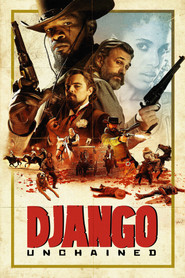
Django Unchained (2012)
Keep your eye on the costumes. From the moment Django chooses his own clothes — that absurd, magnificent powder-blue suit, the first decision that is entirely his — the film becomes a story about a man dressing himself into a self that history refused to permit. Tarantino rations tension the Leone way: long faces, long talk, then eruption; and the whole picture wears the borrowed finery of the Italian Western while smuggling in something new — a "Southern."
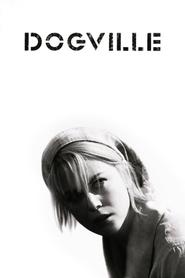
Dogville (2003)
Von Trier removes the visible world: a town rendered as chalk lines on a black floor, doors that exist only as sound, a dog that is just the word "dog." Watch how this bareness intensifies rather than starves the film — with nothing to hide behind, every gesture must be read, and you become the reader. Notice too the friction between the geometric stillness of the set and Anthony Dod Mantle's restless handheld camera, hunting among the actors.
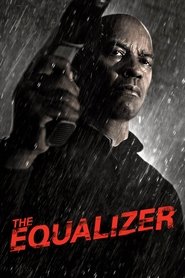
The Equalizer (2014)
Finish with the quietest film here, and the one that most rewards what the previous eleven have taught you. For nearly an hour Fuqua simply watches Denzel Washington's nightly ritual — the folded napkin, the squared book, the timed tea — a man who has subtracted himself from the world and arranged the remainder down to the teaspoon. Notice how often the camera finds him behind glass, framed in windows, studying a street he won't step into: an action film that begins by refusing action, letting stillness carry all the meaning.
Watched together, these films teach each other. Clementine shows you the posture; Gangs and Django show you posture as performance. Yuma shows you the engine; Pat Garrett, Meek's Cutoff, and Sicario show you what it feels like when the engine seizes. Deakins's desert connects three of them; Dylan's guitar echoes into the Australian outback; a ritual cup of tea in Boston rhymes with a tilted barber's chair in Tombstone. The reward isn't spotting references — it's a retrained eye. By the end you'll notice how much a frame can say before anyone acts: how a bonnet, a doorway, or an empty sky can hold the whole story in suspension, and how the best genre filmmakers know exactly when to let time stretch.