Sightlines · a mini film course
The Western at the Crossroads: When Doing Meets Waiting
Every Western begins with the same promise: a person sees trouble and rides out to fix it. The land is vast, the stakes are simple, the gun settles the argument. But the eleven films on your list — spanning sixty-five years, three continents, and one chalk-outlined stage — form a remarkable conversation about what happens to that promise under pressure. Some of these films run the old engine at full power and let you feel its beauty. Some slow it down until the moment before the deed becomes almost unbearable. Some jam it entirely: the hero sees everything and can do nothing, the posse never gets closer, the shortcut leads nowhere. Watched together, they trace how a genre built on action became, film by film, a meditation on hesitation, endurance, obsolescence, and time itself. Watch for the gap between seeing and doing. That gap is where all these films live.
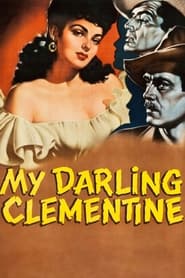
My Darling Clementine (1946)
Start here, with the machine running clean. Watch Henry Fonda tilt a barber's chair back on two legs and prop his boots on a porch post — Ford gives you the whole man in a posture before he speaks a word. Joseph MacDonald's high-contrast black-and-white sets tiny human figures against the buttes of Monument Valley, and the film thinks in exactly those terms: the land presses, the man answers, the town learns to breathe. Notice how much authority Ford builds out of stillness and attitude rather than gunplay. Every film that follows on this list is arguing with this one.
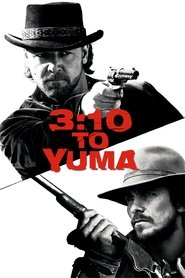
3:10 to Yuma (1957)
A Western that spends its second half in a hotel room — and the room is the point. Charles Lawton Jr.'s photography moves from sun-flattened open country into boxed, shadow-cut interiors, and Daves builds suspense not from gunfights but from a man gripping a shotgun too hard while nothing happens. Watch how the film redefines courage as endurance: holding still, waiting for a train, refusing to abandon a commitment even a foolish one. The villain lounges on the bed like a man on holiday; his ease is more menacing than any draw.
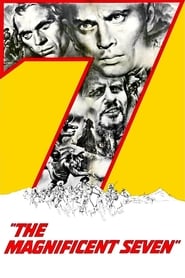
The Magnificent Seven (1960)
The classical form as a teaching model, and gloriously so. Watch James Coburn's introduction — a wordless man baited into a contest, settled in a single decisive gesture — and you've seen the film's whole philosophy in miniature. Charles Lang keeps the widescreen village legible at all times: entrances, rooftops, the square, the hills. This is also a fascinating case of ideas circling the globe — Ford influenced Kurosawa, Kurosawa made Seven Samurai, Hollywood brought it home. Notice how each gunman gets his own distinct "audition" beat, and how the film never lets you forget these superb professionals belong nowhere.
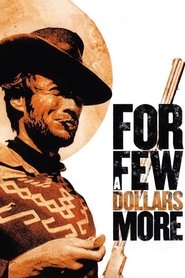
For a Few Dollars More (1965)
Leone finds the place where the Western hesitates — the hand hovering above the holster — and builds a cathedral on it. Watch the oscillation Massimo Dallamano's camera performs: tiny figures dwarfed by desert immensity, then an eye filling the entire screen. Watch, too, what a pocket watch does to a standoff — a musical chime turned into a ticking clock, stretching the second before violence until you feel it as pressure in your chest. This is masculinity as ritual performance, and Leone knows exactly how theatrical the ritual is.
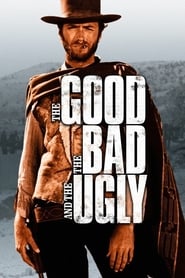
The Good, the Bad and the Ugly (1966)
The famous three-way standoff in the cemetery runs close to five minutes in which nobody moves — and it may be the most violent passage in the film. Leone had Morricone compose the music before shooting, played it on set, and cut the images to the score rather than the other way around. Watch what that reversal does: the editing accelerates and slows like an aria, and the gunfight becomes opera. Notice also how the Civil War rolls through the frame, enormous and indifferent, dwarfing the three schemers and their gold.
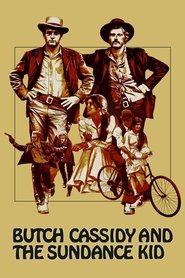
Butch Cassidy and the Sundance Kid (1969)
"Who are those guys?" Butch keeps asking, squinting at a dust cloud that never gets closer and never falls behind — and that question, funny at first, curdles into the whole film. Conrad Hall trades the genre's stark grandeur for amber, ochre, golden-hour warmth: nostalgia photographed as light. Watch how the film borrows from the French New Wave — comedy and violence sharing a breath, a bicycle interlude scored to pop music — to make an elegy for men whose skills the modern world has organized itself to eliminate. You can't have a gunfight with modernity.
Pat Garrett & Billy the Kid (1973)
Almost always shot at dusk — figures becoming silhouettes against a fading sky — and that perpetual sundown is the film's whole argument. Watch the riverbank scene with Slim Pickens and Katy Jurado: two actors doing almost nothing while Bob Dylan's song finishes the scene for them. Peckinpah takes the most reliable engine the movies own, the manhunt, and refuses to run it as suspense; the pursuit becomes a slow, fatalistic procession. This is also New Hollywood in a nutshell — an auteur's mournful vision fighting the studio that financed it.
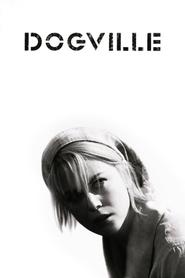
Dogville (2003)
The outlier that illuminates everything else. Von Trier strips away the visible world — no buildings, just chalk lines on a black floor, a sign reading "Elm St.," the word "dog" written where a dog should be — and Anthony Dod Mantle's handheld camera hunts restlessly among the actors on this bare stage. Watch what the subtraction does: with no scenery to hide behind, every gesture must be read, and you become complicit in the reading. Borrowed from Thornton Wilder's bare stage and Brecht's theater, it's a frontier-town parable about charity, dependence, and how a community rationalizes cruelty person by person.
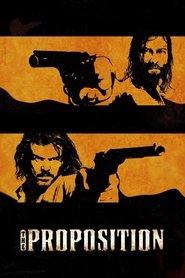
The Proposition (2005)
Benoît Delhomme photographs the Australian outback without mercy or amelioration: insects on sweat, heat you can nearly smell, and — in stunning contrast — a homestead of whitewash, lace curtains, and a Christmas dinner laid out as if the door didn't open onto a furnace. Watch that collision between performed Englishness and the land that surrounds it; the "civilizing" project is lit with a doomed prettiness. The film inherits Leone's grammar of vast landscapes against weathered faces, and its sparse score (by Nick Cave and Warren Ellis) works as lament, the way Dylan's did for Peckinpah.
3:10 to Yuma (2007)
Watch this soon after the 1957 original — the double feature is a gift. Mangold inherits the hotel-room pressure chamber where a criminal's charismatic certainty erodes a lawman's resolve, but Phedon Papamichael's anamorphic frame adds a new register: a small figure under an enormous, indifferent sky, the verdict delivered before anyone speaks. Notice that the hero's central problem isn't moral but financial — he can't afford to be honorable — and the film never pretends virtue is costless.
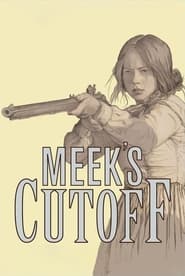
Meek's Cutoff (2011)
Reichardt shrinks the frame to a near-square box — no sweeping panoramas, no mastery of the terrain — and shoots by natural light, so the desert stays partial, frontal, unreadable. Watch the scene where the women stand apart on a slope, bonnets blinkering their view, while the men decide the party's fate below: the camera stands exactly where the women stand, and you hear only what the wind carries. This is a wagon-train Western in which no one can act adequately on what they know, the guide's bluster is the sound of confidence with nothing behind it, and a captured man's untranslated speech becomes a screen for every hope and fear the settlers project.
Why Watch These Together
Run in rough chronological order, these films become a single long argument. Ford shows you the engine gleaming; Daves and Sturges test it in a locked room and a besieged village; Leone slows it down until the pause becomes the spectacle; Hill and Peckinpah mourn it; Hillcoat, Mangold, and the Coens rebuild it with full knowledge of the cost; Reichardt and von Trier strip it for parts and show you what's underneath. The pleasures compound: you'll hear Morricone's score-first method echo in Cave and Ellis's laments, see the same tiny-figure-against-vast-land composition recur from Monument Valley to Queensland to the Oregon desert, and watch the ticking clock migrate from a town square to a hotel room to a pocket watch. Most of all, you'll start noticing the most eloquent thing a Western can photograph: not the draw, but the moment before it — the hand hovering, the man waiting, the dust cloud on the ridge that never gets closer.