Sightlines · a mini film course
The Long Look: Love That Waits, Watches, and Refuses to Resolve
Every film in this set is about desire — but none of them treats desire as a problem to be solved. These are films where love arrives too early or too late, where the beloved keeps slipping just out of frame, and where the filmmakers respond not by speeding up but by slowing down. Across sixty years and six countries, these directors share a conviction: that the most truthful way to film longing is to let the camera watch rather than chase. Time is allowed to stretch. Rooms become traps or shrines. Faces are held on screen longer than any living face would let you look. What connects a Danish chamber drama, a Hong Kong science-fiction reverie, and a Polish romance told in eighty-eight ruthless minutes is a shared bet — that what a film refuses to show, or refuses to hurry past, can carry more grief than any plot.
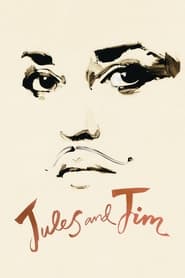
Jules and Jim (1962)
Watch for the moment the film simply stops — a face caught mid-laugh, held still while the music swells, not at an ending but in the middle of happiness, for no reason except love. Truffaut inherited Renoir's way of letting the camera drift among an ensemble without taking sides, and Coutard's photography gives the countryside a warm softness that makes fleeting joy ache more. Notice too how the film treats a photograph of a statue as a kind of prophecy: the two friends fall for an image before they ever meet the woman. The whole film is about trying to pin down something that only exists in motion.
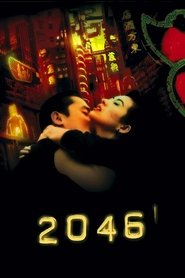
2046 (2004)
This film is built on the beat of hesitation — the pause before an answer that never quite comes. Wong stretches those pauses literally, printing individual frames two and three times so a single second of held breath swells into something you can climb inside. Watch how the amber corridors of a 1960s Hong Kong hotel and the cold blue train of a science-fiction story keep trading places until you can't tell memory from invention — they're two faces of one turning stone. Names return attached to different faces; slatted partitions catch people in reflection. The lag between feeling something and saying it is the film.
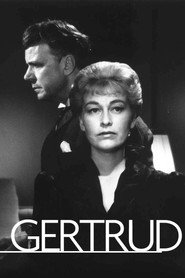
Gertrud (1964)
Dreyer's last film is made of astonishingly few shots — scenes unfold in long, unbroken takes at a deliberately funereal tempo. The thing to watch is the eyes: two people sit together, one says the word love, and neither looks at the other. Declarations are delivered to the empty air, confessions to the floor. Once you notice this, the film transforms — it becomes a portrait of where a person looks when she has stopped expecting the world to answer. Its heroine is the most clear-sighted person on screen, and precisely because what she wants cannot be secured by any act, she watches instead. So do you.
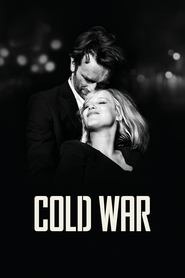
Cold War (2018)
Fifteen years, four countries, eighty-eight minutes. Pawlikowski's radical move is what he cuts: a scene ends, the screen goes black, and when the picture returns a year has passed and everything has changed — and you were never shown the change. The ruptures happen in the dark between shots. Watch also how Żal's silvery black-and-white frames push the lovers low beneath looming walls and skies, dwarfing them inside the architecture of their era, and how a single folk melody keeps returning in new costumes as it travels from field to state stage to Paris jazz club. The film's grief lives in what it refuses to film.
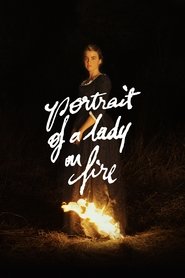
Portrait of a Lady on Fire (2019)
Here, looking is not the prelude to the drama — it is the drama. Mathon's camera constantly frames people in the act of watching each other: a painter studying her subject on a cliff walk, the subject studying her right back. Watch for the moment the gaze becomes a two-way circuit, when the one being looked at turns her eyes directly into the lens and the theft of glances is over. The film descends from Akerman's patient, unblinking framing of women's lives, and it holds faces long enough that stillness itself becomes eloquent.
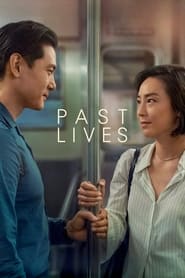
Past Lives (2023)
The opening shot hands you your job: strangers across a bar try to guess what three people are to each other, and the film lets you overhear them. Before you know a single name, you've been made the appraising third party. From there, watch how Kirchner's patient compositions treat physical distance between bodies as the true subject — who stands where, how far apart, held in doorways and thresholds. The film draws on the restraint of Brief Encounter and In the Mood for Love: bodies separated by frame edges, longing carried by negative space rather than declaration.
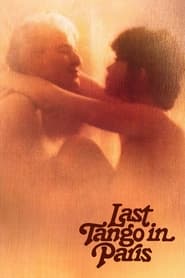
Last Tango in Paris (1972)
Start with the room: an unfurnished Paris flat the color of a bruise — amber, ochre, old varnish — a palette lifted directly from two Francis Bacon canvases that hang over the opening credits like an instruction. Two strangers agree to meet there and exchange no names, and Bertolucci strips the space of furniture, history, and biography so the relationship can exist outside society entirely. Watch how the room, warm and glowing, becomes a cell rather than a home. The genuinely unsettling thing was never the frankness — it's that the space declines to mean anything, and the people inside it can only drift.

Happy Together (1997)
A cheap table lamp with a photograph of the Iguazú Falls on its shade sits in a Buenos Aires apartment — a destination held in the hands and never reached. Doyle's camera constricts space to the point of suffocation, pressing wide-angle lenses into cramped kitchens and corridors half a world from home. Watch how the film's central figure endures rather than acts: he waits, he watches, he listens at doors. This is a Hong Kong film made entirely outside Hong Kong on the eve of the handover — the displacement is the point, and looking, in this film, is everything.
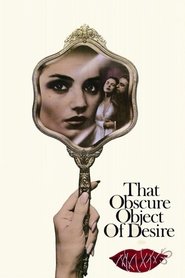
That Obscure Object of Desire (1977)
The famous gambit: two actresses share a single role, swapping sometimes mid-conversation, and Buñuel marks the change with nothing — no cut you'd notice, no dream to file it under. The editing behaves with perfect conventional politeness while quietly dissolving the very idea that a person stays one person. Watch also for the burlap sack a man carries through his own story, which no one, out of good breeding, ever asks about. The flat, even lighting mimics affluent domestic comfort precisely so the inexplicable can sit undisturbed in the middle of the drawing room.
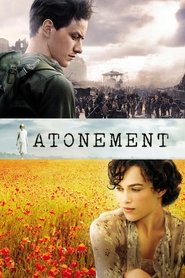
Atonement (2007)
Watch the fountain scene twice — because the film shows it to you twice. A girl at an upstairs window, too far away to hear, reads one thing; a closer retelling reads another; and crucially, the second version doesn't erase the first. Both sit on screen together, and you must hold two incompatible accounts of one minute. That doubling is the film's whole machine. McGarvey shoots the 1935 country house in a heightened, heat-soaked palette of almost hallucinatory clarity — the look of a world remembered rather than lived — which is your first clue that storytelling itself is what's on trial here.
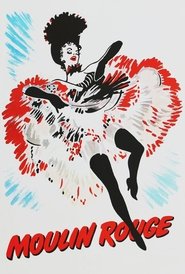
Moulin Rouge (1952)
Huston and cinematographer Oswald Morris fought Technicolor's own technicians to make the format wrong — reds dirtied to brick, ambers gone to smoke, fog filters and colored haze bleeding the candy out of the light. The result is color that stops recording how things looked and becomes the tone of a feeling: the dance hall's brassy warmth is the gaiety, the drab cool of the painter's rooms is the loneliness. Watch the low, sidelong vantage — down at the edge of the frame, beneath the churning petticoats, a small man sits sketching. He belongs to the spectacle precisely because he can only observe it.
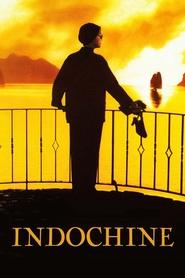
Indochine (1992)
Watch the size of things. Catonné's camera keeps pulling back until the lovers are a smudge on the water beneath the limestone towers of Ha Long Bay, until a woman is a pale point against the endless green of her plantation. Every dwarfing wide shot is an argument: behind the veranda lies the labor market, behind the love story lies the end of an empire. And notice that the whole spectacle arrives as one woman's recollection, told years later — a past already framed as past, an epic delivered as memory.
Watch these together and something happens to your own attention. You start noticing where a camera chooses to wait rather than cut, where a filmmaker buries the crucial moment in a gap between shots or holds a face three beats past comfort. These twelve films train you to read distance — between bodies in a frame, between a feeling and its expression, between an event and its retelling. None of them will hand you resolution; all of them will hand you time. And the reward of moving from Dreyer's unbroken takes to Wong's stuttering slow motion to Pawlikowski's ruthless ellipses is discovering that these are all the same gesture, made at different speeds: the refusal to look away from longing, and the refusal to pretend it ever fully arrives.