Sightlines · a mini film course
Watching Becomes the Story: Twelve Films Where the Camera Waits
There's a moment in most movies where seeing leads to doing — the hero spots the danger and runs, the lover sees an opening and speaks. The films on this list are built on what happens when that chain snaps. Their characters look, and looking is all there is: a woman gazing at something no one else can see, a man frozen between floors while his careful plans unravel, a couple watching their children's lives close politely against them. In these films, the drama doesn't come from events so much as from duration — time allowed to stretch, faces held longer than comfort permits, empty rooms and streets given the weight usually reserved for action. Watch them together and you'll start to feel a secret history of cinema: the moment filmmakers discovered that a person who can only watch and endure might be more gripping than one who acts.
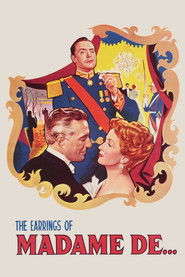
The Earrings of Madame de... (1953) — dir. Max Ophüls
The camera almost never stops moving — gliding through doorways, around corners, across ballrooms — but the movement isn't restless; it traces the shape of a world with no exits. Watch how a pair of earrings travels from hand to hand, a small object accruing enormous meaning as it circulates. And notice the mirrors: from the very first scene, we meet the heroine not as a face but as a reflection of a face, a woman appraising the surface she's been taught to be. The whole tragedy is there in that shine — where performance ends and feeling begins becomes impossible to say.
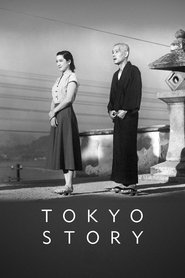
Tokyo Story (1953) — dir. Yasujirō Ozu
The camera sits about fifty centimeters off the floor — the eye-line of someone seated on a tatami mat — and it almost never moves. Between scenes, Ozu cuts to shots of chimneys, laundry, a passing train: images that do no narrative work at all, held a few seconds past any use. Let them work on you. This is a film about elderly parents visiting children too busy to receive them, and its power comes precisely from what it refuses — no confrontation, no melodrama, just people facing a situation that no action can touch, rendered with a patience that becomes devastating.
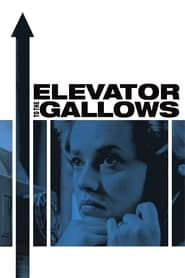
Elevator to the Gallows (1958) — dir. Louis Malle
The premise is a beautiful trap: a meticulous man commits a perfectly planned act, and then a stopped elevator seals him in a box while the night outside quietly dismantles everything he arranged. Notice the two visual registers — hard noir shadow for the confined interiors, and then something looser and more modern for the nighttime Paris streets. Every modern convenience in the film — car, elevator, camera — turns on its user. And listen: the Miles Davis-scored night wanderings are among the most haunting passages in French cinema.
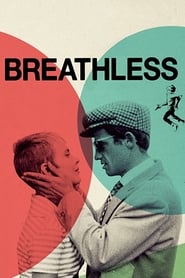
Breathless (1960) — dir. Jean-Luc Godard
Watch Belmondo run his thumb across his lip, imitating Bogart — a man testing whether a borrowed gesture can hold a life together. The film treats its crime-movie skeleton as found material: the iconography of the man on the run, with the satisfying machinery removed. What's left is wandering, talk, and the famous jump cuts — moments sliced out of the middle of shots so that time itself seems to stutter. Shot handheld on real Paris streets, treating the city as reportage, it still feels like it was made this morning.
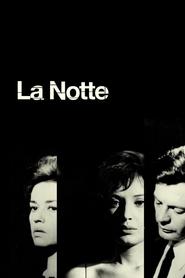
La Notte (1961) — dir. Michelangelo Antonioni
Keep your eye on the architecture. Antonioni photographs Milan's glass towers and half-finished buildings not as backdrop but as active presences — they hold the center of the widescreen frame while the human beings drift to its edges. The centerpiece is a walk: a woman leaves a party and simply moves through the city, watching, and the film grants her drifting the attention another movie would give a chase. Nothing is decided; everything is felt. This is a portrait of a marriage told almost entirely through space, silence, and where people stand in a frame.
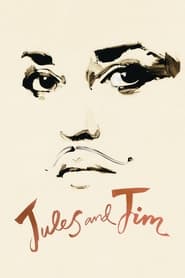
Jules and Jim (1962) — dir. François Truffaut
Truffaut inherits from Renoir a way of staging that follows several characters at once without taking sides, and the film's warmth — riverside light, country-house idylls — makes its melancholy hit harder. But the choice to watch for is the freeze frame: at one point Truffaut simply stops the film on a woman caught mid-laugh, holding her there while the music swells, far longer than any living face would allow. He stops the film not at an ending but in the middle of happiness, for no reason except love. It's one of the most quietly radical gestures in the whole New Wave.
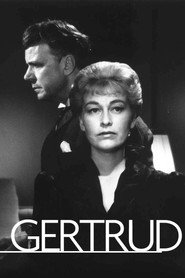
Gertrud (1964) — dir. Carl Theodor Dreyer
One of the longest average shot lengths in narrative cinema: the film is built from a small number of extended takes, so scenes unfold in something close to real time. Watch where people look. Again and again, two figures sit side by side and declare their feelings while gazing past each other — love spoken to the empty air, confessions delivered to the floor. Once you notice it, you can't stop seeing it, and the film reveals itself as a study of a woman who demands absolute love and where a person's eyes go when the world stops answering.
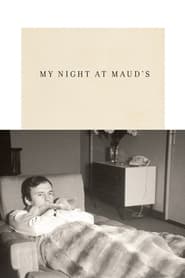
My Night at Maud's (1969) — dir. Éric Rohmer
The proof that conversation alone can carry a film — and Rohmer knew it, drawing directly on Dreyer's Gertrud for the courage of the long, static two-person scene. The centerpiece is a single snowy night in an apartment, a white bed in the middle of a gray room, and a man who has already made a private vow before he walks in. The suspense is entirely moral: will he act on what he believes, and does he even know what he believes? Notice how the soft, lived-in black-and-white photography makes talk feel as charged as any thriller.
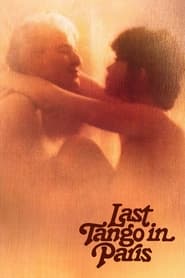
Last Tango in Paris (1972) — dir. Bernardo Bertolucci
Start with the room: an unfurnished Paris flat in bruised ambers and ochres, a palette lifted directly from two Francis Bacon paintings that hang over the opening credits like an instruction. Two strangers agree to meet there and exchange no names — and the film strips the space of furniture, history, and biography so the relationship can exist outside society entirely. Watch how a room can decline to mean anything, offering bodies with no situation around them. The scandal was never really the sex; it's the emptiness the sex tries to fill.
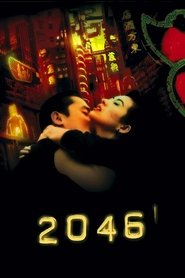
2046 (2004) — dir. Wong Kar-Wai
Wong shoots in near-darkness with telephoto lenses that flatten bodies against walls and dissolve backgrounds into molten color — and he step-prints key moments, repeating individual frames so a single second of hesitation swells into something you can almost climb inside. Watch how the film's two worlds — the amber corridors of a 1960s Hong Kong hotel and the cold blue train of a science-fiction story the hero is writing — mirror and bleed into each other, faces and names recurring across both. It's a film about latency: love arriving a beat too late, and replaying forever in the gap.
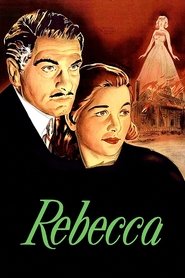
Rebecca (1940) — dir. Alfred Hitchcock
The title character never appears — no face, no flashback — and yet she dominates every frame through monograms, a preserved bedroom, a musical theme that gives her a body the image denies her. Watch how George Barnes's gliding camera keeps gesturing toward someone it can never turn to find, and how the vast staircases and doorways of Manderley dwarf the nameless young heroine trying to live inside another woman's legend. It's the ultimate demonstration that absence, staged carefully enough, is the strongest presence in a room.
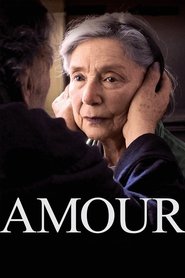
Amour (2012) — dir. Michael Haneke
Early on, at a concert, Haneke points the camera at the audience instead of the stage and makes you hunt through the crowd for the two people the film is about — and in finding them, you've accepted the only job the film will give you: to watch. The camera stays static, at a respectful middle distance; meals are prepared and bodies lifted in something close to real time; light comes from windows and lamps. Haneke learned this patient inventory of daily gesture from Ozu and Umberto D., and the restraint is the point: no music tells you what to feel.
Watched together, these films teach you a different way of paying attention. You'll see influence pass hand to hand like the earrings in Madame de... — Dreyer's sustained conversations enabling Rohmer's, Ozu's domestic patience underwriting Haneke's, Renoir's generosity flowing into Truffaut. But more than that, you'll feel a shared conviction: that the most important moments in a life are often the ones where nothing can be done — where a person can only look, wait, and endure — and that a camera willing to stay in that moment, rather than cut away to the next event, can find something no plot ever reaches. Give these films your patience. They repay it with interest.