Sightlines · a mini film course
The Camera Watches, the World Moves: Twelve Films About Seeing More Than You Can Do
There's a bargain most movies make with us without ever saying so: a character sees a problem, acts on it, and the acting changes things. Cop chases thief, chase resolves, world restored. The twelve films on your list are all, in one way or another, about what happens when that bargain gets renegotiated — heroes who see everything and can fix nothing, neighborhoods that press on people harder than people can press back, cameras that stop chasing the story and simply watch, images so stripped down you have to read them like a page. A couple of these films keep the old bargain running at full power, and they're here as the perfect contrast — proof of exactly what the others are refusing. Watched together, they form a quiet argument about what cinema does when doing isn't enough.
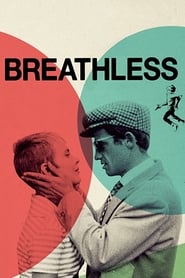
Breathless (1960)
Watch Belmondo's thumb cross his lip — a gesture borrowed from Bogart, tried on like a coat, to see if style alone can hold a man up. This is a crime picture with the crime plot let out of it: a man on the run who mostly wanders Paris, talks, cadges money. Feel how the famous jump cuts slice bits out of the middle of shots, making time hiccup — the editing goes slack exactly where a thriller would tighten. Coutard shoots the real streets like reportage, hard shadows and all, against everything polished French cinema stood for.
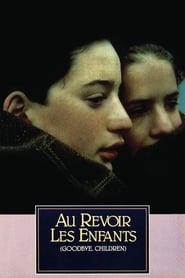
Au Revoir les Enfants (1987)
Malle made this from his own boyhood in a wartime boarding school, and everything in it is built around a child's watchfulness. Notice how little the young lead does — Manesse plays him almost entirely through looking, a boy slowly discovering that history is real and reaching into his school. Renato Berta's cold, narrow palette — grays, browns, bluish winter light — keeps the film honest: no warmth the story hasn't earned. A film where a single glance can carry more weight than any act.
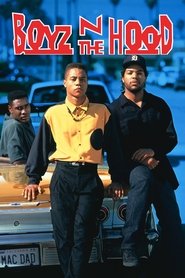
Boyz n the Hood (1991)
Listen before you look: the helicopter is there under the barbecues and the porch talk, a policed sky droning over everything. Singleton and cinematographer Charles Mills keep framing bodies inside the architecture of the neighborhood — corners, fences, yards — until the geography itself becomes a character pressing down on the people in it. The camera stays steady and refuses to turn violence into spectacle, which is exactly why the ordinary domestic moments land so hard.
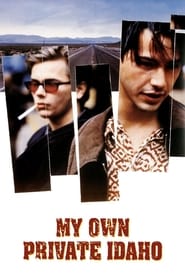
My Own Private Idaho (1991)
A road movie whose hero keeps falling out of it — Mike's narcolepsy means the film itself goes under with him, cutting to time-lapse clouds and dreamlike images while he drops and the world does the moving. Van Sant holds documentary grit and painterly beauty in the same frame: grainy flophouses, then wide Idaho vistas of road and sky. Underneath runs a Shakespearean skeleton, Henry IV grafted onto street hustlers. Be patient with the campfire scene; it's where the film's whole heart sits.
Withnail & I (1987)
Here the paralysis is funny — and it never stops being sad. Two out-of-work actors see their predicament with perfect clarity (no money, no work, a kitchen sink they're afraid of) and can do absolutely nothing about it; the plot is a trip that changes nothing, gloriously. Watch Peter Hannan's photography do the tonal work: sickly nicotine browns in the Camden flat, then rain-grey open country, the frame holding close and steady so the faces carry the comedy.

Dancer in the Dark (2000)
Von Trier's musical runs on a switch: the drama is handheld, washed-out, deliberately ugly — and then factory noise finds a beat, machines fall into rhythm, and grey industrial space becomes a stage for a few minutes before dropping you back. Watch for the casting of Catherine Deneuve, summoned precisely so the memory of the golden-age musical haunts every frame. This is the musical as demolition job: the gap between what songs promise and what the world delivers is the film's whole subject. Brace yourself.
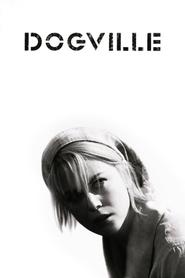
Dogville (2003)
A town drawn in chalk on a black floor: no walls, no doors, just labels and mime — and a latch you hear but never see. With the visible world subtracted, every frame becomes something you have to decipher, and you become its reader, unable to hide behind set dressing. Notice the tension between the geometric stillness of the stage and Anthony Dod Mantle's restless handheld camera hunting among the actors. Charity, and its hidden price, anatomized person by person.

Y Tu Mamá También (2001)
Two teenagers, an older woman, a car, a road — and a calm narrating voice that keeps interrupting to tell you things the characters will never know: who that was on the roadside, what's happening in the country flashing past the windows. The film's real engine is the gap between what the boys see and what the film knows. Lubezki's long unbroken takes trap you in the car with them, desire and resentment in a confined space, while class difference hums in every habit and gesture without ever being announced.
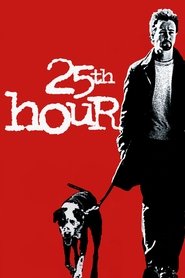
25th Hour (2002)
A man's last free day before prison — the reckoning already over before the first frame, nothing left to do but move through the city one more time. Watch Lee's signature double-dolly shot: actor and camera glide on the same rig, so Norton seems carried by New York rather than walking through it — the world moves, the man holds still. Rodrigo Prieto drains the city to a cold, bruised blue; this is also one of the first films to let the grief of post-9/11 New York in as pure atmosphere. Don't miss the mirror scene.
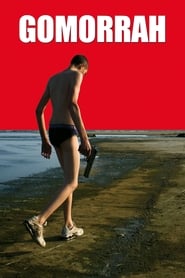
Gomorrah (2008)
Five strands of life inside the Camorra's total environment, braided but never converging — and violence treated as weather: no strings, no slow motion, the camera already drifting elsewhere. Onorato's long lenses keep a watchful distance even at the worst moments; the palette is concrete-grey. Watch the two teenagers acting out Scarface on a beach — Garrone stages the Hollywood gangster fantasy precisely to puncture it. Everyone here sees the system perfectly; the film's bleak power is that seeing changes nothing.
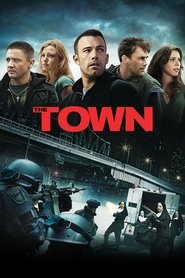
The Town (2010)
Now the counter-argument: the old bargain running like a machine. It opens with a crew pouring bleach over a crime scene — no swagger, just housekeeping — announcing a film where crime is a job and competence is the only glamour. Watch the Fenway sequence: Elswit (who also shot Heat, and you can tell) keeps the geography legible so every cut tracks a decision. Yet the deeper pressure is Charlestown itself — a square mile where loyalty is enforced by proximity and leaving is treated as betrayal.
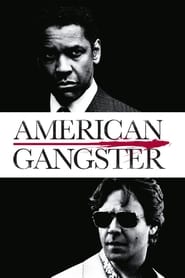
American Gangster (2007)
Here, watch the clothes. Frank Lucas's grey accountant's suit says my survival depends on not being looked at; a chinchilla coat says something else entirely — and the film's whole moral argument lives in the gap between those two postures. Savides builds the visual world on a chromatic split: amber warmth around Lucas's self-made wealth, institutional grey around the detective grinding away in the other half of the film. Scott, the informed outsider, treats the American Dream not with celebration or elegy but with analysis: the drug trade as a business, run like one.
Watch these together and something shifts in how you see everything. The Town and American Gangster show you the engine at full power — perception flowing into action, cuts serving decisions — so that when Breathless lets the chase go slack, when Withnail can't face the sink, when Gomorrah's camera drifts away from a killing, you feel what's been removed and why. You'll start noticing where films put their attention when they take it off the plot: onto sound (that helicopter), onto texture (chalk lines, bleach, a fur coat), onto faces that watch instead of act. That's the course, really: learning to read what a camera does when it stops chasing — and discovering how much a film can say by simply, patiently, looking.