Sightlines · a mini film course
The Court Is Not a Truth Machine: Twelve Films on Watching, Judging, and Being Deceived
Every film in this set puts someone on trial — in a courtroom, a kitchen, a marriage, a newsroom, a small border town — and then quietly asks a harder question: can we actually see what happened? These are films about the gap between watching and knowing. Some of them slow the camera down until it simply observes, refusing to chase the plot. Some turn a single room into a pressure chamber. Some tell you flat-out that the story you're being told cannot be trusted. What connects them isn't the gavel; it's the way each director decides where to put the camera when the truth is in dispute — whether it moves or holds still, whether the light reveals a face or hides it, whether the film lets you settle the question at all.
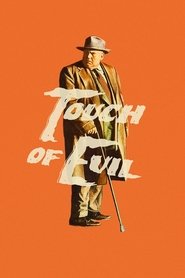
Touch of Evil (1958)
Start with the legendary opening: a single unbroken shot, minutes long, that lifts off the ground and threads through an entire border town before the story even begins — a camera that insists everything and everyone here is connected. Then watch how Welles films the corrupt cop Quinlan: from floor level, wide lenses, ceilings pressing down, a man made monstrous by the frame itself. The whole film lives between those two ideas — a camera that tells the truth about space, and a lawman who manufactures his own. It's the last gasp of classic noir, every shadow and moral compromise pushed to the edge of excess.
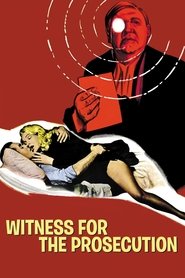
Witness for the Prosecution (1957)
Wilder builds a courtroom where almost nothing is done — people sit, testify, and listen — and the entire drama happens in your head as you connect who's lying to whom. Watch the lighting: the barrister Sir Wilfrid is lit flat and bright, a man incapable of concealment, while Christine keeps sliding into shadow at exactly the moments she deceives. The film is a quarrel between two qualities of light, and you're invited to trust the bright one. Be careful.

The Postman Always Rings Twice (1981)
Sven Nykvist — Bergman's great cinematographer — shoots Depression-era American pulp in soft, dim, available light, and the effect is startling: no noir glamour, just hunger. Watch how the film runs appetite together — for food, for bodies, for money — as one continuous drive, filmed in the same plain daylight. Where the famous 1946 version had to sublimate everything under the censor's code, Rafelson strips the story back to raw want and lets you watch people pulled down a slope they don't understand.
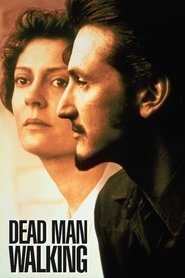
Dead Man Walking (1995)
Roger Deakins keeps catching the wire mesh of the death-row visiting room in reflection, so that Sister Helen's face and the condemned man's slide into the same pane of glass — for a second you can't say whose face you're seeing. Watch how the film runs a procedural countdown (appeals, hearings, the scheduled hour) while quietly refusing the consolations that structure usually delivers. Its boldest choice is making its condemned man guilty: it won't let you off the hook with innocence.
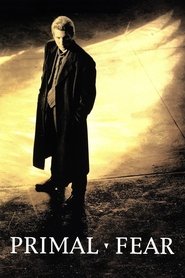
Primal Fear (1996)
There is a scene in a holding cell where the camera does nothing at all — no cut, no push-in — and simply holds on Edward Norton's face long enough for you to watch one person become another without a seam to hide it. That patience is the film's secret weapon. A legal thriller is the most truth-bound genre there is, a machine built to settle what really happened; watch how this one plants doubt inside that machine and lets it run.
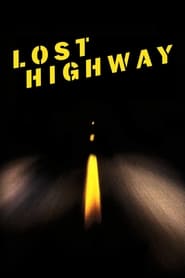
Lost Highway (1997)
Peter Deming photographs the Madison house as near-abstract darkness — rooms defined by what can't be seen, characters walking into blackness and dematerializing. Don't come looking for motive or detection; Lynch keeps the props of noir (the femme fatale, the gangster, the surveillance tapes) and removes the explanations. Watch instead for doubling — one actress, two women, or perhaps one woman dreamed twice — and for how the film treats time as something folded rather than a line. It refuses the cut that would let you sort the real from the imagined. That refusal is the point.

Dancer in the Dark (2000)
Von Trier hired Robby Müller, a master of lyrical celluloid, and asked him for the opposite: jittery handheld frames, washed-out color, snap zooms — a deliberately ugly world. Then watch what happens when the factory noise finds a beat: the grey room becomes a stage, the machines fall into rhythm, and for a few minutes the film is a musical. Then the song ends and the press is just a press again. Everything lives in that switch — the gap between the consolations of art and the indifference of the world — sharpened by the casting of Catherine Deneuve, summoned precisely so you remember what musicals used to promise.
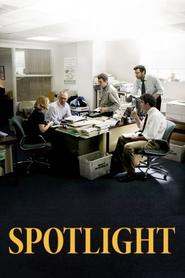
Spotlight (2015)
Watch where the scenes end. A reporter secures a document, a name, the specific word from a survivor at a kitchen table — and the film cuts, not on an emotional close-up but on the information itself. McCarthy builds two hours out of that cut. The camera is disciplined to the point of self-effacement: functional placement, unbeautified newsrooms, institutions looming in wide shots. This is investigation as accumulation — small acts of pursuit that slowly disclose a situation too large to see any other way.
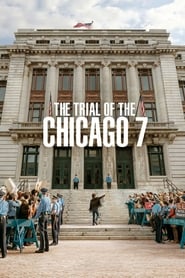
The Trial of the Chicago 7 (2020)
Sorkin still believes a person can change the world by saying the right thing at the right moment, and he builds his film accordingly: the courtroom shot in warm, classical, controlled compositions where speech becomes consequence, the convention flashbacks in grainy, desaturated handheld chaos. Watch the collision of those two registers — and watch for the one unbearable image of a man the court will not let speak, which tells you exactly what's at stake in a room built for talking.
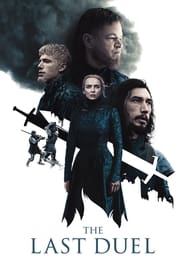
The Last Duel (2021)
One story, told three times, each version announcing itself as a truth. Watch how little Scott changes between tellings — same muddy ochres, same overcast Norman light — and how much those small changes matter: a gesture re-weighted, a line re-inflected, and above all where Marguerite stands in the frame. Pushed to the edges of the men's chapters, she is simply placed in the center of her own. The placement is the entire argument.
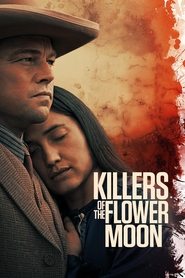
Killers of the Flower Moon (2023)
Scorsese made the moving camera a signature — the glide, the whip-pan, the freeze-frame as a grammar of appetite. Here, watch him switch it off. The camera holds still on Lily Gladstone's face and waits, and that stillness carries the film's moral weight. Prieto's widescreen frames the Osage landscape as both paradise and trap, oil derricks crowding the horizon like wealth and encroachment at once. This is a crime epic told from inside the act of watching — complicity unfolding in plain sight.

The Seed of the Sacred Fig (2024)
Watch a single household object — a pistol, set on a shelf the way another family keeps keys by the door — and watch what its absence does to an apartment. Rasoulof shoots the Tehran flat with clinical compression: doorframes as frames-within-frames, corridors as sightlines of surveillance, a cool grey palette. The film's great argument is that an authoritarian state doesn't stay outside; it walks into the kitchen, wearing the face of a father. Made in defiance of censorship, it carries that risk in every frame.
Watched together, these films become a conversation about the limits of the visible. You'll see the same rooms recur — courtrooms, kitchens, cells, visiting rooms — and the same question posed with different cameras: when the truth is contested, does the film move to seize it, or hold still and let you sit with not knowing? You'll notice how light itself takes sides (Wilder), how a single held shot can drop the floor out of a movie (Hoblit, Scorsese), how repetition can be an argument (Scott), and how refusing to explain can be the most honest choice of all (Lynch). By the end, you won't just be watching trials. You'll notice you've been seated on the jury the whole time — and that the best of these films were never going to hand you a verdict.