Sightlines · a mini film course
When Songs Meet Silence: Twelve Films About People Who Can Only Watch
Here is a strange and beautiful thing this watchlist has in common: nearly all of these films are about people caught in situations they cannot fix. Some of them burst into song about it. Some go quiet. Some stage elaborate jokes. But again and again, the camera stops chasing action and starts watching — faces, rooms, waiting, the space between people. Music, when it comes, isn't decoration; it's what happens when feeling has nowhere else to go. Watch these films as a set and you'll start noticing how differently each one handles the same problem: what does cinema do when its characters can't do anything?
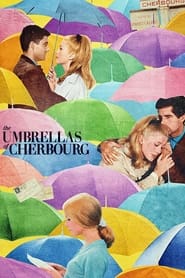
The Umbrellas of Cherbourg (1964)
Start here — it's the sweetest trap in the set. Demy makes every word sung, floats the camera down candy-colored streets, and borrows all the confidence of the classic Hollywood musical. But watch what's missing: the number that fixes everything. His lovers face war, money, and time — forces too large and too slow to fight — and the bright surfaces keep gliding as ordinary life quietly does its work. Notice the overhead opening shot of umbrellas crossing a wet square: color moving to music before you've met a single face. Demy is teaching you the rules in sixty seconds.

Dancer in the Dark (2000)
Von Trier casts Deneuve deliberately, summoning your memory of Demy's film in order to invert it. The dramatic scenes are shot ugly on purpose — handheld, washed-out, jittery — and then, when the heroine's imagination takes over, the rhythm of a factory press becomes a beat and the grey floor becomes a stage. Watch for that switch between the two visual worlds; the whole film lives in it. And listen: as her sight fails, the film's hearing intensifies.
A Hard Day's Night (1964)
The trick hiding inside this joyous pop quickie: the Beatles are never allowed to do anything. They're chased, herded, packed into trains and corridors and studios — brilliant at being handled, never in charge. Watch the famous field sequence, shot on long lenses so it looks caught rather than staged: two minutes of pure, useless, glorious movement toward nothing. Lester's jump cuts and handheld immediacy come straight from the French New Wave and documentary filmmaking, and they make celebrity look like a cage with great music in it.
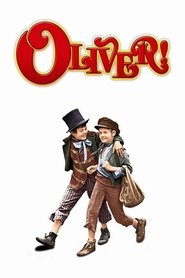
Oliver! (1968)
Reed came to this family musical from noir — he made The Third Man — and he never left the doorway. Watch where he keeps putting the boy: small, at the bottom of a huge widescreen frame, half in shadow under archways, framed so the same opening looks onto festivity and menace at once. The threat is never cut away to; it's held just past the edge of the frame the whole time. That's why a cheerful musical keeps making you faintly uneasy — and why it's worth watching closely.
Look Back in Anger (1959)
The inaugural film of the British New Wave, and a masterclass in constriction: low ceilings, close walls, an attic flat that gives physical shape to being trapped between classes. Watch the ironing-board scenes — a man raging with theatrical eloquence while a shirt gets pressed and nothing changes. His education gave him perfect clarity about what's wrong and no lever to pull. Speech becomes what action can't be.
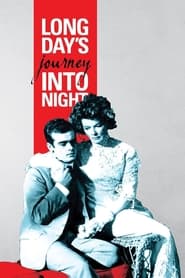
Long Day's Journey Into Night (1962)
Lumet's great hidden trick is optical: as the day darkens, he swaps to longer and longer lenses, so the air between four family members flattens until they seem pressed onto the same suffocating plane while sitting feet apart. Watch how the room seems to shrink without a wall ever moving. Everything the family fears is known before breakfast; what the film gives you instead of plot is listening faces held through long monologues, and fog rolling in like memory.
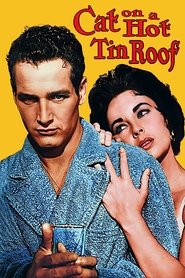
Cat on a Hot Tin Roof (1958)
Watch the bed. It sits in the middle of the room, present and untouched, everything circling it — and the wide CinemaScope frame lets Brooks keep Taylor, Newman, and Ives in the same shot, sharing space while worlds apart. This is a film about a house organized around lies everyone has agreed to, and about a man who sees everything and converts none of it into action. Notice how Newman plays that stall physically — a body that doesn't quite occupy the space it moves through.
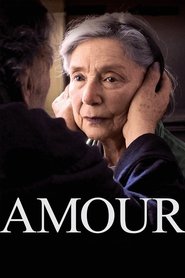
Amour (2012)
Haneke's camera is mostly still, set at a respectful middle distance, and the shots are long enough that you wait inside rooms in something close to real time. Watch the early concert scene: the camera faces the audience, not the stage, and gives you your one job — to look. The lineage here runs through Ozu and Italian neorealism: aging rendered as an inventory of small everyday gestures rather than dramatic incident. Time is allowed to stretch, and the stretching is the film.
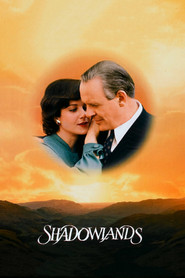
Shadowlands (1993)
The film opens with a man fluently lecturing on the meaning of pain — a subject he has, so far, only argued. Watch the gap between his eloquence and his experience; the whole drama lives there. Attenborough shoots in muted autumnal light with stable, unhurried framings that let Hopkins hold the frame, and Hopkins gives you feeling almost entirely through withholding — the great British tradition of Brief Encounter, where emotion travels through what is not said. Watch the face, not the words.
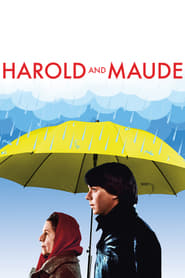
Harold and Maude (1971)
A young man stages his own deaths with total theatrical commitment, and the world is too bored to look twice. Watch how Ashby — an Oscar-winning editor before he directed — cuts these routines so they land as deadpan gags precisely because nothing follows from them. They aren't attempts; they're performances by someone who sees the deadness of his affluent world with perfect clarity and can't act on it. The muted Northern California palette keeps everything cool so the comedy stays strange.
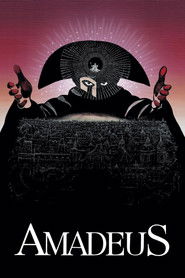
Amadeus (1984)
Hold onto one thing: everything you watch is being heard — remembered, arranged, and argued by an old man confessing in an asylum. Watch how Forman corrupts the flashback: this isn't memory trying to be accurate, it's a case being built, scene by scene, exhibit by exhibit. Ondříček's candlelit photography is warm and painterly, and the film's boldest move is putting whole stretches of performed music at its dramatic center — the scene of one man reading another's manuscript, hearing it lift off the page, is the entire picture folded small.
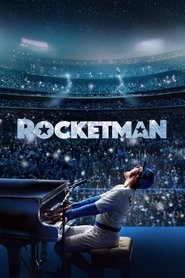
Rocketman (2019)
Most musical biopics promise to show you the real man behind the costume. Watch the opening: this one refuses to take the costume off — the man arrives in devil horns and sequins, sits down in a therapy circle, and starts telling his life as a performance. Notice how the film strips songs from their original moments and reassigns them wherever the emotion needs them, in the lineage of All That Jazz and Moulin Rouge! — fantasy that produces its own truth rather than reenacting facts. The saturated, heightened palette tells you the film knows exactly what it's doing.
Watched together, these films become a conversation across sixty years about the same question: when a person can't act — because of class, illness, fame, grief, war, or their own paralysis — what does the camera do instead? Demy answers with color and song, Haneke with stillness, Lumet with a slowly flattening lens, Ashby with a joke, Forman with an unreliable storyteller, von Trier with a brutal switch between two visual worlds. You'll start seeing the rhymes: the bed in Cat on a Hot Tin Roof and the ironing board in Look Back in Anger; the confessional frames of Amadeus and Rocketman; the two Deneuve-haunted musicals answering each other across four decades. None of these films will tell you how they end here — but by the third or fourth one, you'll be watching how they're made, and that's when the whole set lights up.