Sightlines · a mini film course
When the Camera Waits: Stillness, Endurance, and the Weight of Seeing
There is a kind of film that refuses to rescue you. No chase, no rising score at the decisive moment, no cut that spares you the discomfort of watching someone simply be in a situation they cannot escape. The films collected here share a deep commitment to duration — to letting time accumulate in the frame until you feel it as a physical presence rather than a measure of plot. Their protagonists are less agents than witnesses: to suffering, to beauty, to the slow collapse of belief, to violence that arrives without explanation and departs without resolution. Across different countries, decades, and temperaments, these filmmakers ask the same quiet question: what does it mean to see something fully, when there is nothing you can do about it?
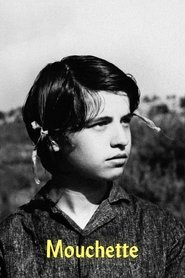
Mouchette (1967)
Before you've met anyone in this village, Robert Bresson gives you a girl's hands gripping a bumper-car rail and a moped's whine that seems to come from nowhere. That gap — sound detached from image, gesture isolated from face — is Bresson's whole method in miniature. Watch how often he frames fragments of Mouchette's body rather than her whole figure: hands, feet, a downcast head. His non-professional "model," Nadine Nortier, is directed to drain her face of performed feeling, so that the cruelty the world aims at Mouchette lands on a surface of remarkable stillness. Notice, too, how the soundtrack carries as much weight as the image — amplified textures of fabric, spilled liquid, a snared bird — so that you are always receiving two separate streams of information that never quite synchronize.
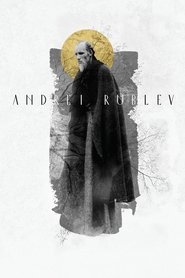
Andrei Rublev (1966)
Tarkovsky opens with a man who builds something, briefly flies, and falls to the mud — and nobody saves him, and the camera does not cut away. That patience is the film's grammar from the first frame. Cinematographer Vadim Yusov builds sequences around extremely long takes that refuse to punctuate revelation with an edit: the camera tracks and cranes and drifts, but its movement tends to absorb events rather than dramatize them. Watch how the film is organized in chapters, each one almost a separate short film in texture and tone, and notice how the historical spectacle — battles, raids, a great bell being cast — is always filtered through one man's act of watching rather than doing. Rublev is present at catastrophe the way a painter is present at the world: registering everything, changing nothing.
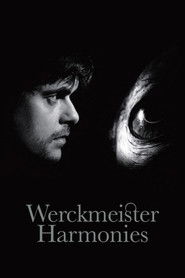
Werckmeister Harmonies (2001)
The opening sequence — in which the postman Valuska arranges drunken men in a provincial bar to enact a solar eclipse — is approximately ten minutes of a single, fluid, choreographed take. No cut. Bodies orbit one another under a bare bulb, briefly become a working model of the cosmos, and then the bartender sends everyone home. Béla Tarr's entire film works this way: immense, rolling takes in which the camera glides through darkened streets and institutional corridors at walking pace, so that you feel the weight of time passing in a small, suffocating town. Watch how darkness functions as architecture — Tarr lights scenes so that figures move through pools of black rather than furnished rooms, the world reduced to whatever the camera's slow eye chooses to illuminate at any moment.
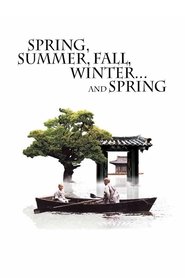
Spring, Summer, Fall, Winter... and Spring (2003)
Kim Ki-duk trained as a painter, and almost every shot here announces it: the small Buddhist temple centered symmetrically on still water, the encircling mountains held in compositions of formal, near-heraldic stillness, the seasonal palette shifting from the bright greens of spring through summer's hazed warmth to winter's bone-white. The floating temple is a set built on an actual lake in South Korea, and the geography itself does much of the film's moral work — watch how the film returns obsessively to the same framings across different seasons, so that you feel time passing not through plot but through color and light. There is almost no dialogue; notice how Kim pushes meaning onto the behavior of water, birds, and small animals, and onto objects — a stone, a rope, a small wooden boat — that return across the years carrying accumulated weight.

Silent Light (2007)
Before a single face appears, Carlos Reygadas holds his camera on a dark sky and lets dawn arrive in something close to real time. The horizon bruises blue, birds stir, and a Chihuahuan morning builds itself — for several uninterrupted minutes, as you simply watch the world turn. That opening establishes the film's scale and its patience: cinematographer Alexis Zabé favors wide, deep, static compositions that place the human figures small inside an immense luminous landscape, so that a domestic drama of faith and adultery is always framed against an order far larger than it. Watch how Johan weeps — not in a moment of crisis but quietly, at a kitchen table, in ordinary morning light — and notice how the film treats feeling as something that simply exists in the body, without buildup or release.
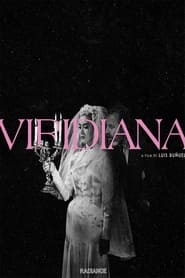
Viridiana (1962)
Luis Buñuel's camera, operated by José F. Aguayo, is calm, deep-focused, and completely without alarm — it regards the strange and the transgressive with the same even documentary gaze it turns on the ordinary. This surface placidity is the method: Buñuel smuggles disturbing images through a sober, classical visual language so that their strangeness registers as undeniable rather than sensationalized. Watch how objects travel through the film — a length of skipping rope, a pair of shoes, a crucifix — gathering associations as they pass from hand to hand, each new context quietly revising what the object means. And pay attention to the beggars: Buñuel photographs them with a plainness borrowed from documentary practice, letting cruelty land without an editorializing camera to tell you how to feel about what you're seeing.

Salò, or the 120 Days of Sodom (1976)
Prepare yourself, first, by knowing this: the film's formal strategy is distance, not immersion. Tonino Delli Colli photographs the villa and its atrocities in cool, measured medium and wide shots — the image is clean, bureaucratically even, like an official document. Pasolini refuses the close-up as a tool of horror; instead of pulling you into suffering, the camera observes from the composed remove of a connoisseur. The film is structured like Dante's Inferno, moving through named circles — Manias, Shit, Blood — which replaces narrative with a graded, relentless descent. Watch the faces of the four libertines: they are played with a civil servant's blandness and decorum, and it is precisely that ordinariness — not theatrical villainy — that makes the film's argument about power and fascism land where it does.
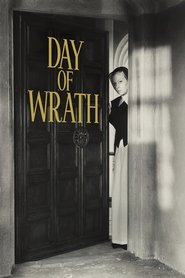
Day of Wrath (1943)
Karl Andersson's black-and-white photography is the first thing to notice: faces emerging from deep shadow, white linen against near-total darkness, compositions that invoke seventeenth-century Dutch painting — Rembrandt and Vermeer — before a single word of theology is spoken. Carl Theodor Dreyer holds Anne's face long past the point where ordinary cinema would cut: the scene's business is over, the line has landed, and still the camera stays, waiting for something to cross Lisbeth Movin's pale, still features. Watch how Dreyer handles light as moral weather — the slow, gliding tracking shots carry the camera through shadow in a way that feels less like cinematography than like dread moving through a building. And notice how differently the film treats stillness and motion: the face held static is one kind of event; the face where something is gathering beneath the surface is another.
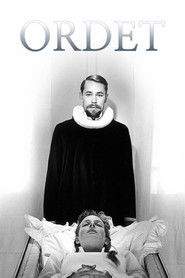
Ordet (1955)
The first thing to understand about Ordet is its editing — or rather, its near-refusal of editing. Under 120 shots across two hours. Rather than cutting between speakers, Dreyer's camera drifts on a slow lateral track, reframing and repositioning as figures move, absorbing whole conversations into a single unbroken take. Watch the camera move and you are already watching the film's argument: it attends to ordinary farm people — a squabble over doctrine, a sick woman's bed, a family's Sunday morning — with an unhurried patience that feels less like direction and more like a quality of attention extended to the everyday. Henning Bendtsen's light is milky and near-shadowless, drained of conventional drama on purpose; nothing is staged for emotional effect. Hold onto the flatness. The film needs it for what it is building toward.
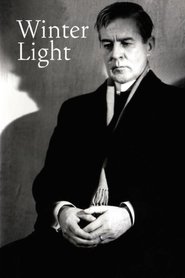
Winter Light (1963)
Sven Nykvist's photography here is among the most austere in cinema: flat, diffused, near-natural light that refuses glamour and refuses shadow, lying on faces like a cold fact. Bergman and Nykvist place the camera very close to the human face and hold it there without music, without reaction shots, without the usual mechanisms of relief. Watch a sequence early in the film in which a character reads a letter aloud, directly into the lens, for nearly seven minutes: it is a sustained experiment in how long a face can hold your attention before it stops being an expression and becomes something closer to a landscape. The film is set in winter churches filmed in actual winter light — no augmentation, almost no artifice — and the physical cold of the Swedish Lutheran interior is present in every frame as a kind of theology made visual.
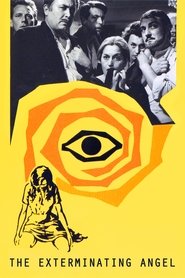
The Exterminating Angel (1962)
Gabriel Figueroa's deep-focus black-and-white photography holds the entire bourgeois dinner party in sharp, elegant frames — a world that looks, in every visual detail, exactly as it should. Buñuel's joke, sustained for the whole film, is that this impeccably photographed normality contains a premise of pure absurdity that nobody in the film questions and nobody can explain. Watch how the film handles repetition: certain scenes — an entrance, a gesture, a piece of dialogue — recur in slightly varied form, and each repetition quietly unsettles your confidence in what you actually saw the first time. Notice, too, the film's management of social performance: the way the guests maintain the rituals of polite society (formal dress, conversation, the proprieties of the dinner table) as their situation becomes increasingly desperate. The gap between the manners and the circumstances is where Buñuel conducts his entire experiment.
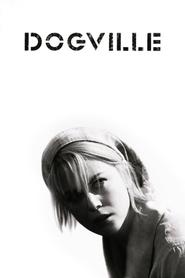
Dogville (2003)
The set is a bare black soundstage with the town of Dogville chalked onto the floor: streets labeled, buildings outlined, a dog drawn in chalk where the dog should be. There are no walls, no doors — only actors miming hinges, and from somewhere on the soundtrack, the click of a latch that no physical object produces. Anthony Dod Mantle shoots this stripped world with a restless, hunting handheld camera that refuses the composed tableau the theatrical staging might invite, creating a constant tension between the film's Brechtian abstraction and the raw physical immediacy of the performances. Watch how the absence of walls changes what can be hidden — in Dogville everyone can see everything, which makes the film's story about privacy, exposure, and complicity feel built into the architecture from the start. And notice how darkness functions as the film's real walls: Mantle lights scenes so that the visible world is exactly as large as the story requires it to be at any moment.
Why Watch These Together
Individually, each of these films rewards attention. Together, they constitute something like a private education in what cinema can do when it refuses to flatter your desire for easy resolution. You will notice, across these twelve films, a set of shared instincts being tested in different cultural soils: the long take as an act of moral witness; the face held beyond comfort; sound that arrives without a visible source; landscapes that dwarf and reframe human suffering; objects that gather meaning through repetition; and an insistence on the audience's full, wakeful participation. These filmmakers trust you to sit with discomfort, to read rather than simply watch, to let time accumulate until it means something. That trust is, in itself, a kind of argument about what cinema is for — and returning to it, from Bresson's Flemish village to Tarr's provincial Hungarian dread to Reygadas's Mennonite flatland, is one of the deepest pleasures serious film-watching can offer.