Sightlines · a mini film course
The Cinema of Watching: Eleven Films Where the Camera Refuses to Hurry
There's a kind of movie where a person sees trouble and does something about it — sees the bomb, cuts the wire — and the film cuts along briskly to keep up. The eleven films on your list belong, in different ways, to the other kind. Here the camera watches rather than chases. Characters look at their world more than they act on it, and the films trust that looking — theirs and yours — is the real event. Time is allowed to stretch. Faces are held past the point of comfort. Objects, sounds, and landscapes are asked to carry meanings that dialogue never states. Nearly all of these films circle religion, faith, and doubt; nearly all unfold in villages, farms, and small towns where a community's pressure on the individual is visible in every frame. Watched together, they form a conversation across eighty years — several of them literally quote or answer one another — about what cinema can do when it slows down and simply attends.
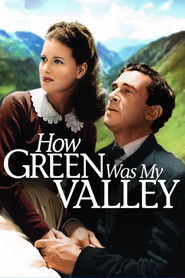
How Green Was My Valley (1941)
Start here, with the classical model working at full power. John Ford built an entire Welsh mining village from nothing in the Santa Monica hills so that Arthur C. Miller's deep-focus, Oscar-winning photography could show a whole society in one legible frame: the hearth-lit kitchen, the street, the looming pithead, all in physical relation to each other. Watch how the camera waits — miners climbing toward it at shift's end, singing, their song arriving before they do. Notice how place and people stamp each other: the valley shapes the family, the family shapes the valley, and the film's elegiac ache comes from knowing the green of the title is already remembered, not present.
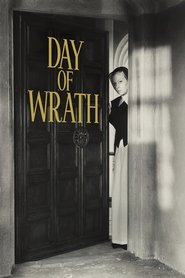
Day of Wrath (1943)
Dreyer's witch-persecution drama looks like seventeenth-century Dutch painting — faces surfacing from deep shadow, white linen against darkness, light distributed like Rembrandt. But the real innovation is duration on a face: the scene's business ends, and the camera stays, waiting for a thought its owner hasn't admitted yet. Watch Lisbeth Movin's Anne, and watch how Dreyer refuses to dramatize her awakening — he lets it surface micro-shift by micro-shift across held time, until stillness itself becomes suspense.
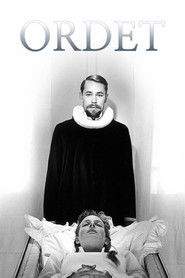
Ordet (1955)
Dreyer again, and the camera has learned to glide. Fewer than 120 shots hold two hours: instead of cutting between speakers, the camera drifts along whitewashed walls, choosing whom to attend to, so movement itself carries the meaning a montage would normally deliver. Henning Bendtsen's milky, near-shadowless light drains the image of conventional drama on purpose — the everyday photographed with documentary gravity. Trust that flatness; it is laying a foundation. And note the spectrum of belief the farmhouse contains — confident piety, modern doubt, grim judgment, and a "madness" no one knows what to do with.
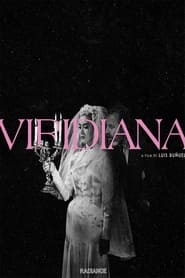
Viridiana (1962)
Buñuel's method is a beautiful paradox: photograph the strange thing plainly, so its strangeness becomes undeniable. José Aguayo's deep-focus black and white keeps a clean, classical surface — no editorializing flourish — while surrealist obsessions (a trunk of shoes, a skipping rope, appetites that seize people before reason can) travel through the frame unannounced. Watch the objects. Buñuel never underlines them, but they migrate through the film accumulating charge, and his portrait of well-meaning charity meeting intractable human appetite lands harder for the camera's cool remove.
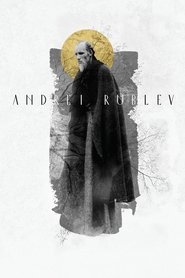
Andrei Rublev (1966)
Tarkovsky opens his film about a medieval icon painter with a man strapped to a homemade balloon — something that briefly works, gloriously, before it fails. Note what the scene doesn't do: no rescue, no cut to spare you. Vadim Yusov's camera tracks and cranes but refuses to punctuate; extremely long takes decline to look away from discomfort or dress up revelation with an edit. The film's great question — can art be made in good conscience amid catastrophe? — is asked through a protagonist who mostly witnesses, and whose watching becomes the drama itself. Made in a brief thaw of Soviet cultural control that closed before the film could safely arrive, it dismantles the heroic historical epic from the inside.
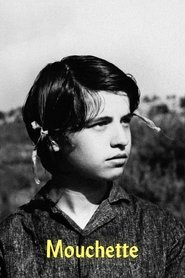
Mouchette (1967)
Bresson's portrait of a rural girl failed by everyone runs on subtraction: non-professional performers drained of theatrical expression, framings that isolate hands and gestures, sounds arriving from off-screen and asked to carry as much as any image. Watch her hands at a bumper-car rail; listen for what the soundtrack gives you that the frame withholds — that gap between eye and ear is the film's whole method in miniature. Ghislain Cloquet's sober, overcast black and white never dramatizes, and Nadine Nortier's famous blankness is not amateurism but design: a face on which the world registers. Adapted from Catholic novelist Bernanos, it frames relentless cruelty within a glimpsed possibility of grace.
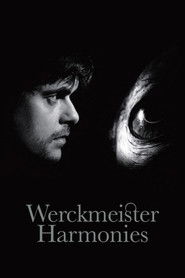
Werckmeister Harmonies (2001)
Béla Tarr's opening is one of cinema's great sequences: at last call in a provincial Hungarian bar, a wide-eyed postman arranges drunken men into a working model of a solar eclipse — you be the sun, you the earth — in a single unbroken take of nearly ten minutes. Nothing is accomplished; everything is expressed. Watch how meaning arrives through choreographed movement and duration rather than plot, how political dread gathers as atmosphere rather than event, and how Lars Rudolph's transparent, unguarded face — pure Bressonian "model" — registers a world tipping toward violence without ever scheming against it.
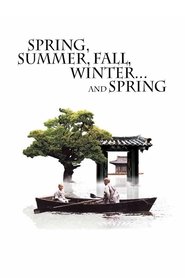
Spring, Summer, Fall, Winter... and Spring (2003)
Kim Ki-duk, trained as a painter, organizes a floating temple on a mountain lake into frontal, symmetrical tableaux, the seasons supplying both palette and structure. There is almost no dialogue; meaning is pushed onto water, wind, birds, the creak of a rowboat. Watch for weight — literal stones, carried burdens — as the film's nearest thing to a plot: lessons here are never abstract but always borne in the body, and the seasonal architecture insists that desire, consequence, and discipline recur in cycles rather than resolve in acts.
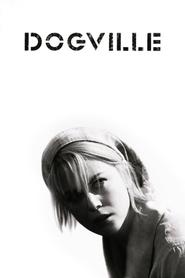
Dogville (2003)
Von Trier subtracts the visible world itself: a town rendered as chalk outlines on a black floor, doors that exist only as mimed hinges and a latch's click on the soundtrack, the word "dog" written where a dog should be. The trick is that bareness intensifies rather than starves the film — stripped of set dressing, every frame becomes something you must actively read, and Anthony Dod Mantle's restless handheld camera hunts among the actors, denying you the safety of composed distance. Borrowing Thornton Wilder's bare stage and Brecht's alienating devices, it anatomizes how a community's kindness toward a vulnerable outsider can curdle, person by rationalizing person.

Silent Light (2007)
Reygadas opens on a star-pricked sky and lets night turn to dawn in something close to real time — no cut, just the world moving while you watch it move. Hold onto that shot; the whole film is folded inside it. Alexis Zabé's wide, luminous compositions place a Mennonite farming community within an immense Chihuahuan landscape, telling you the story's scale before its plot. A married man's love for another woman is treated not as melodrama but as genuine spiritual crisis, played by non-professional Mennonites in the drained, unactorly manner Reygadas learned from Bresson — and the film openly converses with Dreyer's Ordet, which is one excellent reason to watch that one first.
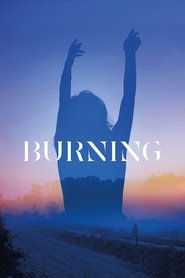
Burning (2018)
Lee Chang-dong builds a slow-burn mystery around things that may not exist — a well, a cat, a greenhouse — and never shows you the evidence either way. Hong Kyung-pyo's sustained compositions refuse to telegraph meaning; the flat Paju farmland near the DMZ is filmed without picturesque softening. Watch Yoo Ah-in's blocked, near-absent performance — lifted almost directly from Bresson's Pickpocket — as a young man who watches and watches without the watching ever converting into resolution. Underneath the creeping unease runs a precise class argument: extreme wealth as immunity from consequence, made through form rather than speeches.
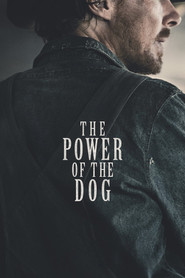
The Power of the Dog (2021)
Campion's revisionist Western opens the puzzle in its very first images: a man looks at a mountain and sees a shape no one else can see, a meaning legible to one trained eye alone. That is the film's whole grammar — Ari Wegner shoots landscape as psychological surface, and information sits in the frame (braided rawhide, hidden books, a woman shrinking into smaller rooms) before you know what it means. This is a film you decipher rather than merely watch, one that famously plays completely differently a second time. Its performance style — posture and gaze doing the work faces refuse to do — descends straight from Bresson, closing the circle this list opened.
Why watch them together? Because these films train you. The patience Ordet asks of you pays off in Silent Light, which answers it directly across fifty years. Bresson's blank-faced "models" reappear in Reygadas's Mennonites, in Tarr's postman, in Yoo Ah-in's stifled drifter, in Campion's unreadable rancher. Tarkovsky's witnessing painter is the direct template for Tarr's holy innocent. Ford shows you the classical machine running perfectly — place pressing on people, people answering with acts — so that you can feel, in every film after, exactly what has been removed and what floods in to replace it: time, texture, sound, faces, the sheer weight of a world that won't be fixed by a deed. These are films that reward the same quality they depict. Watch slowly. The looking is the event.