Sightlines · a mini film course
The Long Second Before the Trigger
Every film in this set is about a professional — a killer, a soldier, a ronin, a fixer — and yet what binds them isn't the violence. It's the waiting. These are films that understand that action means nothing unless we've first been made to sit inside stillness: a man folding a napkin the same way every night, a hand hovering above a holster that will not move, a face that refuses to react. Some of these films let the stillness explode into motion; others let it simply deepen, until watching becomes the whole drama. Across sixty years and four continents, they're all wrestling with the same question — what happens in the gap between seeing and doing — and each one answers it differently. Watch them together and you'll start to feel that gap as the true subject of the thriller.
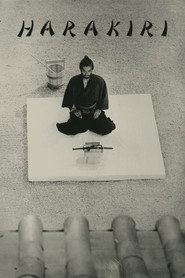
Harakiri (1962)
A samurai film that keeps the sword sheathed for most of its running time — and is more gripping for it. Watch how the architecture does the intimidating: raked gravel, receding corridors, retainers arranged in rigid geometric rows, one man kneeling inside a pattern he didn't build and can't leave. Tatsuya Nakadai plays almost everything through tiny adjustments of breath and voice; the film builds its case the way a prosecutor does — patiently, piece by piece — and asks you to feel the difference between honor as ceremony and honor as substance.
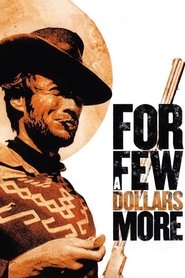
For a Few Dollars More (1965)
Leone found the place where the Western hesitates — the hand near the holster — and built a cathedral on it. Notice the wild swings in scale: tiny figures dwarfed by desert immensity, then an eye filling the entire frame. Where the classic Hollywood gunfight was over before you registered it, Leone stretches the second before the draw until you feel it as pressure in your own chest, with a pocket watch's chime doing the counting. This is where the modern standoff was invented.
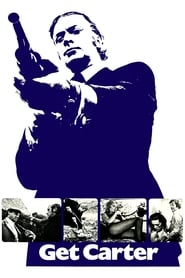
Get Carter (1971)
Michael Caine on a train heading north, terraced roofs giving way to slag heaps, a harpsichord ticking underneath like a meter running down. Wolfgang Suschitzky, a documentary photographer by training, shoots Newcastle flat and true, in weak northern daylight that refuses to prettify anyone — and the industrial landscape itself starts to feel like a force pulling the characters downhill. Watch for how the film denies you an avenging hero: Carter belongs to the same rotten world he's tearing through, and the movie never lets you forget it.
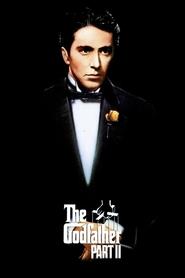
The Godfather Part II (1974)
Coppola braids two timelines — a father's rise, a son's consolidation — and lets each comment silently on the other. Gordon Willis's photography splits accordingly: harsh Mediterranean light and warm tenement ambers for the past, deepening shadow and enclosure for the present, until the built world seems to close around Michael like a shell. The boldest thing here is what the camera doesn't do: at key moments it simply waits with a face rather than cutting away, letting endurance itself become the drama.
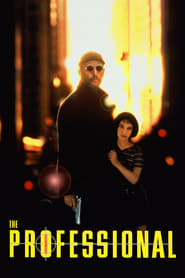
Léon: The Professional (1994)
A hit man who drinks milk, does sit-ups in the dark, and tends a houseplant "because it has no roots — like me." Before Besson shows this man killing, he shows him caring for things, and the whole film lives in that gap. Watch how Thierry Arbogast's warm ambers and golds mark the interior refuges, while cooler light claims the institutional and violent spaces — and how Jean Reno, behind round black glasses, plays stillness as a kind of arrested innocence. The lineage runs straight from Melville's silent, code-bound professionals, but the sentiment is all Besson's.
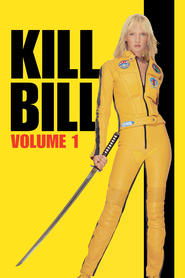
Kill Bill: Vol. 1 (2003)
Where other films sample motion in its ordinary in-between moments, Tarantino builds an entire movie out of climactic poses — the arterial spray staged as a geyser, duelists frozen in ritual stillness, standoffs stretched until time itself seems to strike an attitude. Robert Richardson's hot, near-vertical top-light halos hair and shoulders so that even grimy rooms look graphic and crisp. Every image is quoting an image — from Lady Snowblood's snow-against-blood to Bruce Lee's yellow tracksuit — and the density of citation becomes its own kind of spectacle.
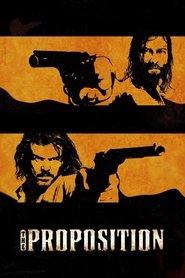
The Proposition (2005)
Open on a fly walking the rim of a wound. Benoît Delhomme shoots the Queensland outback without amelioration — sweat, blood-crust, insects, the small busy life the frontier runs on — and the whitewashed homestead with lace curtains and a Christmas dinner reads as a fragile stage set with a furnace outside the door. Watch the alternation the film borrows from Leone: figures miniaturized against vast landscape, then weathered faces in extreme close-up, with Nick Cave and Warren Ellis's spare score as elegy rather than excitement.
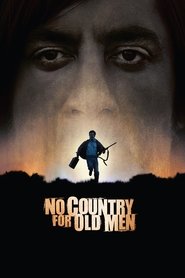
No Country for Old Men (2007)
Roger Deakins works by strategic restraint here: long lenses compress figures against featureless desert, emphasizing distance and exposure, and the landscape becomes a participant rather than a backdrop. Listen as much as you look — the film builds tension out of ambient sound, rustle, and room tone, in the tradition of The Conversation. And watch the gas-station scene closely: nothing moves except the talk and the fluorescent light, and it's one of the most frightening scenes of its decade precisely because of that.
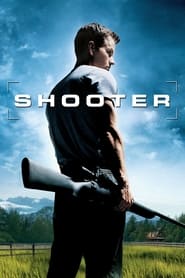
Shooter (2007)
Notice the small physical fact in the opening: the bullet lands before you hear the shot, the crack rolling across the valley a beat later. That gap between impact and report is the film's whole logic in miniature — perception and action separated by a measurable distance, then closed by a competent body. Watch the environmental contrast too: Montana rendered clean and Edenic in natural light, the institutional world of safehouses and offices going progressively colder as corruption spreads. A conspiracy thriller wearing a marksman's patience.
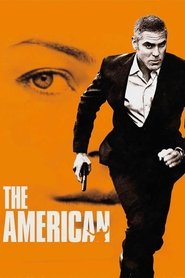
The American (2010)
Corbijn, a photographer before he was a filmmaker, keeps placing George Clooney small within converging stone streets, the medieval walls pressing in like the sides of a vise — the beautiful town revealing itself, shot by shot, as a trap. Stop waiting for the chase; there isn't one in the sense the trailer promised. Instead: exercises, coffee, a piece of steel patiently filed, long wordless stretches of craft in the Melville tradition. Even Leone gets screened within the film, a wink at where this patience comes from.
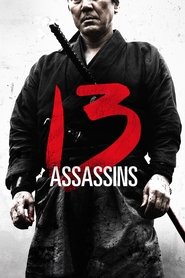
13 Assassins (2010)
For roughly ninety minutes, Miike's camera holds in formal mid and long shot, honoring the measured distances of Edo-period rooms — men kneeling, bowing, speaking across ceremonial space — building moral pressure the way Harakiri did before it. Watch Kōji Yakusho's face when the commission arrives: a man greeting a death sentence like good news. The film borrows Seven Samurai's recruitment grammar — each specialist introduced through a single defining act — and rebuilds the old machinery of the mission film with total, unironic conviction.
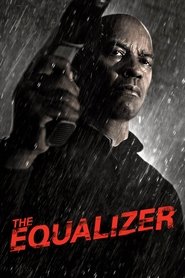
The Equalizer (2014)
Same diner, same table, every night: a napkin folded into a clean rectangle, a book squared to the table's edge, tea steeped the exact right number of minutes. For most of an hour, the camera holds still or drifts slowly, and the film keeps finding Denzel Washington behind glass — framed in windows, caught in reflections, studying a street he won't step into. It inverts the menacing watchfulness of Training Day and extends the ritual domesticity of Le Samouraï; when the camera finally turns kinetic, you'll understand why it waited.
Watched in sequence, these films become a conversation across decades about the same held breath. Kobayashi and Leone discovered, in the same few years, that the moment before violence could carry more meaning than violence itself — and everyone after them has been working out the consequences. Some of these films complete the circuit with exhilarating precision; others deliberately leave it open, letting stillness ask questions that action can't answer. Watch for the diner tables, the folded napkins, the assembled rifles, the faces that won't move — the small liturgies every one of these professionals performs — and you'll start to see that the ritual isn't preparation for the story. It is the story.