Sightlines · a mini film course
The Watchers: Revenge in Slow Motion
Every film in this set carries a gun and a grudge — mobsters, hitmen, avengers, lawmen — and every one of them, in its own way, refuses to hurry. These are crime films where the most important thing on screen is often a man not acting: reading a book in a diner, staring through rain-streaked glass, holding a face in close-up long past the point of comfort. The through-line here is patience as a weapon — filmmakers who understand that the moment before violence is more interesting than violence itself, and that a camera that watches rather than chases can turn a pulp revenge plot into something closer to a portrait, an elegy, or a trap. Watch these together and you'll start to feel the family resemblance: the ritual routines, the reflective surfaces, the stillness that carries meaning, and the strange things that happen when a story lets time stretch instead of racing to the kill.
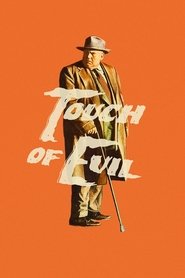
Touch of Evil (1958) — dir. Orson Welles
Start at the source. The film opens with one of cinema's most famous unbroken shots — a camera lifting off the ground to follow a car with a bomb in its trunk for three full minutes of traffic, neon, and drifting music, with no cut to relieve you. Watch how Welles builds scenes not through back-and-forth cutting but by having actors move toward and away from a wide-angle lens, so that proximity itself does the dramatic work — and how the corrupt cop Quinlan is shot from floor level, ceilings pressing down on his head, his own frame made monstrous by the camera. Arriving at the very end of the classic noir cycle, this is the genre pushed to gorgeous, self-conscious excess.
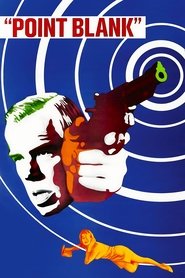
Point Blank (1967) — dir. John Boorman
A British documentarian was handed an MGM crime picture and Lee Marvin, and smuggled in the grammar of the French avant-garde. Listen for the footsteps in the opening — hard, metronomic, echoing down a corridor, cut against images from another time and place until you can't be sure what's happening now. The flashbacks arrive with no warning, no dissolve, bleeding into scenes mid-stream, and Marvin's affectless avenger moves through a cold, geometric Los Angeles of brutalist concrete and glass that dwarfs him at every turn. Notice how the film swaps noir's shadows for glaring modernist sunlight — and how a story about getting money back becomes a meditation on memory.
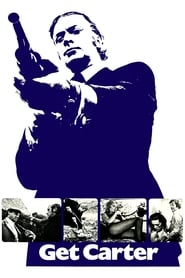
Get Carter (1971) — dir. Mike Hodges
Michael Caine on a train going north, a harpsichord ticking underneath like a meter running down. Watch Wolfgang Suschitzky's photography, which comes out of documentary and still work: flat, frontal, unglamorous, refusing to prettify Newcastle or anyone in it. The film inherits the location realism of British kitchen-sink cinema but strips out the warmth, setting its avenger against the industrial landscape itself — slag heaps, rail-yards, quayside pubs, weak northern daylight. Pay attention to how often Carter is framed as a small figure inside that landscape, as if the place is pulling him down a slope he can't climb back up.
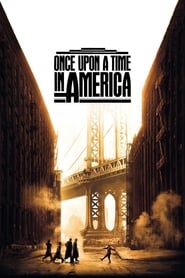
Once Upon a Time in America (1984) — dir. Sergio Leone
Leone's four-hour farewell to cinema opens on a man's face as opium takes hold — a slow, unreadable smile the camera refuses to leave — and everything that follows curls back toward it. Watch how the time periods are told apart by light alone: honeyed amber for the past, colder tones as the years advance. Notice, too, how much of the film is a man looking — through a peephole, into a locker, across a room at a ghost — and how De Niro plays his aging gangster as a study in passivity. Morricone's music was composed in advance and the scenes staged around it, so the film moves at the tempo of memory rather than plot.
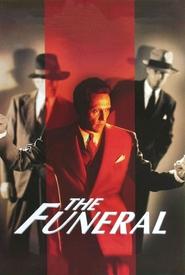
The Funeral (1996) — dir. Abel Ferrara
A gangster film built to negate the gangster film: it opens where the genre usually ends, with a body in a coffin in the front room, and everything after happens in its presence. Ken Kelsch's photography is painterly and severe — faces emerging from near-total darkness, interiors lit as if by a few candles and lamps, a palette of browns and blacks. Watch how the wake in the present keeps being interrupted by the past, and how the dialogue carries an almost liturgical weight, arguing questions of free will, sin, and damnation inside a period crime story. No glamour, no empire, no rise — just a family bound to something it cannot escape.
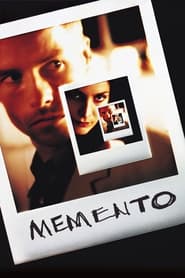
Memento (2000) — dir. Christopher Nolan
Watch the opening image closely: a Polaroid that fades instead of developing, run in reverse — the whole film in three seconds. Nolan's protagonist cannot form new memories, and the film's great invention is structural: the color scenes run backward, each ending where the previous one began, so that you are dropped into every scene with no idea how you got there, while a black-and-white strand runs forward toward a hinge. Wally Pfister shoots it all with deliberate restraint and clarity — a wise mercy, given how much work your brain is already doing. This is noir's confessional voiceover corrupted into something new: you're not watching a man lose his memory; you're losing yours.
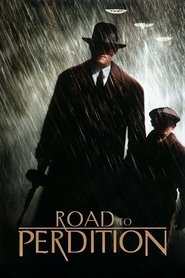
Road to Perdition (2002) — dir. Sam Mendes
Conrad Hall's photography is the star: a near-monochrome winter palette of slates and browns, figures dwarfed by doorways and architecture, and his signature device of rain running down glass so that shadows of water cross a face like tears. Watch what the film does with violence — most famously a machine-gun massacre in the rain from which all gunfire sound has been removed, Thomas Newman's score carrying the whole thing, muzzle-flashes reduced to light on wet pavement. The kill becomes something held up to be looked at rather than an action to be cheered. Underneath it runs a story descended, by way of a graphic novel, from the Japanese Lone Wolf and Cub — a wandering assassin, a child, and the question of what fathers pass down.
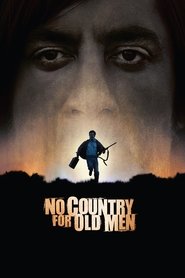
No Country for Old Men (2007) — dir. Joel Coen
The film's most celebrated scene is nothing but a coin toss on a gas-station counter — two men talking under fluorescent light, one of them unaware he's playing for his life. Watch how Roger Deakins uses long lenses to compress figures against featureless desert, making the landscape a participant rather than a backdrop, and how the film builds tension from ambient sound — rustle, drone, room tone — rather than music. This is a chase thriller that honors every mechanic of the genre while quietly refusing to let the machine deliver what you expect; its villain is coded not as a psychopath with a backstory but as something closer to weather.
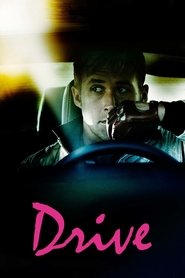
Drive (2011) — dir. Nicolas Winding Refn
An American crime picture with a European soul. Newton Thomas Sigel shoots Gosling's face at near-surveillance closeness and then holds — past comfort, past where any normal film would cut — so that the close-up becomes a surface offered rather than a psychology explained. Watch the deliberate tension between that intimacy and the wide views of Los Angeles as vast, indifferent space; and watch the elevator scene, where tenderness and brutality happen in one unbroken breath with no transition between them. The Driver has no name, no past, no stated want — the film inhabits the myth of the cool loner so completely that its costs become visible.
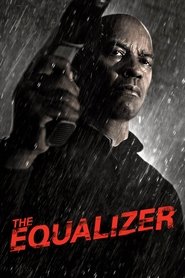
The Equalizer (2014) — dir. Antoine Fuqua
For most of its first hour, this is a film about a man's rituals: the same diner every night, the napkin folded into a clean rectangle, the book squared to the table's edge, the tea steeped an exact number of minutes. Watch how the camera stays patient — static or slowly drifting compositions that let stillness carry meaning — and how often it finds Washington behind glass, framed in windows, isolated in reflections: a man studying a world he won't step into. The film belongs to the same cycle as Taken and John Wick, but distinguishes itself through slowness and prestige-drama patience, and its debt to Le Samouraï's ritual domesticity is written into every teaspoon.
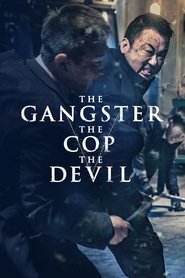
The Gangster, the Cop, the Devil (2019) — dir. Lee Won-tae
After so much stillness, here's the counter-example — and it's clarifying. This Korean crime film is a beautifully engineered machine: perception flows into action, action changes the situation, and every cut serves that chain. Watch the tripartite logic of it — a crime boss, a cop, and a killer, each operating by a different code of order — and the palette of wet asphalt and sodium-vapor orange for the night exteriors against flatter, clinical light indoors. Its visual grammar is functional rather than showy, which is itself a choice: watching its parts mesh teaches you exactly what the slower films in this set are deliberately withholding.
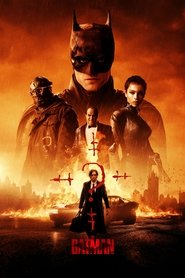
The Batman (2022) — dir. Matt Reeves
The blockbuster as procedural. Greig Fraser's photography is famously underlit by studio standards — near-monochrome darkness punctuated by amber, sodium orange, and blood red, faces falling into shadow in the manner of Gordon Willis's radically underexposed Godfather frames. Watch how the film's first move is to establish that everyone is being watched, and that the watching is the plot: a detective, a cipher-leaving killer who addresses his crime scenes directly to him, and you decoding over the detective's shoulder. Its true ancestors aren't other comic-book films but Zodiac and Se7en — the obsessive, document-driven investigation over the action set-piece.
Watched together, these twelve films become a conversation across seven decades about the same problem: what happens to a crime story when the filmmaker refuses to rush the crime. You'll see the lineages plainly — Le Samouraï's ritual solitude flowing into Carter, the Driver, and McCall; Gordon Willis's darkness passed from The Godfather to Road to Perdition to The Batman; the affectless avenger handed from Lee Marvin to Michael Caine and beyond. But more than influence-spotting, this set trains a way of seeing. Once you've learned to read a folded napkin, a held close-up, a silenced gun, a Polaroid running backward, you'll notice how much of these films' meaning lives in the waiting — in reflections, rituals, and rooms where nothing has happened yet. The genre promises violence. These films know the promise is more interesting than its keeping.