Sightlines · a mini film course
When the Gun Isn't the Point: Killers, Avengers, and the Weight of Time
There's a particular kind of crime and action film that isn't really about the crime or the action. The films on this list all belong to that company. They use genre mechanics — the revenge mission, the contract killing, the manhunt, the conspiracy — as a frame around something quieter and stranger: a study of how men move through the world when the world has stopped making sense to them, or never did. What connects them is less plot than posture — the way each film uses stillness, space, time, and the human face to ask what it costs a person to be shaped for violence. Watch how patient these films are. Watch what the camera does when nothing is happening. That patience is where the real argument lives.
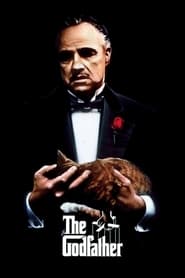
The Godfather (1972)
Before you follow the story, follow the light — or rather, follow where it isn't. Gordon Willis, the cinematographer, made the audacious choice to keep the most powerful man in the room almost entirely in shadow, his eyes swallowed by darkness cast from above. This wasn't a mood choice; it's a moral statement built into the photography itself. Notice also how slowly the camera withdraws in the opening scene, and how long Coppola holds on faces listening rather than speaking. The famous baptism sequence toward the end of the film is worth your complete attention: watch how it braids two different kinds of action together through editing, using a structural idea borrowed from silent cinema, and what that juxtaposition asks you to feel simultaneously.
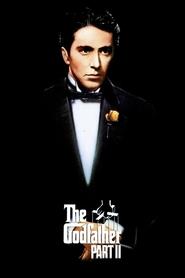
The Godfather Part II (1974)
Coppola runs two entirely separate stories in two different time periods, and the film's central pleasure — and pain — comes from the way those stories comment on each other without ever meeting. Watch how Willis's visual language changes depending on which story you're in: the past has one kind of light, the present another, and the shift is itself an argument about innocence and its loss. Pay particular attention to the architecture of how Michael is framed as the film progresses — whether he is centered or cornered, in the light or edged toward darkness, surrounded or alone. By the final image, the camera simply sits with him and refuses to resolve anything. That refusal is the film's last and most honest statement.
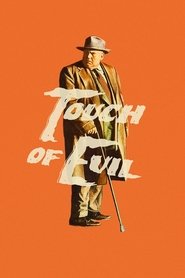
Touch of Evil (1958)
The opening shot — an unbroken crane movement lasting roughly three minutes, threading through a border town in a single continuous breath — is one of the most discussed in cinema history, and it deserves that attention: notice how it binds completely unrelated people and spaces into a single, connected tension before anything has technically "happened." Then watch how Welles photographs himself as the corrupt detective Quinlan: low angles, wide lenses, ceilings pressing down, his body made grotesque by the optics. The camera is telling you something about institutional power and physical corruption that the dialogue never quite states. Welles also builds scenes through movement within the shot rather than cutting between shots, so watch for the way performers move toward and away from the lens to shift the drama's weight.
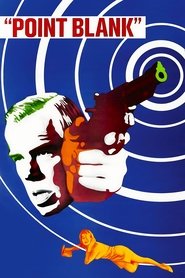
Point Blank (1967)
The film fractures its timeline without warning or courtesy — there are no dissolves, no musical cues, no helpful labels announcing then and now. Boorman learned this technique from the French filmmaker Alain Resnais, and he applies it to a pulp revenge story with remarkable nerve. Watch especially how sound crosses the cuts: a voice, a footstep, a line of dialogue will carry over from one time into another, so that past and present bleed into each other rhythmically before you've had time to orient yourself. The geometric coldness of the Los Angeles locations — glass towers, concrete channels, empty corridors — is not incidental. The modern city is being used as a visual argument about what has happened to human connection and to money itself.
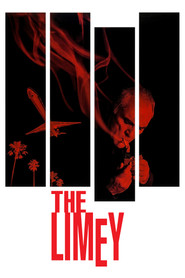
The Limey (1999)
Soderbergh does something technically brazen that's worth knowing in advance so you can watch for it: he inserts footage of Terence Stamp from a completely different film made in 1967 — a Ken Loach picture called Poor Cow — as Wilson's own remembered past. He doesn't label it. He doesn't soften it with a different film stock or a musical sting. The younger man simply appears, grainy and decades younger, as if memory doesn't know it's supposed to announce itself. This technique, carried further through the film's restless cutting between the present and the recent past, means the film's form is its subject: grief and regret don't arrive in neat chronological order, and Soderbergh's editing refuses to pretend otherwise. Watch how often we hear a line of dialogue before we see the scene it belongs to.
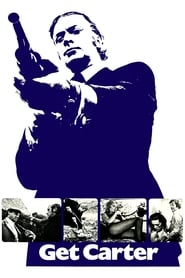
Get Carter (1971)
Wolfgang Suschitzky's photography is the first thing to track: it has the flat, honest look of documentary rather than the heightened drama of studio crime film. The northeast English locations — the industrial skyline, the slag heaps, the brutalist car park, the grey river — are photographed in weak daylight that refuses to make anything romantic. Carter is not presented as separate from this world; the film insists he belongs to it, is made of the same materials. Watch how Hodges uses long shots to place Carter against landscape and architecture rather than cutting tight to make him heroic. The film's emotional logic is one of gravity rather than triumph: something is pulling the central character down throughout, and the camera keeps finding compositions that make that pull felt.
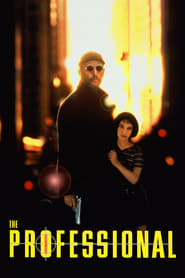
Léon: The Professional (1994)
Notice what Besson shows you about Léon before he shows you Léon working. The houseplant. The milk. The sit-ups in the dark. This is a film that is very interested in the gap between what a person does for a living and whatever small, arrested thing they are underneath. Thierry Arbogast's cinematography warms the interior spaces — the apartment where Léon and Mathilda take refuge glows amber against the colder world outside — and the lens frequently moves very close to Jean Reno's face to hold an expression that is not quite readable, not quite acting on anything. That blankness is a performance choice worth watching: Léon is defined by what he doesn't express as much as what he does.
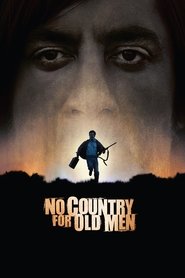
No Country for Old Men (2007)
Roger Deakins uses the West Texas landscape as pressure rather than beauty: long lenses compress figures against featureless desert, making distances feel both vast and inescapable. The film is also remarkable for what it does with silence — many sequences that would be scored with music in a conventional thriller are left with only ambient sound, so the drone of a motel room, the hiss of a cattle gun, and the hum of fluorescent light carry the full weight of dread. Pay close attention to how the Coens handle the structure of expectation: the film repeatedly sets up the machinery of the genre thriller — pursuer, pursued, investigator closing in — and then quietly declines to deliver the resolution that machinery promises. The coin toss scene is the film's thesis statement. Watch the gas station proprietor's face.
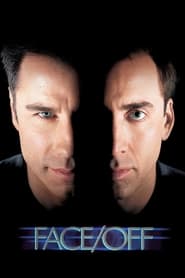
Face/Off (1997)
John Woo composes the film in mirrors, reflections, and doubled images almost from the first frame — this is worth watching for consciously, because it isn't decoration. The formal question the film keeps posing is whether identity lives in a face, a body, a set of habits, or something underneath all of those, and the production design and camerawork keep visualizing that question rather than simply letting the screenplay state it. Oliver Wood's cinematography favors backlit smoke, shafts of light, and slow-motion passages that turn action into something closer to ballet — this is Woo's Hong Kong filmmaking sensibility carried into a Hollywood studio picture, and the emotional register is operatic in a way that distinguishes it sharply from the ironic cool of most American action cinema of the period. The famous standoff over a sheet of reflective glass is the film's central image delivered with complete literalness.
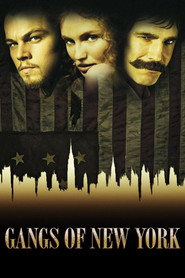
Gangs of New York (2002)
Watch Daniel Day-Lewis not for what his character does but for how he occupies space — the way he sets down his knives, the angle of his body when he addresses a crowd, the glass eye tapped for rhetorical emphasis. Scorsese and Day-Lewis are using Bill the Butcher's physical presence to make an argument about nativist American identity that the film's dialogue never quite needs to state directly; his body is a theory of belonging-as-domination made visible. Michael Ballhaus's cinematography renders the Five Points as an almost subterranean world of candlelight, soot, and saturated reds — less historical reconstruction than infernal myth, owing something to the great studio-built historical spectacles of Italian cinema. The film's thesis about how American civic life was founded is in the imagery as much as the story.
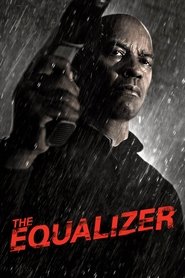
The Equalizer (2014)
The film's long first act is unusual for its genre and deliberate in its slowness: Fuqua and cinematographer Mauro Fiore hold on Denzel Washington in static compositions at his regular diner table, letting stillness carry meaning rather than propelling things forward. Notice the recurring use of reflective surfaces — windows, glass — to frame McCall as a figure watching the world rather than moving through it. This patience is the film's central formal choice, because it establishes McCall's stillness as something that costs him something to maintain, an effort of will rather than indifference. The rituals — the tea, the book, the folded napkin, the timed watch — are worth paying attention to as character argument: a man who has arranged the external world with tremendous precision because something internal remains ungoverned.
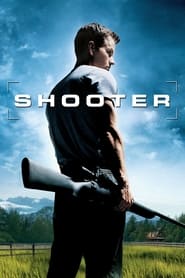
Shooter (2007)
The film opens with a technical detail that announces its priorities: the bullet arrives before the sound of the shot, the small gap between impact and report rendered faithfully. This procedural seriousness about what a skilled body actually does — how it reads wind, calculates distance, modifies equipment — is what Fuqua and screenwriter Jonathan Lemkin are most invested in, and it runs throughout. Peter Menzies Jr.'s cinematography uses environmental contrast deliberately: the Montana wilderness is open, clean, and lit by natural light that reads as a kind of moral clarity, while the institutional spaces of government — offices, safehouses, corridors — are compressed and artificially lit in ways that feel dishonest by comparison. The film is a straightforward action thriller, but it's one that uses the landscape as an argument about where integrity might still be found.
Why Watch Them Together
What these films collectively reward is attention to the gap between action and meaning — the space between what a character does and what it resolves, between the violence and its justification, between the mission and the person carrying it out. Watched in sequence, they form an informal education in how filmmakers use stillness, architecture, light, and time to make the inner life of a genre picture visible. The great cinematographers here — Willis, Deakins, Lachman, Suschitzky, Lathrop — are each doing something distinct, but they all understand that the camera's patience is itself a moral position. And the performers they photograph — Brando, Washington, Caine, Stamp, Reno, Marvin — share a quality of held stillness that the films are structured to make eloquent. Watch what these men do when they're not doing anything. That's where the films live.