Sightlines · a mini film course
The State Against Its Own: Twelve Films About Watching Power Work
There's a particular chill that runs through all twelve of these films, and it isn't the chill of the villain in the shadows. It's colder than that: the discovery that the institution you serve — your government, your agency, your army — has already decided you're expendable. These are films about people who look too closely at power: investigators, soldiers, spies, photographers, a sound technician, a father. And the filmmaking follows the looking. Again and again, the drama isn't a fistfight but an act of perception — a tape replayed, a face reconstructed, a document copied, a camera raised at exactly the wrong moment. Watch these films for how they watch: where the camera places you, what it lets you see before the characters see it, and how often the deadliest weapon in the frame is a piece of paper.
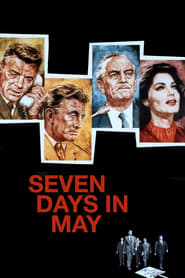
Seven Days in May (1964)
The oldest film here, and the blueprint. Frankenheimer and cinematographer Ellsworth Fredericks shoot in deep-focus black and white with aggressive wide-angle lenses, so a face looms huge in the foreground while the room conspiring behind it stays razor-sharp. Notice how a single shot can hold an entire power struggle on one plane — no cutting needed, because the composition itself tells you who's dangerous. Notice too what the weapons are: not guns but memoranda, phone logs, letters. It's a thriller fought entirely with evidence, and it invents a grammar the rest of this series inherits.
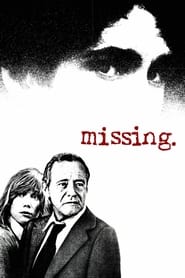
Missing (1982)
Costa-Gavras, who essentially invented the modern political thriller with Z, brings that European sensibility to a Hollywood production about an American father searching for his son in an unnamed Latin American country. Watch how the camera works in two registers: mobile and handheld in the present-tense search, embedded in crowds and chaos, versus the accumulating stillness of official rooms where nothing is ever quite said. The suspense here is built from dogged disclosure — an interview, a demand, a requested document — each small act revealing another piece of a hidden picture. It's a film about a man losing two faiths at once, and it lets you feel each one crack.
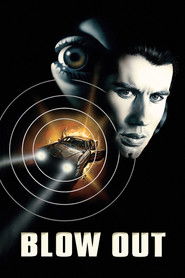
Blow Out (1981)
De Palma opens with a joke — a prowling camera revealed to be footage from a cheap slasher film — and then gets deadly serious about the same question: what can a recording actually prove? A sound man taping wind at night captures something his trained ear can't file under "accident," and the entire film lives in the gap between what he heard and what he can demonstrate. Watch how De Palma builds meaning across images rather than inside them: audio laid against photographs, sound synced to sight, the viewer assembled into a juror. Vilmos Zsigmond's anamorphic widescreen photography is among his most controlled — every frame is doing evidentiary work.
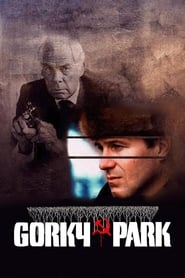
Gorky Park (1983)
Three bodies in the Moscow snow, faces and fingertips removed so no one can ever name them. The whole film is organized around that absence — an investigation that must literally rebuild identity, clay and bone, before it can ask who benefits from erasure. Watch the reconstruction sequences: patient, flatly lit, fascinated by real forensic method, they quietly manufacture a human face — and a human feeling — where someone tried to abolish both. Notice too the surrogate geography: Helsinki performing Moscow, a story of Russia made entirely without Russia, shot in a muted wintry palette of grey sky and sodium light.
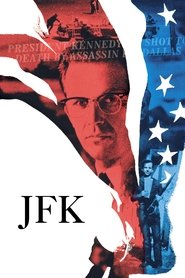
JFK (1991)
Stone's most audacious move is also his most unsettling: he degrades freshly shot footage to match the grain of 1963 newsreel and splices it against the real Zapruder home movie, so you can never be fully sure whether you're seeing document or reconstruction. That's the point. The film argues that the official story is itself a fabrication, and that the only way to fight an image is with images. Watch the editing — an argument built from collisions, in the lineage of Eisenstein — and Robert Richardson's Oscar-winning photography, which shifts textures constantly: warm and classical for home, hot and blown-out for interrogation, grainy and stolen-looking for the past. Watch with a jury's attention. The film wants your unease.
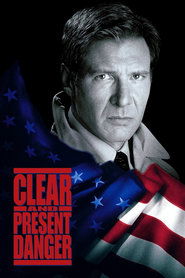
Clear and Present Danger (1994)
The purest expression of the document-as-weapon idea: the film's most nerve-shredding set piece is two men at keyboards, one copying a file while the other deletes it out from under him. No guns in frame. Donald McAlpine's photography splits the film into two visual worlds — Washington in cool, low-key, wood-paneled shadow; the field in heat and glare — and watch how the cross-cutting binds them, so that a decision in a dim office lands as violence a hemisphere away. A big studio thriller that locates its "clear and present danger" not abroad but inside the government itself.
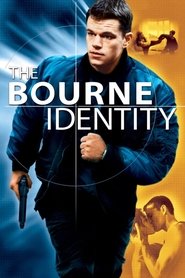
The Bourne Identity (2002)
A spy film that begins by subtracting the spy. Watch the diner scene early on: a man recites everything his eyes have gathered without his permission — the exits, the plates, which stranger could become a problem — and is frightened by his own inventory. His body knows things his mind can't reach, and Doug Liman films that split with a camera that alternates registers: restless and searching in public space, still and warm in the rare private moments. Shot on real European locations rather than backlots, it trades the fantasy spy for something colder and more plausible — a man trying to reclaim himself from the system that built him.
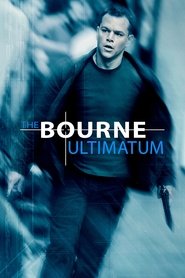
The Bourne Ultimatum (2007)
Here the handheld style reaches full expression: the camera almost never rests, drifting and reframing even in dialogue, as if it too were under surveillance. The Waterloo Station sequence is the series' masterpiece and this set's thesis in miniature — three stacked layers of watching (a man on monitors, operatives in a crowd, a reporter who can hear but not see), the whole drama conducted through eyes and earpieces, and not a shot fired. Listen to the sound design there: the score drops away and earpiece chatter fills the space. Greengrass's roots in British documentary television, and the influence of The Battle of Algiers' faked-newsreel texture, are everywhere in the grain.
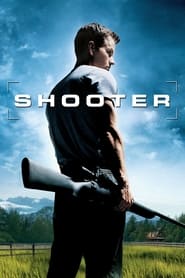
Shooter (2007)
Watch the very first kill: the bullet lands, and only afterward does the crack of the shot roll across the valley. Impact first, sound second — a small ballistic truth that's also the film's whole design in miniature: perception and action separated by a measurable gap, then closed by a supremely competent body. Fuqua's film belongs to the mid-2000s wave processing Iraq-era disillusionment through the betrayed-soldier story, and Peter Menzies Jr.'s photography draws the moral map visually: open Montana light for the world before corruption, cramped institutional interiors after. A conspiracy thriller that asks what a perfect instrument does when the institution wielding it proves unworthy.
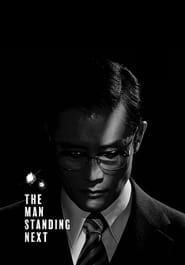
The Man Standing Next (2020)
The quietest film in the set, and possibly the most gripping. Woo Min-ho builds a political thriller almost entirely out of a face doing nearly nothing — a flicker at the jaw, a held glance — as an intelligence chief watches his regime rot and cannot yet convert what he sees into what he might do. Watch the two-men-across-a-table scenes, where power transfers through posture and eyeline rather than dialogue — a staging grammar inherited directly from Costa-Gavras. Jo Young-jik's palette refuses period-film nostalgia: amber and institutional green inside government rooms, cold blue-grey outside, everything slightly airless, sealed.

The Hunger Games: Catching Fire (2013)
Don't let the franchise packaging fool you — this is a film about the management of dissent through spectacle, and it knows exactly what it's doing. Watch the wedding-dress spin on the broadcast stage: one gesture, two audiences, two meanings, performed live in front of the regime that scripted it. The film keeps staging moments like this — a salute, a forced kiss, joined hands — postures held up to be read rather than actions that resolve anything. Note the visual shift from the first film: where its predecessor jittered handheld, this one is poised, composed, presentational — a camera style that matches a world where everyone knows they're being watched.
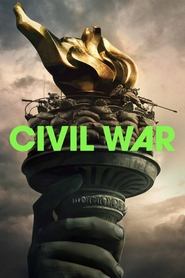
Civil War (2024)
Garland closes the series by turning the question on us. His press-team protagonists drive through a collapsing America, and the film's signature device is a shock every time: mid-firefight, motion stops, one perfectly composed high-contrast still, a shutter click — then motion resumes as if nothing had been removed. Something had. Rob Hardy's camera behaves like a fifth member of the press team, handheld, sometimes caught flat-footed by violence erupting at the frame's edge. Watch your own reactions to those frozen frames: the film is asking what it means to pull one saleable image out of the flow of the world, and whether witnessing is moral seriousness or a sublimated thrill.
Watched together, these twelve films form a sixty-year conversation about the same discovery: that the state can lie, and that the only defense is to look harder, record better, read more carefully. They pass techniques down the line like contraband — Frankenheimer's rooms-that-tell-you-everything, Costa-Gavras's evidence-as-suspense, the faked-documentary grain that travels from The Battle of Algiers through the Bourne films, the weaponized document that connects a 1964 general's phone logs to a 1994 progress bar. And they keep relocating the drama from the trigger finger to the eye and the ear — to tapes, photographs, reconstructed faces, broadcast gestures, a shutter click. By the time you reach Civil War, the question the whole set has been circling arrives at your own seat: what does it cost to be the one who watches? Pay attention to how each film teaches you to look, and you'll find they're all, in the end, teaching you to look at looking itself.