Sightlines · a mini film course
Revenge Is a Trap: Eleven Films Where Getting Even Costs Everything
Every film on this list runs on the oldest engine in the movies: a wrong is done, and someone sets out to answer it. But watch closely and you'll notice none of these films actually believe in that engine. Again and again, the avenger turns out to be part of the machinery that wronged him. The pursuit deepens the wound instead of closing it. And the filmmakers build that doubt right into the form — cameras that watch rather than chase, spaces that become traps, faces held so long they stop being windows and become walls. This is a course in how crime cinema learned to distrust its own hero, told through eleven films that stretch from the last gasp of classic noir to the neon-lit present. What connects them isn't just revenge — it's the growing suspicion, visible in the framing and the cutting itself, that the act of getting even settles nothing.
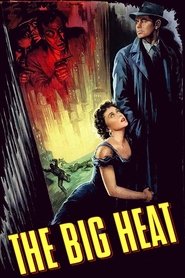
The Big Heat (1953)
Start here, with the machine running clean. Fritz Lang builds his corrupt city out of thresholds — doors, windows, archways, corridors — placing his people constantly at the boundary between safety and exposure. Watch how the bright, warm spaces of the opening give way to progressively narrower and darker ones. And notice Lang's patience with the worst moments: he trusts you to do the arithmetic before the camera confirms anything, letting a turned-up coat collar say what a cut to the wound would cheapen.
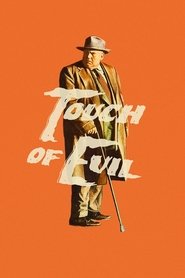
Touch of Evil (1958)
The famous opening shot — three unbroken minutes gliding over a border town with a bomb ticking somewhere inside it — is worth watching twice. Notice how it binds strangers, music, traffic, and off-screen life into a single breathing whole, an argument that everything in this town is already connected. Then watch what Welles does with wide lenses and low angles: instead of cutting, he lets actors loom toward the camera and shrink away from it, so that moral corruption becomes something you can see in the distortion of a body filling the frame.
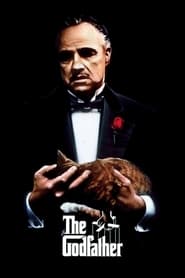
The Godfather (1972)
Gordon Willis lit Marlon Brando from almost directly above, flooding his eye sockets with shadow — a decision so radical the establishment didn't know what to make of it. Watch for what that darkness does: you cannot read Vito's eyes, and that blindness is the feeling of his power. Notice too how the film refuses the old gangster-movie bargain in which the criminal's fall arrives as moral punishment; instead, family loyalty and institutional violence are shown as the same structure, wearing each other's clothes.
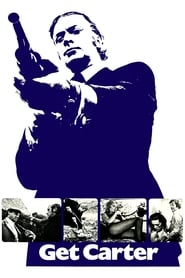
Get Carter (1971)
Wolfgang Suschitzky, a documentary photographer by training, shoots Newcastle flat and true, in weak northern daylight that refuses to prettify anyone. Watch how the film stages Michael Caine as a small figure against real industrial architecture — coal, river, car park — so the landscape seems to be pulling him downward rather than merely surrounding him. This is a revenge film that inherits the cool, methodical avenger from Point Blank and Le Samouraï, but insists from the first frame that its hero belongs to the same rotten economy he's come to punish.
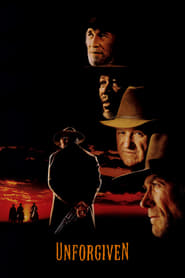
Unforgiven (1992)
The opening image — a lone figure at dusk, silhouetted against a burning orange sky — is built on the exact visual template Eastwood helped invent with Sergio Leone. But the man is digging a grave, not riding in. Watch how the film keeps promising the clean, mythic violence of the classical Western and withholding it, letting scenes go slack where a genre cut should fall, so that when killing finally comes it arrives dark, confused, and without grace. It's a Western that opens on its own funeral and asks what the stories cost.
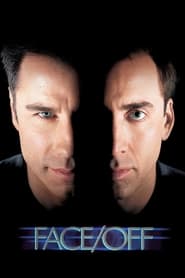
Face/Off (1997)
John Woo brought the operatic emotional style of Hong Kong action cinema — the slow-motion gun ballets, the doves, the church light — into a Hollywood blockbuster, and the result is action staged as feeling rather than a break from it. Watch the mirrors: Woo keeps arranging his two stars in reflected, doubled compositions, until a two-way mirror standoff makes it literal — each man aiming at his own stolen face. The question underneath all the spectacle is deadly serious: where does a self live, if not in the face?
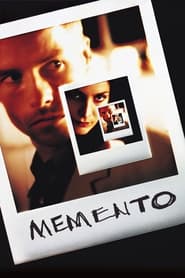
Memento (2000)
Watch the Polaroid in the opening — a photograph un-developing, detail draining back into blankness. It's the whole film in three seconds. Nolan's real invention is structural: the color scenes run backward, each ending where the last began, so you're dropped into every scene with no memory of how you got there, while a second black-and-white strand runs forward to meet it. You don't watch a man who's lost his memory; the film makes you lose yours. Wally Pfister's photography stays deliberately clean and legible — a generous choice, given how hard your brain is already working.
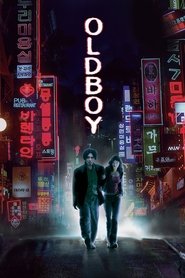
Oldboy (2003)
The famous corridor fight is shot flat from the side in one unbroken take, the camera gliding along the wall like an eye reading a line of text — and the man in it can only move one direction, along a track someone else laid down. That's the film's whole argument compressed into a single shot. Watch how Chung Chung-hoon's camera treats the frame as a moral instrument: canted angles, overhead views that shrink the hero to a figure being observed. The film wears the costume of pure action cinema while quietly demonstrating that revenge is just another room with a locked door.
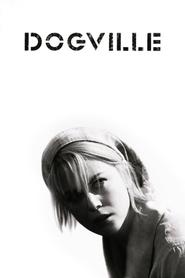
Dogville (2003)
Von Trier removes the visible world: a town rendered as chalk lines on a black floor, doors that exist only as sound, a dog that is just the word "dog" written on the ground. Watch what this subtraction does — stripped of walls and set dressing, every frame becomes something you have to actively read, and there's nowhere to hide from what the townspeople do to their guest. Anthony Dod Mantle's restless handheld camera hunts among the actors against all that geometric stillness, keeping the abstraction uncomfortably alive.
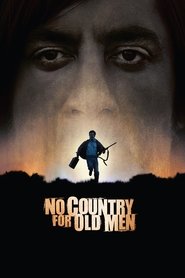
No Country for Old Men (2007)
Watch the gas-station coin toss: nothing moves but the talk and the fluorescent light, and the tension has nowhere to go. Roger Deakins shoots the Texas landscape with long lenses that flatten small figures against featureless desert — the land as participant, emphasizing distance and exposure. And listen: the film inherits its grammar from The Conversation, where rustle, drone, and room tone do the work a score usually does. This is a chase thriller that honors every mechanic of the genre while quietly unplugging the machine, and the strange dread you'll feel is the sound of it not restarting.
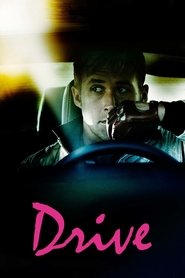
Drive (2011)
Refn shoots Ryan Gosling's face at surveillance-camera nearness and then holds — past comfort, past the point where any normal film would cut. Watch what those held close-ups do: nothing discharges, the face registers and registers, a surface offered instead of a psychology. The Driver has no name, no past, no stated want — a figure inherited from Le Samouraï and The Driver — and the film inhabits the myth of the cool loner so completely that its costs become visible. Notice the elevator scene when you reach it: tenderness and violence in one unbroken motion, with the transition between them deliberately missing.
Why watch these together? Because the sequence teaches you to see the argument developing. Lang and Welles show the machine at full power — situation, action, consequence, chained tight. Coppola and Hodges pour doubt into it: heroes who belong to the corruption they fight. Eastwood stages the machine's funeral inside the genre that built it. And the twenty-first-century films — Memento, Oldboy, Dogville, No Country, Drive — dismantle it openly, running revenge stories backward, sideways, on bare floors, or at a stillness that lets you feel every gap the old films cut across. Watch for the recurring gestures: the held face, the figure dwarfed by landscape, the violence that arrives without beauty. By the end, you won't just have seen eleven great crime films. You'll be able to feel, in your own attention, the difference between a movie that believes in the fix and one that knows there isn't one.