Sightlines · a mini film course
The Camera as Conscience: Watching, Knowing, and the Limits of Action
There's a question running beneath all of these films, even when the bullets are flying and the clock is ticking: what does it cost to see clearly, and what happens when seeing clearly isn't enough? These twelve films — spanning Fritz Lang's Weimar Berlin to Dan Gilroy's nocturnal Los Angeles — are all, in their different ways, about the gap between perception and action, between what a character (or a camera, or a viewer) can observe and what any of them can do about it. Some fill that gap with dazzling, tragic momentum. Others let it yawn open until it swallows everything. Watching them together, you start to notice a shared grammar: a set of recurring choices about where to put the camera, how long to hold a shot, what to leave in shadow, and what to withhold entirely. This is a course in that grammar.
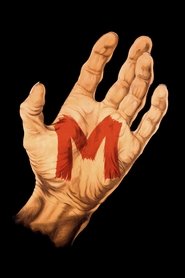
M (1931)
Lang's film is where the grammar begins. Watch how he handles the murders: he never shows them. Instead he shows a ball rolling to a stop, a balloon snagging in telephone wires, a mother calling up an empty stairwell. The empty frame does the killing — and in doing so, it makes you an active participant, assembling the horror from its edges. Then notice the small whistled tune — Grieg's "In the Hall of the Mountain King" — and how Lang trains you to use it as an early-warning system before any character can. You know more than the people on screen, and that knowledge is a kind of dread. The film invents the serial-killer genre and immediately turns it into a question about justice: when the city's criminals convene to try the killer themselves, Lang refuses to make that irony easy.
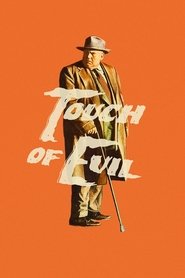
Touch of Evil (1958)
Before you watch anything else, watch the opening shot — and keep watching it, because it doesn't cut for roughly three unbroken minutes. A crane lifts off the ground and follows a car with a bomb in its trunk through a border-town night, threading traffic and music and bodies until the explosion finally arrives. Welles and cinematographer Russell Metty use a wide-angle lens throughout the film to distort space: figures loom grotesquely in the foreground while the world stretches away behind them, ceilings press down, corridors seem to breathe. This is a camera that tells the truth about power and corruption through sheer geometry. Then meet Hank Quinlan — shot from floor level, enormous, a ceiling practically resting on his head — and hold those two images together: the camera that cannot stop telling the truth, and the cop who cannot stop forging it.
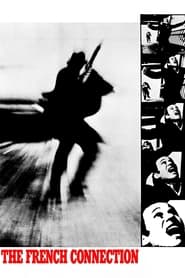
The French Connection (1971)
Friedkin's film essentially invented the texture that American crime cinema would live in for the next two decades: handheld cameras on actual New York streets, winter light that offers no glamour, telephoto lenses squashing distance so that a surveillance tail feels claustrophobic even across a wide boulevard. Watch the cold. Doyle stands on a Brooklyn sidewalk eating bad pizza, and across the glass Charnier — the man he's hunting — finishes a fine meal at a white tablecloth. Friedkin doesn't explain the image; he just holds you on Doyle's side of the glass and lets you feel the asymmetry. The film is a masterclass in procedural patience: each stakeout, each wiretap, each near-miss gradually assembles a criminal network that is always one step too sophisticated for the blunt instrument trying to dismantle it. Notice what the car chase — rightfully famous — does not do: it does not resolve anything.

Chinatown (1974)
Polanski and cinematographer John Alonzo commit a deliberate heresy: they set a noir in the blazing California sun. Shadow offers no refuge here; crimes happen in harsh midday light and wide open spaces. Jack Nicholson's Jake Gittes spends much of the film with a white bandage across his nose — a detective who can't follow his own nose — and that bandage is worth watching as a kind of running joke that turns serious. The film deploys every piece of classical detective-story machinery with maximum craftsmanship — the photograph, the tail, the discovery of evidence — and then uses that machinery to accelerate rather than prevent catastrophe. Notice how the water imagery functions: water is what the conspiracy is about, but it also works as a figure for power itself, the way authority finds hidden channels and shapes a landscape without ever being seen doing it.
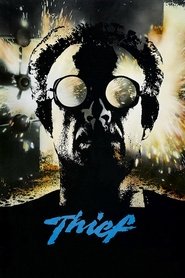
Thief (1981)
Michael Mann's debut feature establishes a nocturnal visual grammar he will spend forty years refining: wet streets that mirror neon, deep blacks against saturated primary colors, a city that looks most beautiful when it is most dangerous. Cinematographer Donald Thorin and the Tangerine Dream score conspire to make Frank's safecracking feel like a form of meditation — watch the thermal-lance sequence, shot in near-real-time with actual tools, for what it does to the tension between competence and vulnerability. The film is genuinely interested in how the job is done, and that interest is not decorative. Mann builds an entire argument about autonomy and the cost of professionalism through the act of watching a man work. Pay attention to the collage Frank carries — a photograph assemblage of the life he intends to purchase. It is a character's attempt to author his own future, and the film has a devastating opinion about that ambition.
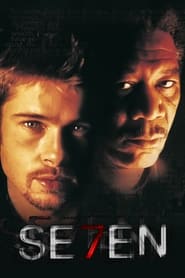
Se7en (1995)
Darius Khondji's cinematography here is perhaps the most influential visual document of 1990s American film. The principle is simple and total: every light source is motivated — a bare bulb, a flashlight, streetlight bouncing off rain — and the camera is placed to let maximum shadow exist around it. Almost nothing is lit from above in the conventional studio sense; instead light comes from within the scene, at human-eye level, as if the city is generating its own murk. This is worth studying as a system: darkness here is not atmosphere but argument, a statement about what institutions can see and what they cannot. Watch Somerset more than Mills — watch an intelligent man's attempt to maintain professional distance from a city he has decided to abandon, and watch what the film does to that posture. The killer's crime scenes function as a series of texts to be read, and the film rewards the viewer who reads them alongside Somerset rather than waiting for the plot to deliver answers.
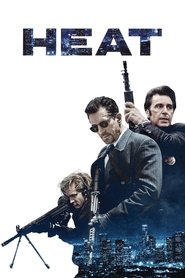
Heat (1995)
Dante Spinotti shoots Los Angeles on anamorphic widescreen as a cold, horizontal city of glass towers, freeway interchanges, and distant harbour lights — a functional rather than romantic space, where warmth exists only in small, fragile domestic interiors that the film treats as things easily shattered. Watch how Mann uses that city geometry: figures are often tiny within vast urban architecture, and the film's action set-pieces — particularly the downtown bank robbery — use actual city space at actual scale rather than a studio's approximation. The famous coffee-shop scene between De Niro and Pacino is the film's pivot point, and worth watching twice: two men who have organised their entire lives around a single operational discipline, briefly sitting still, with no music and no action available to either of them. Notice what the film says, without sentimentality, about the cost of that discipline.
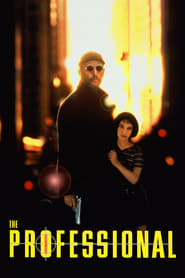
Léon: The Professional (1994)
Thierry Arbogast lights this film in warm ambers and golds for the interior scenes — the apartment becomes a genuinely sheltered space, a register the film earns slowly — and shifts to cooler, harder tones whenever violence or institution enters. The visual system is doing character work: warmth is not simply decoration but an argument about whether refuge is possible in a life organised around killing. Watch Jean Reno's stillness. He plays Léon as a nearly immobile surface, and the film is interested in what that blankness holds: a kind of arrested, monkish innocence that the narrative both celebrates and places in danger. Notice the plant — Léon's self-described only friend, "always happy, no roots, like me." It is an unusually honest piece of symbolism, and the film earns the right to it by making Léon's rootlessness feel like genuine loss rather than cool posturing.
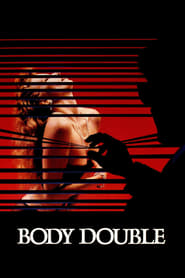
Body Double (1984)
De Palma and cinematographer Stephen Burum keep the camera's own mechanisms visible throughout: telescope eyepieces, split-diopter lenses that hold a face in the foreground and a doorway in the deep background simultaneously, split-screen panels, point-of-view shots that remind you they are point-of-view shots rather than letting you forget the apparatus. This is a film that refuses to let you watch innocently. The whole structure is a meditation on Hitchcock — Rear Window, Vertigo, Psycho are all openly present, lifted and reassembled — and part of the film's project is to implicate the viewer in the act of cinematic looking itself: the protagonist watches, the viewer watches the protagonist watching, and the film argues that these are not entirely different activities. Watch for the split-diopter compositions in particular; they are not just stylistic flourishes but a way of making two separate planes of information feel simultaneously present and impossible to reconcile.
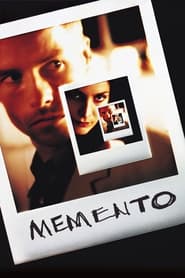
Memento (2000)
The structural conceit is simple to describe and genuinely disorienting to experience: the color scenes run backward, each one ending where the previous one began, so you are dropped into every scene with no memory of how you got there. A second strand, in black-and-white, runs chronologically forward. They meet in the middle. This is not a gimmick — it is a formal argument. The point is not to puzzle you but to put you inside a specific experience rather than observing it from outside. Watch Wally Pfister's photography: deliberately restrained, clear, prioritising legibility over flourish, because the structural complexity already demands significant cognitive effort from the viewer. Notice how Leonard's system of Polaroids, notes, and tattoos functions — it is essentially an attempt to build a self out of objects, to author one's own identity through external annotation. The film has a deeply unsettling relationship to that project.
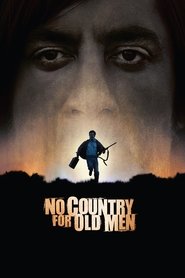
No Country for Old Men (2007)
Roger Deakins shoots the West Texas landscape on long lenses that compress distance and flatten space, pressing human figures against vast, indifferent terrain. Notice the restraint: the film's most violent moments are frequently handled with a near-clinical quietness, off-screen or in the aftermath, with ambient sound doing more work than any score. The coin-toss scene at the gas station — held mostly on reaction, in fluorescent silence — is worth extended attention as an exercise in sustained tension achieved through almost no conventional means. Watch Tommy Lee Jones's Bell and notice what the film does with his narrated meditations: it treats an aging man's sense that the world has outpaced his understanding not as weakness but as the film's real philosophical subject. Chigurh functions less as a conventional antagonist than as a kind of weather system — something the characters encounter rather than solve.
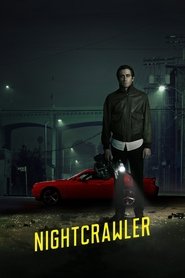
Nightcrawler (2014)
Robert Elswit renders nocturnal Los Angeles as something genuinely beautiful: a glittering, depopulated grid of empty freeways and fluorescent light that the film refuses to make ugly even as it diagnoses the culture that produced it. That refusal is part of the argument. Watch what Lou Bloom does at crime scenes once he becomes proficient — the way he begins to arrange what he films, dragging a body into better light, improving the composition. The observer becomes the author of what he observes, and the film is precise about the institutional systems that reward him for doing so. Bloom is fascinating to watch because he has absorbed the grammar of motivational self-improvement — the language of initiative, growth, and relentless optimisation — and applied it without any of the ethical constraints that grammar is supposed to assume. Jake Gyllenhaal plays him with a stillness that becomes increasingly strange as the film progresses; notice how rarely he blinks.
Why Watch These Together
Seen individually, each of these films is a considerable achievement. Seen together, they start to illuminate each other in ways that are genuinely instructive. The opening shot of Touch of Evil and the structural architecture of Memento turn out to be asking related questions about time and continuity; the cold surveillance of The French Connection and the warm-lit refuge of Léon are in quiet conversation about what it costs a person to be professionally observant. M's empty frame and Se7en's carefully lit darkness share a belief that what you withhold is as meaningful as what you show. Heat and Thief are almost a diptych — the same director returning, fourteen years later, to the same question about competence and its price, with a larger canvas and a more devastating answer. Chinatown and No Country for Old Men are the two great American films about the limits of investigation, separated by thirty-three years, and together they form a complete and merciless argument. These films reward not just watching but watching how they watch — where the camera is, what it chooses to stay with, what it refuses to show, and what it trusts you to supply. That attentiveness is what repertory cinema is for.