Sightlines · a mini film course
Watching Instead of Acting: Twelve Films Where the Camera Refuses to Rush
There's a certain kind of thriller that trains us like dogs: a problem appears, a hero moves, the world changes, cut to the next thing. The films on your list — a mix of noirs, epics, vigilante pictures, and art-house meditations — all quietly break that training. In each one, seeing and doing come apart. Characters watch worlds they cannot fix. Cameras drift through spaces that seem to think for themselves. Time is allowed to stretch, loop, run backwards, or fold in on itself like a mirror. Genre films smuggle in the patience of art cinema; art films borrow the pulse of the thriller. Watch them together and you'll start noticing the same daring choice everywhere: the moment a filmmaker lets a shot last, and trusts you to feel what the character cannot say.
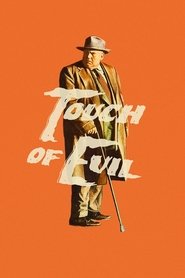
Touch of Evil (1958)
The famous opening: a camera lifts off the ground and threads three unbroken minutes through a border town — traffic, neon, music bleeding from doorway to doorway — binding a strolling couple and a ticking car trunk into one continuous breath. No cut. Then notice how the film photographs its corrupt cop: from floor level, wide-angle, the ceiling pressed down on his head, his bulk made monstrous by the lens itself. Welles builds scenes by having actors move toward and away from the camera rather than cutting between them — the film's whole moral argument about honest images and forged evidence is carried in how it's shot.
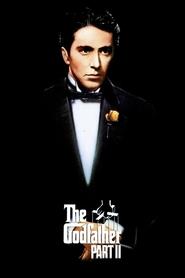
The Godfather Part II (1974)
Gordon Willis shoots the past and present in two different registers — harsh Mediterranean light for young Vito's Sicily, deepening shadow and amber enclosure as the American story darkens — and Coppola braids the two timelines so each comments on the other. Watch how the film strips the gangster genre of every consolation, and how it dares to end not on an act but on a man simply sitting, the camera waiting with him. Powerful men framed small against grand architecture is a trick borrowed from Visconti; here it becomes tragedy.
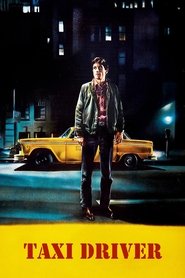
Taxi Driver (1976)
The whole film knows what it knows from inside a cab: windshields fogged and streaked, neon smeared across wet glass, pedestrians caught and lost in headlights. Michael Chapman's camera rides close enough to Travis's point of view to infect you, then steps outside — across a diner, down from above — to let you judge what you've just shared. Notice how the vigilante-picture engine has been hollowed out: Travis perceives everything and it converts into nothing. He drives. He drives some more. The loop is the point.
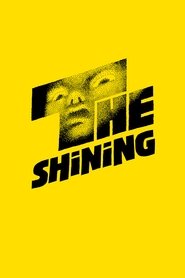
The Shining (1980)
Garrett Brown's brand-new Steadicam was designed to smooth out shaky footage; Kubrick turned it into a way of thinking. Watch it glide behind Danny's tricycle a few inches off the floor — carpet, hardwood, carpet, the wheel-sound rising and falling — and notice how you brace before every corner. Then try to map the Overlook. You can't: windows where walls should be, rooms that can't connect. The hotel isn't a setting the characters move through; it behaves like a mind they're moving inside, rendered in bright, symmetrical, unnervingly clear light rather than gothic shadow.
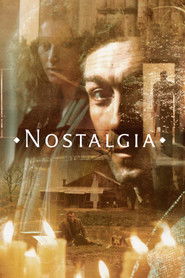
Nostalgia (1983)
A man carries a lit candle across a drained thermal pool, and the flame keeps going out, and he keeps starting over — nine minutes, one shot, real precariousness. Nothing is happening; everything is at stake. Tarkovsky's camera moves slowly, laterally, building pressure through sheer duration rather than cutting, and his lead performs almost entirely by withholding — moving like a man walking underwater. This is a film about exile that makes you feel untranslatability rather than explaining it.
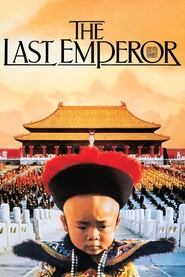
The Last Emperor (1987)
Storaro paints history as temperature: amber and gold for the Forbidden City's gilded confinement, cooling as the decades pass toward grey. Watch the editing, too — editor Gabriella Cristiani almost never cuts hard between eras; she dissolves, so the prison bleeds into the palace and you lose track of which time is real and which is remembered. Keep an eye on a small wicker cricket cage: the film's whole design — a life folded into the memory of a life — is contained in that object.
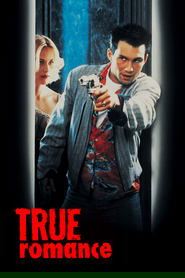
True Romance (1993)
Elvis appears in a bathroom mirror to give advice, and Tony Scott shoots it dead literal — no wavy dissolve, no apology — in a palette of bruised blues and molten ambers saturated to the edge of abstraction. Clarence is a man assembled from comic books and kung-fu movies, a direct descendant of Godard's Bogart-worshipping hero, and the film's wager is that a self built from pop culture can still be real. Watch how it holds extreme violence and extreme tenderness in the same frame, and how the lovers-on-the-run tradition of Gun Crazy and Bonnie and Clyde gets rewired as genuine romance.
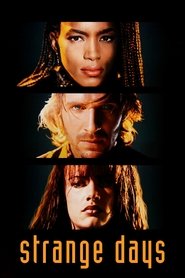
Strange Days (1995)
You don't watch the opening — you wear it: a robbery through borrowed eyes, the gun shaking in "your" grip, and the image dying when its owner does. Bigelow maintains two distinct ways of looking — a grimy, neon-soaked Los Angeles for the "real world," and immersive first-person clips for the black-market recordings her hustler hero deals like stolen feeling. Made years before GoPro, VR, or bodycam footage, it built the technology of rented experience on screen and then asked what watching does to the watcher.
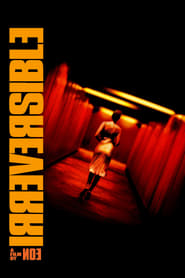
Irreversible (2002)
The story runs from last to first — even the credits scroll the wrong way — so that the gentlest images arrive already wrecked by what you've seen before them (chronologically, after them). Benoît Debie's camera corkscrews and tumbles unmoored through the early sequences, gliding up walls and across ceilings, then gradually settles as the film travels backward toward calm. Watch for a paperback in the grass called An Experiment with Time: the film's maxim — time destroys everything — isn't a theme, it's the architecture. Fair warning: this one is genuinely brutal; it belongs to a French cycle built on extremity. But its formal idea is unforgettable.
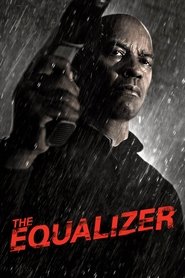
The Equalizer (2014)
For most of an hour, this action movie refuses to act. The same diner, the same table, the napkin folded, the tea steeped precisely — Denzel Washington held in static or slowly drifting frames, constantly seen behind glass, in windows, in reflections: a man studying a street he won't step into. The stillness comes from the tradition of Melville's Le Samouraï, the solitary professional's ritual life. Watch how long Fuqua lets the watching last, and how much meaning stillness can carry before the switch is finally thrown.
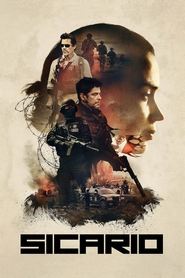
Sicario (2015)
Watch where Villeneuve puts Emily Blunt: in doorways, in back seats, at the edges of briefings where the real decisions are being made without her. She's the competent investigator systematically kept at the threshold — a design borrowed from Chinatown — and the film's entire argument about complicity is encoded in that blocking. Roger Deakins shoots the border landscape geologically rather than romantically, dwarfing human figures in vast desert frames, and the celebrated border-crossing sequence turns action into something you can only watch, dread accumulating in the wait.

You Were Never Really Here (2017)
Ramsay knows Taxi Driver down to its grain — she even shoots on 35mm for the same bruised texture — and then removes everything the vigilante genre promises. Images flare up without dates or explanations: a hand through a grate, shoes, feet in dust. They never assemble into the backstory a thriller owes you, and that refusal teaches you how to watch. Following Bresson, the camera privileges hands over faces and often places violence just offscreen, showing you the aftermath instead of the act — extreme close-ups full of partial information, a whole inner life rendered in fragments.
Why watch these together? Because they teach each other. The candle crossing in Nostalgia explains the diner stillness in The Equalizer; the impossible corridors of the Overlook rhyme with the unmappable border-world of Sicario; the borrowed eyes of Strange Days deepen the fogged windshield of Taxi Driver, which Ramsay then answers forty years later. Across studio noir, prestige epic, and art-house extremity, one conviction keeps surfacing: that the most powerful thing a camera can do is not chase the action — that watching, waiting, and letting time run its own course can be more gripping than any resolution. Once you've seen these films train your eye, ordinary thrillers will feel like they're cutting away from the good part.