Sightlines · a mini film course
The Watchers and the Wolves: Crime Cinema's Long Stare
Every film in this set is, at heart, a crime picture — cops, killers, smugglers, gangsters. But none of them behaves the way a crime picture is supposed to. The genre's usual promise is momentum: see the problem, chase it, solve it. These eleven films keep breaking that promise, deliberately and beautifully. They slow down where thrillers speed up. They hold on faces instead of cutting to the action. They let the camera watch rather than chase. Some of them shuffle time itself; some trap their heroes at thresholds and windows; some lavish attention on rituals — a glass of milk, a folded napkin, a steeping cup of tea — before a single shot is fired. Watched together, they form a course in how filmmakers use the machinery of the crime story to ask a quieter question: what does it mean to see clearly in a corrupt world, and what does seeing cost?
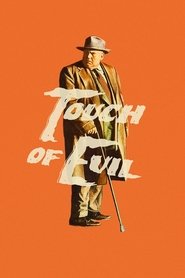
Touch of Evil (1958)
Start here, at the end of classic noir — the film that pushes every noir element to gorgeous excess. Watch the famous opening: a single unbroken crane shot that lifts off the ground and threads minutes of border-town traffic, neon, and drifting music into one continuous breath, binding strangers together before a word of plot arrives. Then notice how Welles films his corrupt cop from the floor up, wide lenses warping him into something monumental, ceilings pressing down on his head. Scenes are built by actors moving toward and away from the lens rather than by cutting — proximity, not editing, controls what you feel.
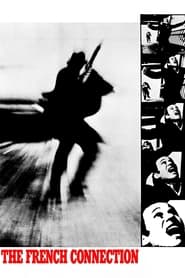
The French Connection (1971)
Shot on real winter streets in greys and browns and fluorescent greens, this is the crime film as cold-weather documentary. Watch for the surveillance sequences: the telephoto lens flattening the city into layers, and the extraordinary wordless scene where a freezing detective eats cold pizza on a sidewalk while the elegant man he's hunting dines behind restaurant glass across the street. Friedkin never explains the image — he just lets you stand on the cold side of the window. Obsession here isn't heroism; it's pathology, and the camera studies it like a specimen.
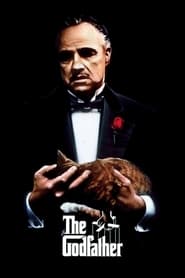
The Godfather (1972)
Gordon Willis lit Brando from almost directly overhead so that his eyes flood with shadow — a decision so radical the industry didn't know what to do with it (Willis wasn't even nominated). Watch how darkness works as a moral statement: power is what keeps itself out of the light, and you're never permitted to see into the man who holds it. Notice too the cross-cutting between sacred ritual and violence, an old silent-film technique revived to devastating ironic effect. This is the film that let the gangster picture become tragedy.
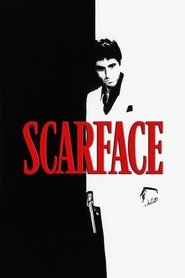
Scarface (1983)
De Palma remakes the 1932 original beat for beat, but blows it up into neon operatics — saturated pinks and blues, widescreen frames arranged like altars to appetite. Watch how the film treats ambition not as motive but as compulsion: a hunger that mistook itself for a person. The glossy surfaces (the nightclub, the white-on-white mansion) are a thin skin over something rawer, and De Palma keeps letting you see the raw thing break through. It's the American Dream filmed as a feeding frenzy.
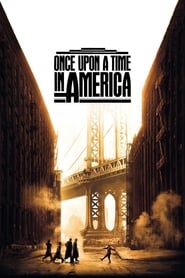
Once Upon a Time in America (1984)
Leone tells his gangster epic out of chronological order, and distinguishes the eras through light itself: the past glows honeyed and amber, sunlight through dust, while the present sits cooler and sadder. Watch the protagonist's face — De Niro plays him as a study in passivity, a man who mostly looks: through peepholes, across banquet tables, at ghosts. Leone builds his set-pieces around pre-written Morricone music, letting the score dictate the rhythm rather than the plot. Time here is allowed to stretch, curl, and fold back on itself; memory is the real subject.
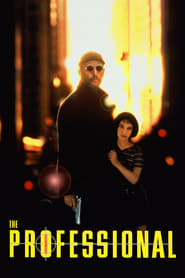
Léon: The Professional (1994)
A hit man drinks milk, does sit-ups in the dark, and tends a houseplant he calls his only friend "because it has no roots — like me." Watch the gap between the two Léons: the flawless professional of the opening job (pure method, inherited from Melville's silent, code-bound assassins) and the arrested, childlike man between jobs, when the film simply holds on his still face behind round black glasses. Arbogast's warm ambers mark the refuges; cooler light marks the institutional and violent spaces. The film asks whether connection can take root in a life built on killing — and lets the faces do the asking.
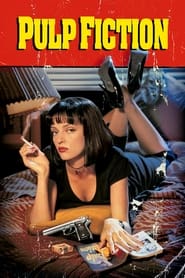
Pulp Fiction (1994)
Tarantino shuffles the order of his three chapters so that "before" and "after" stop being a chain and become rooms you can enter in any sequence — and the miracle is how naturally you accept it. Watch the restraint underneath the swagger: long takes, static frames, medium shots that let conversations breathe without editorial interference. Notice how mundane ritual (fast food, foot massages) and mortal violence are held in the same register, neither allowed to cancel the other. The structure descends from Kubrick's The Killing and Godard's chaptered crime films, reborn as pop pleasure.
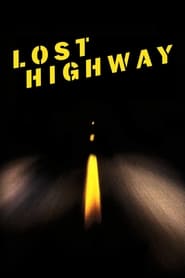
Lost Highway (1997)
Lynch's neo-noir keeps all the genre's furniture — the femme fatale, the gangster, the murder, the doomed Los Angeles night — and strips out motive, explanation, and detection. Watch how darkness works as architecture: rooms defined by what can't be seen, characters walking into blackness and dematerializing, set against bleached sun-struck exteriors. And watch how the film handles the line between what's real and what's dreamed or remembered — it refuses to draw one, and that refusal is the film. Come prepared to hold two contradictory things in mind at once.
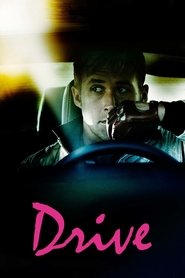
Drive (2011)
Sigel's camera sits at surveillance-camera nearness to Gosling's face and holds — past comfort, past where a normal film would cut. Watch how little the face gives back: no name, no past, no stated want, just a surface where feeling gathers without discharging. Then watch the elevator scene everyone talks about, where tenderness and horrific violence occur in a single unbroken motion, with no transition between them. That missing transition is the film's whole argument: the romantic loner inhabited so fully that his cool is revealed as damage.
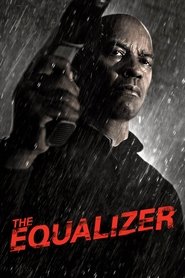
The Equalizer (2014)
For most of its first hour, this is a film about a man and his rituals: the same diner, the same table, the napkin folded to a rectangle, the tea steeped the exact right number of minutes. Watch how the camera keeps finding Washington behind glass — diner windows, reflections — a man studying a world he will not step into. It's the aging-protector genre (Taken, John Wick) slowed to prestige-drama patience: stillness made to carry meaning, so that when the film finally throws the switch, you feel the full weight of what's been held back.
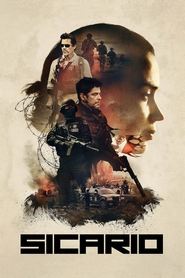
Sicario (2015)
Watch where Villeneuve keeps placing his protagonist: in doorways as the shooting starts, in the back seat of convoys that won't say where they're going, at the edge of briefings where the real decisions happen elsewhere. She's competent, she perceives clearly — and the film systematically converts her from actor into witness. Deakins shoots the border landscape geologically, vast frames dwarfing human figures without romanticizing them. It's a thriller about complicity: how institutions recruit people into things they'd refuse if they were ever shown the whole picture.
Watch these together and a hidden lineage snaps into focus. Welles's crane shot and Willis's shadows echo forward into The Batman's heirs and Drive's held close-ups; Melville's silent professional walks through Léon, Drive, Pulp Fiction, and The Equalizer like a recurring ghost; Leone and Tarantino and Lynch each take time apart and reassemble it their own way. But the deeper reward is learning to notice the choice these films keep making — the moment where the camera could cut to action and instead stays, watching a face, a window, a ritual, a threshold. That patience is where these films hide their intelligence. Train your eye on it in one, and you'll start seeing it everywhere in the others: eleven crime stories that are really, all of them, about the act of looking.