Sightlines · a mini film course
The Camera as Moral Instrument: Crime, Conscience, and How Films See
There's a question running underneath all of these films, and it has less to do with crime than with looking. Each of these directors — working across six decades, three continents, and wildly different budgets — uses the camera not merely to show you what happens, but to implicate you in how you're seeing it. Some of these films make the camera an honest witness to a dishonest world. Others make it a trap, or a mirror, or a kind of slow-moving dread. What connects them is that the form of each film — where the camera sits, how long it holds, what it refuses to show — is itself an argument about the moral world the story inhabits. Watch the technique and you'll find the theme waiting inside it.
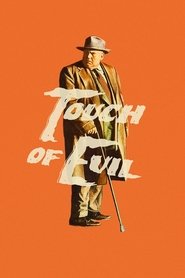
Touch of Evil (1958)
Before a single character speaks, the camera leaves the ground and doesn't come down for three unbroken minutes — threading a ticking car through a border town as though the whole place were one breathing organism. Watch that opening for what it refuses to cut away from: Welles stitches together people and spaces that have no reason to be connected, and the long take insists they are anyway — that everything here is already entangled before the story begins. Then watch how he photographs his own character, Hank Quinlan: from floor level, with the ceiling pressing down, shot through a wide-angle lens that bloats and distorts. The camera that opened the film by telling the truth now frames a man who makes his living forging it. Hold those two images beside each other — the restless, honest crane and the grotesque, cornered cop — because the whole film lives in the gap between them.
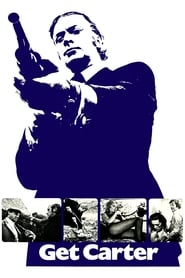
Get Carter (1971)
Wolfgang Suschitzky's photography does something quietly radical: it refuses to make Newcastle look like a movie. The light is flat, northern, a little weak — industrial yards, grimy terraced streets, a multi-storey car park that looks like a concrete cliff. This isn't grittiness as style; it's the landscape behaving like a moral condition, as though the environment itself is pulling Jack Carter downward. Watch how Suschitzky frames Carter against vast, indifferent spaces — a small figure in a large, hostile world — and notice how Michael Caine's performance answers the landscape: controlled, watchful, not quite warm. The film knows from its first frames that this is less a revenge story than a story about a man being drawn back into the thing that made him.
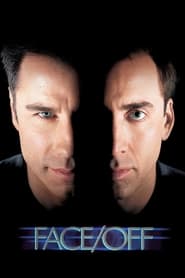
Face/Off (1997)
John Woo's great obsession is the mirror — two men, morally opposed, who are also each other's reflection — and in Face/Off he makes that obsession completely literal. Watch for how Oliver Wood's camera keeps arranging Travolta and Cage in symmetrical frames, on opposite sides of glass, pointing guns at each other's faces (which are, of course, each other's faces). Woo also brings his Hong Kong craft intact: slow-motion set to music that treats a gunfight the way an opera treats an aria, white doves against baroque interiors, violence choreographed as emotion rather than shock. The action here is not interrupting the feelings — it is the feelings, in kinetic form. Pay attention to how Woo uses slow-motion not to cool a moment down but to stretch it open, so you feel what's at stake.
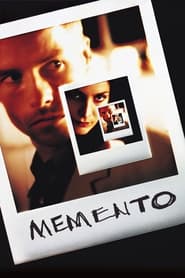
Memento (2000)
Nolan hands you a practical effect in the first seconds — a Polaroid photograph running backwards, the image draining away into blankness — and it tells you everything about what the film is going to do to you. The colour sequences run in reverse chronological order, each scene ending where the previous one began, so you arrive into every scene with no memory of how you got there. This is not a gimmick bolted onto a normal thriller; it is the film's entire moral argument, built into the architecture. Wally Pfister shoots it with careful, unglamorous clarity — no visual fireworks, because the structure is already doing the heavy work. Notice also the black-and-white sequences, which run forward in time and will eventually meet the colour strand. Two directions, one collision. Pay attention to the objects — the photographs, the notes, the tattoos — because in this film, objects are doing the work that memory cannot.
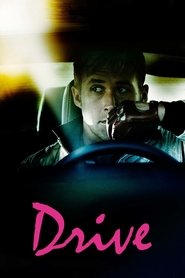
Drive (2011)
Newton Thomas Sigel shoots Ryan Gosling's face at an almost uncomfortable closeness, and then — crucially — holds it there, past the point where a normal film would cut away. Nothing discharges. The face registers, and registers, and does not act. Refn is fascinated by what lives in that gap between feeling something and doing something about it, and the film's visual grammar is built around that gap: long holds, uncomfortable proximity, a neon-soaked Los Angeles that looks like a painting of loneliness. Then watch the elevator scene, where the film collapses tenderness and extreme violence into a single unbroken motion, with no transition between them. That missing transition is the film's real subject. The electronic score — Cliff Martinez building atmosphere rather than underlining action — rewards attention too; it treats silence as a character.
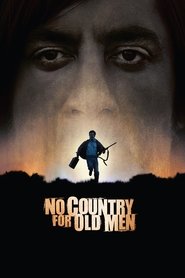
No Country for Old Men (2007)
Roger Deakins photographs the West Texas landscape with long lenses that compress figures against enormous distances, making every person look small and exposed against the desert. This is deliberate: the landscape here is not backdrop but participant, a moral environment that dwarfs the people moving through it. Watch also for what the Coens choose not to show — key events that a conventional thriller would put at the centre of the frame are displaced, reported secondhand, or simply missing. The film honours every mechanical expectation of a crime thriller and then, quietly, refuses to complete them. Pay attention to the sound design: the Coens and their sound team use ambient noise and near-silence as tension rather than score, so the rustling quiet of a motel room or a roadside can carry as much dread as any music.
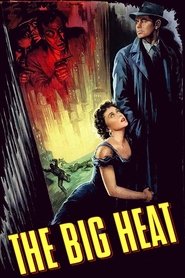
The Big Heat (1953)
Charles Lang's photography makes constant, precise use of thresholds — doors, windows, archways — to place characters at the boundary between safety and exposure. The domestic spaces early in the film are lit warmly, with generous depth of field; the spaces the protagonist moves through afterwards grow progressively narrower and darker. Watch how the lighting shifts as the moral ground shifts. Watch also how Lang trusts the audience to do arithmetic before the camera confirms it: when Debby Marsh enters a room with her collar turned up over half her face, Lang doesn't cut to the wound — he lets you understand what's been done to her a beat before he shows you. That patience, that willingness to let the audience ahead of the cut, is the film's most controlled technique, and its most humane one.
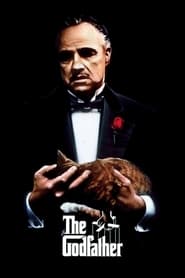
The Godfather (1972)
Gordon Willis lit Marlon Brando from almost directly above, flooding his eye sockets with shadow so that in scene after scene you cannot quite see Vito Corleone's eyes. This single decision — withholding the eyes — instructs the next three hours. Willis used darkness not as atmosphere but as grammar: light is withheld from the study, from certain faces, from entire scenes as a moral reading of the people and spaces inside them. Notice also how Nino Rota's score and the rhythms of Gordon Willis's framings keep moving from intimate darkness into open, sunlit spaces — and what it costs to move between them. Then watch the baptism sequence near the end, where Coppola uses parallel editing to intercut two completely different kinds of ceremony happening simultaneously. The editing is not commenting on the contrast — it is the contrast.
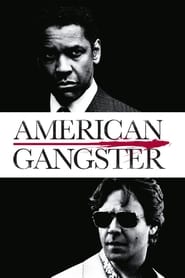
American Gangster (2007)
Ridley Scott and cinematographer Harris Savides build the film around a fundamental visual opposition: the amber warmth of Frank Lucas's world — fur coats, ordered luxury, rooms that look like money — against the institutional grey and street-level cold of the detective Roberts's. These aren't just different colour temperatures; they're two different moral climates existing simultaneously in the same city. Pay close attention to how Scott stages bodies in space — how a Thanksgiving table, a boxing arena, a business meeting can reveal a social relationship without a word of dialogue explaining it. The film loves posture and attitude: how a man carries himself tells you which world he belongs to, and sometimes the moment he stops carrying himself correctly is the moment everything starts to unravel.
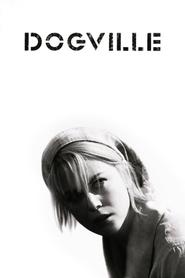
Dogville (2003)
Von Trier and cinematographer Anthony Dod Mantle shot the film on a bare black soundstage where the town of Dogville exists only as chalk lines on the floor, hand-lettered labels, and darkness. There are no walls. A character knocks on air and you hear a latch click. Watch for how this nakedness — rather than emptying the film out — forces you to become an active reader of every gesture and space. The handheld camera moves restlessly among the actors as though looking for the set that isn't there. Because there is no scenery to hide behind, every relationship between bodies is exposed; you can see the geometry of power in a room even when the room itself is invisible. This is Brecht imported into cinema: the stage stripped bare so that the social mechanics become the only thing you're watching.
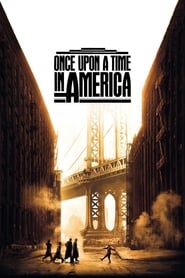
Once Upon a Time in America (1984)
Leone worked with Ennio Morricone in a way almost no other director has: Morricone composed the score before filming began, and Leone built his scenes around the music. Watch for how the film seems to breathe at the pace of the score rather than the pace of action — scenes dilate, faces hold, moments stretch open beyond any functional need. Tonino Delli Colli distinguishes the film's different time periods through colour temperature: the childhood sequences carry a warm amber glow, honeyed and nostalgic; the 1960s present tense runs cooler and more clinical. Notice how the film uses this to make memory feel physically different from the present, as though the past is lit from a source the present can no longer find. The non-linear structure rewards total attention — images, objects, and images of objects recur across decades and change meaning each time.
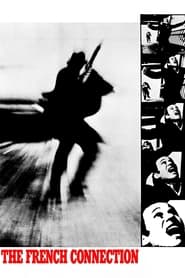
The French Connection (1971)
Owen Roizman's camera is in the street, and it is cold. The palette is winter urban: grey, brown, the dim green of fluorescent interiors. Watch the scene where Doyle stands on a Brooklyn pavement stamping his feet, blowing on his hands, eating bad pizza, while across the street through the restaurant glass the man he's chasing sits over white linen with a fine wine and an attentive waiter. Friedkin doesn't explain the contrast or underline it — he just lets you stand on the cold side of the glass. The handheld surveillance sequences have a quality of genuine discomfort; the camera doesn't have a good angle and doesn't apologise for it, which makes the watching feel illicit, like real surveillance. And then there is the car chase — not staged for beauty, but shot for the sensation of speed and wrongness, the camera mounted on the car itself so that the danger is in the image, not just on the screen.
Why Watch These Together
These twelve films are in constant, productive conversation with each other — about what crime reveals rather than what it consists of, about what a camera owes its audience, about whether justice is even the right word for what these stories are pursuing. Welles's crooked cop and Lang's corrupted institution and Coppola's family-as-power-structure are all asking the same question: what do we build to protect ourselves, and what does the building cost us? Nolan's reversed Polaroid and Leone's opium smile and Woo's hall of mirrors are all interested in the same formal problem: what happens to a story when you can no longer trust what you're being shown? And running underneath all of them is a shared conviction that how a film sees is inseparable from what it sees — that the camera's choices are moral choices, and that watching carefully is its own kind of thinking. Take your time with these. They reward it.