Sightlines · a mini film course
The Cinema of the Held Breath: Love That Watches Instead of Acts
Every film in this set is about a feeling that never quite becomes a deed. A hand that stays on the teacup instead of reaching across the table. A face that registers everything and does nothing. These are movies where the drama doesn't live in what characters do — it lives in the gap between what they feel and what they allow themselves to act on. And each director has invented a different way to film that gap: a camera that glides instead of cuts, a freeze frame that pins a moment of happiness, a soundtrack that drifts loose from the image, a body suspended mid-air over a bamboo forest. Watch these together and you'll start to see how much of cinema's real power lies not in action, but in the space where action is withheld.
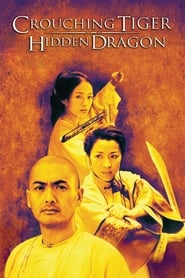
Crouching Tiger, Hidden Dragon (2000)
Everyone remembers the bodies that fly; the film's real subject is the body that holds still. Watch Michelle Yeoh set down a teacup — the gesture carries more weight than any line of dialogue, and the hand that might reach across to the man she has loved for years, silently, stays on the porcelain. Notice too how each location gets its own color signature — lacquered nighttime rooftops, jade-green bamboo, bleached desert ochres — so that place and emotion become the same thing. The flying and the stillness turn out to be one film: discipline and desire, held in exquisite tension.
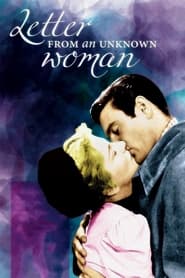
Letter from an Unknown Woman (1948)
Ophüls's camera is the great glider of classical Hollywood — it moves up staircases and along courtyard windows as if it were longing itself, made mobile. Watch for one staircase in particular, climbed more than once, the same banister and the same turn of the spiral carrying entirely different emotional weather each time. And notice the frame: a letter opened in the small hours, a voice addressing a man as "you," so that everything you see feels less like events happening than like a life being remembered — and remembered at someone who cannot remember it back.
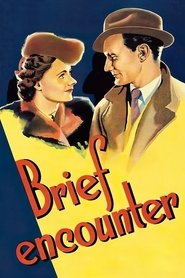
Brief Encounter (1945)
Start with Celia Johnson's face at a refreshment-room table while a neighbor chatters at her. Almost nothing moves on it — and the entire film is happening there, in silence, behind her composure. Lean and cinematographer Krasker split the world in two: shadowy, psychically charged interiors versus the hard documentary daylight outside, so you can see the pressure between private feeling and public life. This is the film that taught generations that restraint isn't the absence of passion; it's passion under enormous compression.
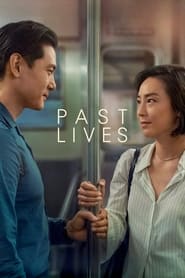
Past Lives (2023)
Song opens by handing the puzzle of her own film to strangers in a bar, guessing at how three people relate — and quietly assigns you the same job: reading lives from the outside. Watch how cinematographer Shabier Kirchner treats the physical distance between bodies as the film's true subject — who stands in a doorway, who is held at the frame's edge, how far apart two people sit. The film inherits Brief Encounter's grammar of love and duty, but transposes it into the language of emigration: the ache of the life you might have lived, standing right beside the one you chose.
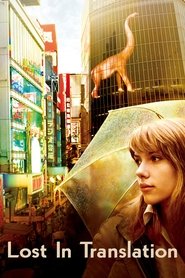
Lost in Translation (2003)
Watch Charlotte at the window of a high hotel room, looking out at a Tokyo she cannot read. Nothing happens — she isn't deciding, isn't waiting — she just sees, and the film lets her, and lets you. Coppola and cinematographer Lance Acord use shallow focus and long telephoto lenses to isolate faces in crowds and flatten the city into a wash of light, so the characters seem to float slightly loose from the world. Time is allowed to stretch here; drift and jet-lag and unspent afternoons become the story itself.
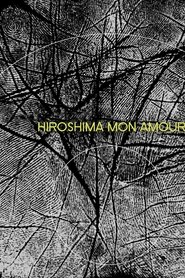
Hiroshima Mon Amour (1959)
The film opens with two bodies shot so close they stop being bodies, skin grained with something you can't identify — and that uncertainty is deliberate. Listen to the opening exchange: a woman insists she has seen everything in Hiroshima; a man answers, flat as a verdict, that she has seen nothing. The film takes that argument seriously — what can looking actually do in the face of catastrophe? Notice how two cinematographers split the work between France and Japan, and how documentary texture and staged fiction sit side by side without apology.
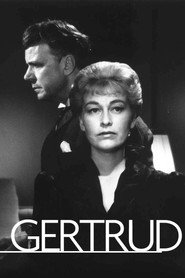
Gertrud (1964)
Watch where people look. Two people sit on a sofa, one says the word love — and neither looks at the other; declarations are delivered to the empty air, confessions to the floor. Dreyer builds the film from some of the longest sustained shots in narrative cinema, scenes unfolding in extended real time, so that you feel the full duration of every silence. Gertrud is the most clear-sighted person on screen, and the film's strange power comes from watching someone who sees everything and has stopped expecting the world to answer.
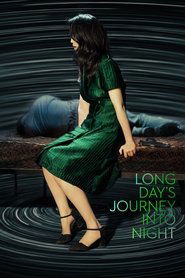
Long Day's Journey Into Night (2018)
An hour in, the screen goes dark, the title card finally appears, and a voice instructs you to put on the 3D glasses you were handed at the door — and then the camera doesn't cut for fifty-nine minutes. That small physical gesture, fingers to temples in a dark room, makes you complicit: you are putting on a dream. Before that, watch how the first half refuses to behave like memory — a lyric voiceover hovers over images that won't anchor to a timeline, so the past has weight but no shape. This is memory as gravity, not as record.
India Song (1975)
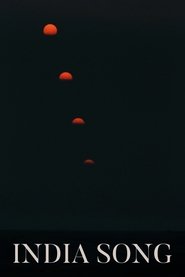
The first strange thing you notice: nobody on screen speaks. Figures drift through amber colonial heat with their lips sealed, while offscreen voices — unsure of their own memories, half in love with the woman they're recalling — do all the talking. Duras has unstuck sound from image completely; the soundtrack and the picture tell two different stories at once, and the film happens in the gap between them. Watch for the mirror shot early on, a woman doubled by her own reflection until you can't say which is which — the whole film in miniature, a present we're told is already finished.
Edward Scissorhands (1990)
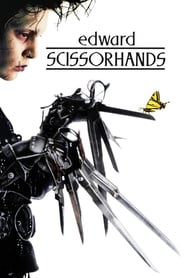
Edward is a face before he is a character: nearly mute, white-scarred, eyes wide, and Burton trains you to read not what he does but what crosses him. Because his hands ruin whatever they reach for, the ordinary movie circuit — see a problem, fix it — is cut at the wrist, and what's left is the looking; the camera stays on his reactions because here the reaction is the event. Notice the deliberate color split: candy-pastel suburb under flat daylight, blue-grey Gothic mansion on the hill — two worlds, and one gentle creature who belongs to neither.
Jules and Jim (1962)
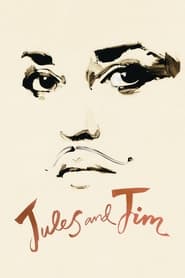
The image everyone keeps is the one that stops: Catherine caught mid-laugh, head half-turned, held frozen while the music swells — not at an ending, but in the middle of happiness, for no reason except love. Watch how Truffaut keeps arresting motion into stillness, turning a living moment into something you can gaze at like a photograph. Coutard's cinematography is warmer and more controlled here than in his rawer New Wave work, and the pastoral river scenes are so beautiful they make the happiness feel more fragile, not less.
Marnie (1964)
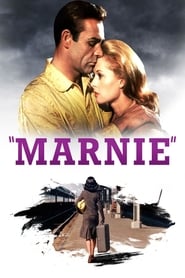
A yellow handbag under one arm, a woman walking away down a railway platform — no face, no name. Hitchcock withholds the one thing a thriller usually hands you first: somebody to look through. Watch how coldly the camera studies her — long lenses flattening her against the architecture, two-shots held past comfort, refusing to let you settle behind anyone's eyes — so that your own curiosity about her starts to feel implicated, clinical. And when red floods the frame, resist the tidy explanation; the film is doing something stranger with color than symbolism.
Why watch these together? Because they teach you a way of seeing. Each one, in its own idiom — wuxia, weepie, New Wave romance, Gothic fairy tale, psychoanalytic thriller — locates its deepest drama in the moment when feeling doesn't become action: the withheld hand, the held face, the camera that watches rather than chases. Once you've seen Celia Johnson's stillness at a café table, you'll recognize it in Michelle Yeoh's teacup, in Charlotte at the hotel window, in Edward's wide eyes. The lineage is real — Brief Encounter feeds directly into Lost in Translation and Past Lives; Ophüls's letter-structure echoes into Hiroshima Mon Amour; Dreyer's faces haunt everything. Watch in any order, but watch patiently. These films reward the viewer who, like their characters, is willing to sit still and simply see.