Sightlines · a mini film course
The Long Watch: A Crime Cinema Course in Seeing vs. Doing
Every film on this list is, on its surface, a crime picture — detectives, gangsters, killers, cities in trouble. But watch them together and a deeper drama emerges: the tug-of-war between acting and watching. The classic crime film makes a promise: someone sees the problem, someone hits it hard enough, and the world snaps back into shape. These twelve films take that promise and test it — sometimes honoring it, sometimes letting it strain, sometimes letting it quietly fail while the camera keeps looking. The real suspense across this set isn't "who did it." It's whether doing something will turn out to mean anything — and what the camera does when it stops chasing and starts watching. Keep one question in your pocket for all twelve: is this film trusting the punch, or trusting my eyes?
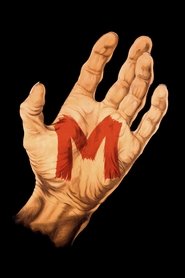
M (1931)
This is where it starts — the founding film of the serial-killer genre, and a masterclass in telling you the worst without showing it. Watch how Lang builds dread out of leftover objects and empty spaces: a ball, a balloon, a name called up a stairwell. He hands you the edges of an event and trusts you to assemble the center yourself. Notice, too, how sound becomes a character: a whistled tune arrives before a face does, and once you learn its rule, your ears do the detective work.
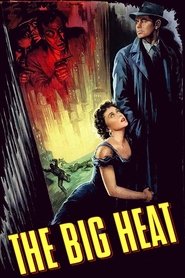
The Big Heat (1953)
Lang again, twenty years and one continent later, working in hard American noir. Watch the doorways: cinematographer Charles Lang keeps placing people in thresholds — doors, windows, corridors — right on the line between safety and exposure, and the domestic spaces that open the film warm and bright grow narrower and darker as it goes. Notice also the film's remarkable restraint: it repeatedly trusts you to understand something terrible before the camera confirms it. The problem here isn't a bad man; it's a whole city whose institutions have been bought, and the film makes you feel that as architecture.
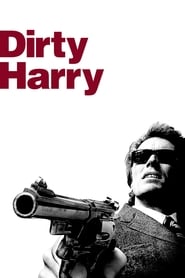
Dirty Harry (1971)
The opening puts you somewhere you don't want to be — looking through a killer's eye — and the film is built on the discomfort of having accepted that view. Watch the geography: San Francisco is filmed as a hunting ground, with the killer perched high above the city and the cop shoved to the margins of the widescreen frame. This is the crime film's old promise running at full power — one man, one decisive act — but Siegel shoots it with a hard, unglamorous flatness that keeps asking what the promise costs.
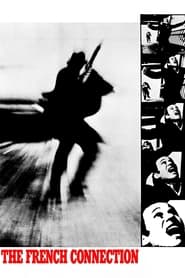
The French Connection (1971)
Same year, same genre, opposite grammar. Where Dirty Harry builds toward the big act, Friedkin's cops work in tiny increments — a tail, a frisk, a hunch — each one lighting up one more inch of something too big to see whole. Watch the handheld, grabbed-off-the-street texture: real winter, real crowds, telephoto lenses that make surveillance feel like weather. And watch the scene where a freezing cop eats cold pizza while his elegant quarry dines behind glass — nobody says a word about what it means, because the image already has.
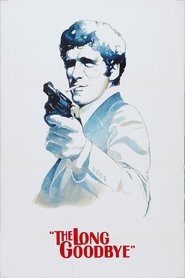
The Long Goodbye (1973)
Altman opens a murder mystery with a man trying to fool his cat with the wrong brand of cat food — and that errand is the whole film folded small. Watch the camera: it never sits still, always drifting, zooming, catching things at the margins, behaving like a curious bystander rather than a storyteller. Gould's Marlowe is a man of loyalty and effort dropped into a Los Angeles that has stopped keeping score, and the film's melancholy comedy lives in the gap between his code and the camera's shrug.
American Gangster (2007)
Read this one through the wardrobe. A grey suit says my survival depends on not being looked at; a chinchilla coat says I have become someone who needs to be seen — and the film's entire moral argument lives in that gap. Watch Ridley Scott's chromatic split: the amber warmth of self-made wealth against the institutional grey of the cop's world. This is the gangster film as business analysis — branding, market share, quality control — told by an informed outsider studying the American Dream rather than singing it.
True Romance (1993)
A young man built entirely out of pop culture — comic books, kung-fu matinees, an Elvis who leans in from the bathroom mirror and offers advice, shot with no dream-signal whatsoever, dead literal. Watch how Tony Scott lights everything like a fever: bruised blues, molten ambers, saturation pushed toward abstraction. The film descends from the lovers-on-the-run tradition, but its wager is stranger and sweeter: that a self assembled from movies, lived hard enough, might become real.
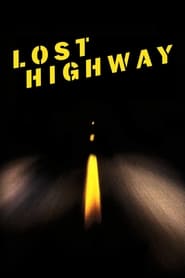
Lost Highway (1997)
Lynch takes the noir kit — the femme fatale, the gangster, the murder, doom-laden L.A. — and removes the explanation. Watch the darkness itself: Peter Deming shoots rooms defined by what can't be seen, and people walk into blackness and seem to dematerialize. One actress, two women, or one woman dreamed twice? The film deliberately refuses the cut that would tell you, and that refusal — the melting of what's happening into what's imagined — is the experience. Don't solve it; inhabit it.
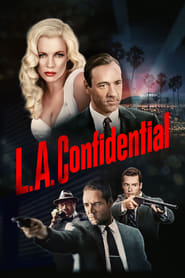
L.A. Confidential (1997)
A film about manufactured surfaces that shoots its fakes with total, loving glamour. Watch Dante Spinotti's amber light — sunlight through venetian blinds, lacquered bars — lifted straight from the grammar of 1940s Hollywood, applied to a city where the tabloid, the TV cop show, and the counterfeit starlet have all taught the lie to pass for the real. The film knows the forgery is beautiful and knows it's a forgery, and it refuses to choose between those facts. That refusal is the engine.
Memories of Murder (2003)
Watch the first crime scene: the camera doesn't rush to the body — it drifts sideways, patient, and the wide frame gives the dead no more visual weight than the dirt above them. That's the film's whole method announced in one shot. Where most procedurals run on close-ups of faces cracking cases open, Bong keeps pulling back, letting landscape and weather and bureaucratic muddle press into the frame. It's the detective story rebuilt as an inquiry into what a broken system can actually know.
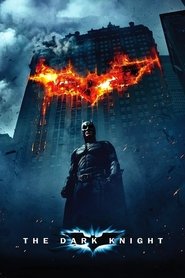
The Dark Knight (2008)
Watch the editing, especially in moments of violence: where any other blockbuster would climb into a crescendo of accelerating close-ups and musical stings, Nolan and editor Lee Smith cut with cold restraint — violence heard before it's seen, shown for an instant, then over. Notice the two visual registers: vast, near-square IMAX images that make humans tiny inside architecture, against tighter widescreen work for the ground game. This is a superhero film wearing the clothes of the 1970s crime procedural — an interrogation-room face-off staged with the geometry of Michael Mann — and asking what the decisive act costs the person who performs it.
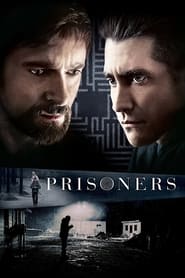
Prisoners (2013)
The opening minutes give you the film's whole worldview: a father teaching his son readiness, prayer and rifle in the same breath. Watch how Roger Deakins solves a genuine problem — making a film oppressive without being inert. The camera almost never announces itself; instead rain, grey light, and tonal consistency accumulate into pressure. And watch the two kinds of space the film keeps opposing: enclosure and corridor, the held and the searching. It builds the machinery of decisive action at full power precisely so you can feel it strain.
Why watch these together? Because in sequence they teach you to see the crime film's deepest question, which was never whodunit but what is action worth? Lang shows you meaning built from absence in 1931; the '70s films split between the punch that lands and the pursuit that never closes; the '90s films fall in love with beautiful forgeries; and the 21st-century films watch the machinery of decisive action run hot and ask what it grinds up. By the end, you'll notice something in your own viewing: you'll have stopped waiting for the answer and started watching the frame — the doorway, the coat, the drift of the camera across a field. That's the course. The films do the teaching; you just have to keep looking.