Sightlines · a mini film course
The Frame That Holds You: Japanese Cinema Between Action and Endurance
Every film in this set asks a version of the same question: when someone sees a wrong in the world, can drawing a sword — or saying a word, or crossing a room — actually fix it? Sometimes the answer is a resounding yes, and you get some of the most exhilarating action architecture ever built. Sometimes the answer is no, and the camera simply stays put while people sit, wait, testify, and endure. What connects these twelve films is how much of the argument happens in the image itself: in where the camera sits, how long a shot is allowed to run, how bodies are arranged inside rooms and landscapes. Watch the geometry — the fences, corridors, screens, and kneeling formations — because in these films, space is never just scenery. It's pressure.
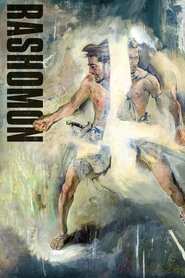
Rashomon (1950)
Kazuo Miyagawa aimed his camera straight up into the sun — something studio rules forbade — and bounced light off mirrors to hold the exposure, so the forest itself flickers, dazzles, and half-blinds you. That's the film's method in miniature: four people describe the same crime, each account shot to feel completely convincing while you're inside it, and no referee ever arrives. Notice how the tracking shots through dense undergrowth put leaves and glare between you and the truth. You're being taught to distrust a beautiful image, and it's thrilling.
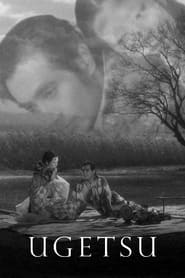
Ugetsu (1953)
Miyagawa again, but in a different register: long, gliding camera movements that follow characters through space without cutting, so that the real world and something stranger can share a single unbroken shot. This is a ghost story where the supernatural never announces itself with a cut or an effect — it simply drifts into the frame as if it belonged there. Watch how desire — for money, status, beauty — pulls the characters, and how the camera's patient, sideways glide refuses to let anyone off the hook.
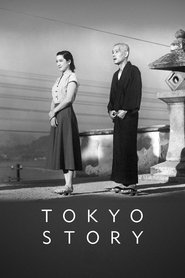
Tokyo Story (1953)
Ozu's camera sits about fifty centimeters off the floor, at the eye level of a person kneeling on tatami, and it almost never moves. Between scenes he cuts to empty shots — chimneys, laundry, a passing train — that hold a few seconds longer than any practical purpose requires. Elderly parents visit their busy grown children in Tokyo; nothing in this situation can be solved by anyone doing anything, and Ozu's genius is to build a whole visual language for that. It may be the gentlest film ever made about time simply passing through a family.

Seven Samurai (1954)
Watch the moment Kambei crouches and scratches a map of the village into the dirt: the coming battle already exists as a diagram, a problem to be solved. This is action cinema at its most complete — every fortification, every recruited specialist, every cut serves a chain of cause and effect — but Kurosawa strips sword fighting of its dance-like elegance and replaces it with mud, rain, fatigue, and speed. Notice too how the framing keeps samurai and farmers visually separate — warriors against the sky, farmers low to the earth — because the film's real subject is that gap.
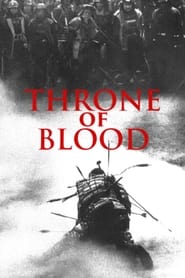
Throne of Blood (1957)
Two horsemen gallop out of the fog and, a minute later, emerge at the very same spot: the Cobweb Forest has no landmarks, no horizon, no way out. Kurosawa builds his Macbeth adaptation from Noh theater — figures held front-center or pushed to the frame's edges, faces composed into near-masks — and drains the samurai film of almost all its usual kinetic pleasures. Watch how the film makes fate spatial: a place you can ride through in any direction and still end up where you were always going.
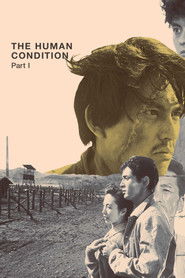
The Human Condition I: No Greater Love (1959)
The first panel of Kobayashi's enormous humanist epic follows an idealist given the chance to run a colonial mining operation humanely — and the widescreen frame keeps telling you what he's up against, stretching fence lines, watchtowers, and rows of laborers into grids of confinement around one small figure. Yoshio Miyajima's hard winter light bleaches the Manchurian plain until a man looks like a comma in a long, indifferent sentence. Watch how often decency and the institution collide inside a single composition, with no cut to rescue anyone.
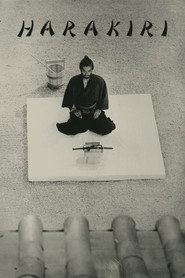
Harakiri (1962)
A ronin kneels on raked gravel in the courtyard of a powerful clan, and for a very long time, nobody acts — he has come not to fight but to tell a story, and the film builds like a court case, testimony by testimony. Miyajima's compositions turn the clan compound's corridors and screens into instruments of power: the hero sits inside a geometry he did not build and cannot leave. This is a samurai film written against the genre's heroism, arguing that the trappings of honor and the substance of it are two different things. The stillness is the point; let it work on you.
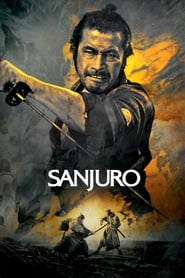
Sanjuro (1962)
Watch how Mifune sits. Nine earnest young samurai kneel in perfect formation, and the scruffy ronin they've bet their lives on slumps against the wall, scratching, yawning — and every slouch is timed to deflate a specific pomposity nearby. Kurosawa makes posture the film's real dialogue: the young men can't tell the trustworthy from the corrupt because both perform correctness beautifully, while the man with no manners sees everything. It's the funniest film in this set, and the comedy is the argument.
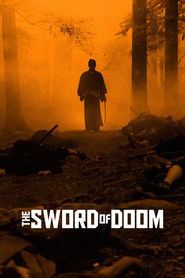
The Sword of Doom (1966)
The dark mirror of the classical samurai film: a swordsman whose mastery is powered by his utter lack of conscience, played by Tatsuya Nakadai with eyes of pure, clinical vacancy. Where most sword films run on a reliable engine — see a wrong, act, set it right — this one follows a man who kills the way water runs downhill, with no motive to negotiate with. Hold on Nakadai's face in medium shot and notice how the widescreen frame keeps offering you a close-up of absence. It's one of the bleakest and most hypnotic films of the 1960s revisionist cycle.
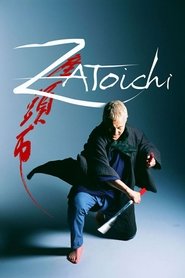
Zatoichi (2003)
Kitano's version of the wandering blind swordsman borrows its skeleton from Kurosawa's Yojimbo — one masterless fighter, two warring gangs — and then does something wonderfully strange with it: labor keeps tipping into rhythm. Farmers' hoes strike mud in time; the whole world seems to want to become music. Watch the contrast between Kitano's flat, still, frontal compositions and the violence that erupts inside them, and stay for how far the performance idea is allowed to go.
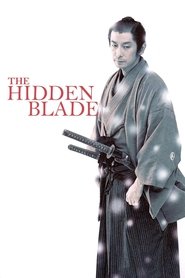
The Hidden Blade (2004)
Yamada's camera stays low, level with the tatami, and frames people through the wooden lattice of sliding screens, so the empty space between two bodies becomes the most eloquent thing in the shot. This is a samurai film that spends most of its time watching people sit, bow, pour tea, and decline to touch — and the inches of permitted distance between a low-ranking samurai and a farm girl carry the entire weight of the class system the film quietly indicts. The sword in the title matters far less than the arrangements of rooms and rank.
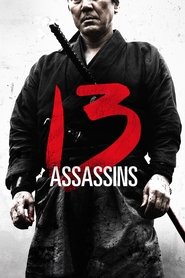
13 Assassins (2010)
Miike, in 2010, rebuilds the classical machine with total conviction: a monstrous wrong, a commission, a recruitment of specialists, and a decisive act to set the world right. The camera holds in composed mid and long shots for roughly the first ninety minutes, honoring the bows and measured distances of Edo-period formality — restraint accumulating like pressure behind a dam. Watch Kōji Yakusho's face when the mission is offered: a man who has waited all his life for a death that means something learns the wait is over, and something in him settles.
Watched together, these films become a conversation across sixty years about what a frame can do. Kurosawa shows you action working at full power; Kobayashi and Ozu show you what the camera does when action can't touch the problem — it watches, it waits, it lets time stretch until watching becomes its own kind of drama. Okamoto empties the hero out entirely; Yamada relocates the whole genre into the space between two kneeling figures; Kitano and Miike return to the old machinery knowing exactly what they're restoring. Once you start reading the geometry — who sits where, how long a shot holds, whether space is a stage for action or a trap around it — you'll find each film teaching you how to watch the next one. That's the course.