Sightlines · a mini film course
The Sword Withheld: A Journey Through the Samurai Film
Here is a set of films that all orbit the same figure — the swordsman in feudal Japan — and yet almost none of them are really about swordfighting. Watch them together and you'll notice something stranger and more rewarding: these are films about waiting, watching, and the terrible weight of the moment before action. Some of them build entire cathedrals of stillness before a single blade leaves its scabbard. Others turn the duel itself into a painting, a dance, a ritual pose. And a few ask whether the whole heroic machinery — see the wrong, draw the sword, set the world right — was ever trustworthy to begin with. The through-line is the tension between motion and stillness, between the story that resolves and the camera that simply watches. Every film here takes a position on that question, and no two positions are alike.
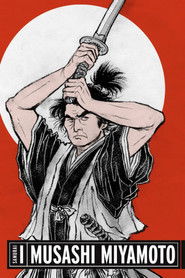
Samurai I: Musashi Miyamoto (1954)
Watch how Kazuo Yamada shoots the cedar forest: trunk after trunk slicing the frame into vertical bars, like a cage built from the landscape itself. Mifune plays the young Takezo as pure appetite — wide stance, explosive lunges — and the film's real drama is whether raw, wild energy can be shaped into discipline without being destroyed. Notice the measured stillness of the compositions, the preference for placing figures within landscape rather than cutting them out of it. This is a coming-of-age story told through framing.
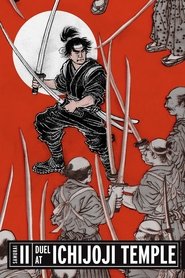
Samurai II: Duel at Ichijoji Temple (1955)
The whole film falls toward one night below a temple, the way water finds a drain — and Inagaki makes you feel that the hero's choice to walk into it is powered as much by pride as by courage. Watch the torchlight sequence: shallow pools of amber on dark earth, a lone figure isolated in the light while numbers gather in the dark. It's one of the cleanest demonstrations in classical cinema of pressure building until a single act must discharge it.
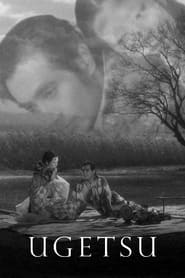
Ugetsu (1953)
Miyagawa's camera glides laterally through space in long, unbroken movements — it surveys rather than penetrates, and it never lets you off the hook with a cut. Watch especially how a single slow camera movement can transform a room, showing you something that cannot possibly be there, without any seam or trick announcing itself. This film taught a generation how the ghost story and the period drama could merge into something dreamlike and devastating. It is the wellspring several other films on this list drink from.
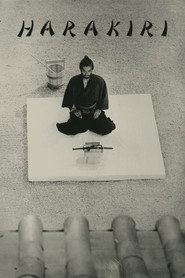
Harakiri (1962)
A samurai film that keeps the sword sheathed for most of its length — and is more gripping for it. Watch Miyajima's deep-focus widescreen frames: the courtyard's raked gravel, the receding corridors and screens, all arranged so that one kneeling man sits trapped inside geometry he didn't build. Nakadai gives a performance made of breath and voice, a man who has converted action into testimony. Notice the nested first-person accounts — co-written by the screenwriter of Rashomon — where competing stories slowly build a case rather than a battle.
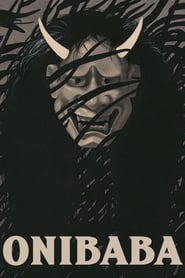
Onibaba (1964)
Start with the grass. The susuki field is the film's true protagonist: Kuroda puts the camera low, beneath the reeds, so the churning silver wall closes over you; long lenses flatten it into a wall; night scenes push the blacks to their limit. Two women survive a wartime wasteland by grim economics, and the film frames their acts as hunger rather than evil — which is exactly why it unsettles. Feel how the social world keeps thinning away until only appetite is left.
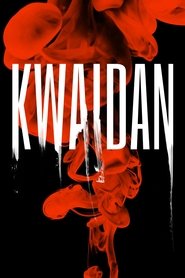
Kwaidan (1965)
Look up in "The Woman of the Snow": the sky has eyes painted into it, and Kobayashi wants you to notice. This film never pretends to show you the world — it shows you a picture and asks you to stand still before it. Watch how the widescreen frame is laid out like a picture scroll, figures flattened against designed backdrops in saturated, deliberately unnatural color, with cuts that reveal new tableaux rather than chopping up action. It's a film that restores the painted, posed image to a medium built on motion.
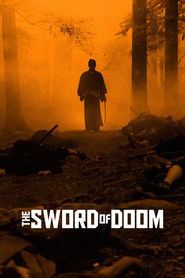
The Sword of Doom (1966)
The opening minute tells you this film has nowhere good to go — and then watch how it goes there. Nakadai plays a master swordsman as pure vacancy: hold on his eyes in the medium shots, because the face that should register feeling registers nothing, and that absence is the film's whole subject. This is the "dark samurai" cycle at its bleakest — mastery powered by emptiness, a killer who moves like water running downhill. Notice how the disciplined widescreen framing keeps you at a clinical distance.
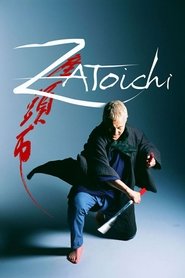
Zatoichi (2003)
Kitano's compositions are flat, frontal, almost still — and then violence erupts inside the stillness, a single stroke and a spray, borrowing the strike-then-spurt rhythm from the 1960s classics. But the real magic is elsewhere: listen to the hoes hitting wet earth early on, and notice the exact moment labor tips into rhythm, work into music. The film keeps sliding, almost shyly, toward performance — and it's built on the oldest chassis in the genre, a masterless swordsman playing two rival gangs against each other. A blind hero in a world of disguises: keep asking who truly sees.
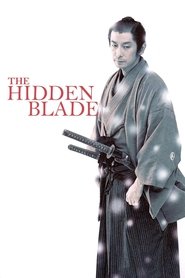
The Hidden Blade (2004)
The title names a sword, but the film spends its time watching people kneel, bow, pour tea, and decline to touch. Watch how Naganuma frames rooms through the wooden lattice of sliding screens, camera low and level with the floor, so that the empty space between two bodies becomes the most legible thing in the shot. Who may sit where, who may approach whom — the injustice of class isn't argued, it's staged, in the inches between two kneeling figures. Patient, muted, and quietly furious.

The Last Samurai (2003)
Hollywood's love letter to everything above. Watch John Toll's painterly light on the landscape, and watch how openly the film quotes its Japanese ancestors: the village-defense staging and mud-churned mass combat of Seven Samurai, the color-coded banners and static wide battlefield tableaux of Ran, the cavalry-against-gunfire template of Kagemusha. The image to hold: horsemen in lacquered armor riding beautifully toward machines that do not care how beautifully they ride. Tradition against modernity, staged as force against force.
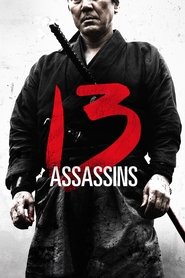
13 Assassins (2010)
Miike's structure is a deliberate two-act machine: roughly ninety minutes of controlled restraint — the camera holding at formal mid and long distance, honoring the kneeling-and-bowing geometry of Edo-period space — before everything it has stored up gets spent. Watch Kōji Yakusho's face when the commission is handed to him: a man greeting a death sentence like good news, and everything the film believes is in that expression. Made with full conviction and no irony, this is a modern director lovingly rebuilding the classical engine — deliberation, then execution — and it draws directly on Harakiri's strategy of moral pressure before physical eruption.
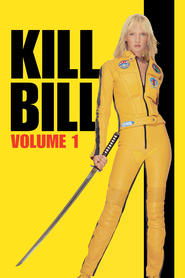
Kill Bill: Vol. 1 (2003)
Tarantino builds a whole film out of climaxes. Watch how every image is posed — the arterial spray staged as a stylized geyser (inherited from Lady Snowblood), the duelists frozen in ritual stillness before anyone moves, the standoff stretched until time itself seems to strike a pose. Richardson's hot top-light halos figures like icons. This is a film assembled from the peak moments of the export cinemas that reached America through grindhouse theaters and video stores — kung-fu, chambara, spaghetti Western — each climax citing the climax it descends from. The density is the invention.
Why watch these together? Because they're in conversation, sometimes literally — the same screenwriter connecting Rashomon's architecture to Harakiri; Ugetsu's ghostly camera grammar flowing into Kwaidan and Onibaba; Yojimbo's two-gang town resurfacing in Kitano's Zatoichi; Harakiri's slow-pressure structure rebuilt inside 13 Assassins. Watching in sequence, you'll start to feel the genre arguing with itself across decades: films that trust the decisive act, films that expose it as performance, films that withhold it entirely and make the withholding the point. You'll notice when a camera chases and when it merely watches; when space is a home and when it's a trap; when time is spent and when it's allowed to stretch. By the end, a single frame — a kneeling figure, a lattice screen, a field of grass — will tell you more than a dozen swordfights. That's the education this list offers, and it's a beautiful one.