Sightlines · a mini film course
When Looking Becomes the Story
Every film on this list quietly breaks the oldest rule in movies: that a character sees a problem, acts on it, and the cutting hurries us from one deed to the next. Here, instead, the spring between seeing and doing has been unwound. People arrive at situations too large, too strange, or too quiet to be fixed by action — and so they look, they wait, they endure. The camera does the same. It watches rather than chases; it lets time stretch until you feel its weight; it lets a landscape, a corridor, or an empty street corner carry as much meaning as any speech. These twelve films, made across half a century and half the world, are all training grounds for a different kind of attention. Watch them slowly. They will teach you how.
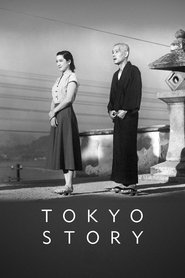
Tokyo Story (1953)
The camera sits about fifty centimetres off the floor — the eye-level of someone kneeling on a tatami mat — and it almost never moves. Watch for the cutaways between scenes: chimneys, hanging laundry, a passing train, shots with nobody in them that linger a few seconds past any obvious use. They aren't telling you information; they're teaching you the film's tempo, an awareness of passing time that is neither despair nor consolation. Notice how much emotion Ozu generates from stillness, restraint, and what he chooses not to stage.
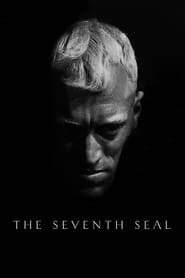
The Seventh Seal (1957)
A knight returns from a Crusade into a plague-stricken land, and famously sits down to play chess with a white-faced figure in black. Watch Gunnar Fischer's high-contrast photography — faces set against burned-out skies or deep shadow, a lighting scheme inherited from silent-era masters like Murnau and Dreyer — which makes the medieval landscape feel like a moral pressure chamber. The drama isn't in swordplay; it's in a man's face as he searches for an answer that will not come, and in the game he plays to buy time to keep looking.
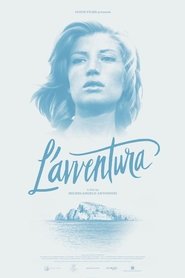
L'Avventura (1960)
A woman vanishes on a volcanic island, and a search begins — then notice how Antonioni lets the engine of the mystery quietly wind down, and what fills the space instead. Watch the framing: human figures drift to the edges, get obscured by walls and columns, or shrink against rock and sea until they read as marks on stone. The film's real subject is the distance between people standing inches apart — nobody says what they mean because nobody quite knows what they mean — and the compositions carry that ache better than any dialogue could.

L'Eclisse (1962)
Antonioni again, now in Rome's eerily modern EUR district, where the architecture itself seems to argue with the love story. Watch how Di Venanzo frames characters against windows, walls, and reflective surfaces that subdivide the image — a woman seen through car glass, a figure dwarfed by a receding colonnade. And stay alert in the final stretch, when the film makes one of the boldest formal moves in all of cinema: it trusts places and objects, held at full duration, to say what people cannot.
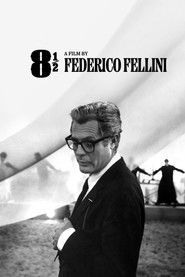
8½ (1963)
A film director can't decide what his next film should be, and Fellini turns that paralysis into a carnival. The thing to watch for is the missing seam: the film cuts between waking life, memory, and fantasy with the same hard, matter-of-fact join it uses between two rooms — no dissolves, no dreamy music, no change in the black-and-white texture to warn you. Di Venanzo shoots all three registers on one continuous silver, so you must stay alert to where you are at every moment. That vigilance is the pleasure.
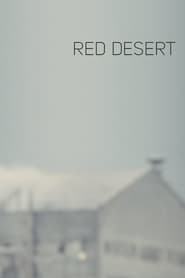
Red Desert (1964)
Antonioni's first color film, and he treats color as authorship: he famously had the grass along a refinery road painted gray so that nothing growing could look alive. Watch how the industrial landscape of Ravenna — steam, pipes, engine throb — is tuned to match the inside of Monica Vitti's flooded, over-perceiving heroine, a woman who registers too much and can discharge none of it into action. You're not watching a person in a place; you're watching a place built to the specifications of a nervous system.
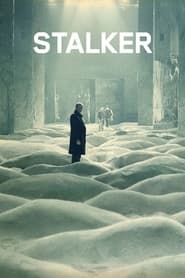
Stalker (1979)
Three men journey into a forbidden Zone said to contain a room that grants your deepest wish — and then, having risked everything to get there, they mostly sit in wet grass and argue about faith. Watch Knyazhinsky's camera move with geological patience through flooded corridors and rubble, and notice the shift from sepia to color as the men cross into the Zone. Above all, watch the long drifting shots over water and submerged objects: they refuse to resolve into clues or symbols, and the looking itself slowly becomes the film's substance.
The Shining (1980)
Kubrick took the brand-new Steadicam — invented to smooth out shaky shots — and turned it into a way of thinking. Watch it glide inches off the floor behind a boy on a tricycle, the wheel-sound going loud on hardwood and soft on carpet, and feel yourself bracing before every corner. Watch, too, the one-point-perspective corridors receding to a single vanishing point, and notice that the hotel's geography doesn't quite add up — people have tried to map the Overlook and failed, and that failure is the design. This is a haunted-house film where the house behaves less like a place than like a mind.
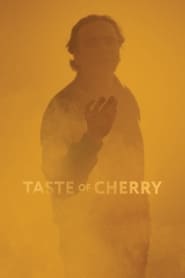
Taste of Cherry (1997)
A man drives the ochre hills outside Tehran with a request he can barely say aloud, and the whole film unfolds in and around his car. Watch how Kiarostami films conversation: two people side by side, looking forward at the road, almost never at each other — the standard back-and-forth of movie dialogue simply withheld, so you read the men through posture and vocal pitch. And notice where the lens sits, roughly where the windshield would be: the person being addressed, structurally, is you.
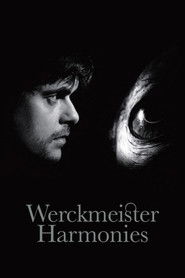
Werckmeister Harmonies (2001)
The opening alone is worth the price of admission: in one unbroken take of nearly ten minutes, a gentle postman arranges drunken men in a closing-time bar into a working model of a solar eclipse, setting them orbiting across the sticky floor. Watch how Tarr builds the entire film this way — long, choreographed takes in black and white, where meaning arrives through bodies in motion and time allowed to pass, not through plot. Watch Lars Rudolph's face, too: open, unguarded, a surface on which events register rather than a mind that schemes.
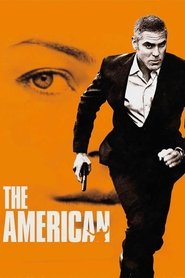
The American (2010)
Corbijn, a photographer by training, films George Clooney's assassin from behind — a small figure walking into converging wedges of medieval stone, the beautiful Italian town slowly revealing itself as a vise. Stop waiting for the chase; there isn't one in the usual sense. Watch instead the long, nearly wordless sequences of a professional at work — the exercises, the coffee, the patient filing of steel — a ritual minimalism inherited from Melville's lone-killer films, with a Leone western literally playing on a screen within the film to teach you how to read stillness before violence.
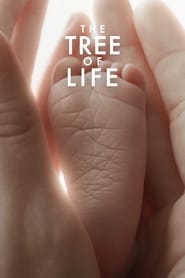
The Tree of Life (2011)
Malick builds a film out of perception cut loose from purpose: Lubezki's camera floats at a child's eye-level through sunlit rooms, chasing curtains, water, the undersides of leaves, on natural light and impulse. Watch how memory, grief, and even the birth of the cosmos are braided together without conventional connective tissue — the wordless cosmic passages descend directly from 2001, whose effects wizard Malick brought back for the occasion. Give yourself over to its drift; the film asks to be received the way its whispered voiceovers are spoken — as question, not statement.
Watched together, these films rewire your reflexes. Each one, in its own idiom — Ozu's kneeling camera, Antonioni's painted grass, Kubrick's gliding corridors, Kiarostami's windshield — withholds the payoff of action so that the act of looking can take its place. The reward compounds: the patience Tarkovsky demands makes Tarr's long orbits feel inevitable; Antonioni's empty frames prepare you for Corbijn's stone streets; Bergman's silent sky echoes forward into Malick's whispered questions. By the end of the series, you'll find that a held shot of water, laundry, or an empty corner no longer feels like a delay before the movie — it feels like the movie. That shift in your own attention is the real subject of this course.