Sightlines · a mini film course
When the Camera Stops Chasing: Twelve Films That Ask You to Look
Most movies are built on a simple engine: a character sees a problem, acts on it, and the story moves forward one deed at a time. The twelve films gathered here all, in their different ways, switch that engine off. Their people — a dying man remembering, a grieving widower in orbit, a detective whose every discovery deepens the trap — find themselves in situations that action cannot touch. So they look. They wait. They endure. And the films slow down with them: shots outlast their obvious purpose, the past stops arriving in tidy labeled flashbacks and instead soaks into the present, and images that would be "scenery" in another movie — wind through a field, smoke from a chimney, a fan turning on a ceiling — become the main event. Watching these together is a course in a different kind of attention: not what happens next? but what is this image doing to me right now?
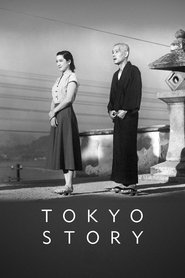
Tokyo Story (1953) — Yasujirō Ozu
Start here, with the quietest film of the set. Ozu mounts his camera about knee-height — the sightline of someone seated on a tatami mat — and almost never moves it. Between scenes, he cuts to shots of chimneys, laundry, a passing train: images with nobody in them and no job to do, held a few seconds past any use. Notice how these empty moments carry as much feeling as the faces, and how the film treats an ordinary family visit — elderly parents, busy adult children — as a situation nobody can fix, only live through.

Wild Strawberries (1957) — Ingmar Bergman
The film opens with a dream: a deserted street in white glare, a clock with no hands, a pocket watch with a blank face. Time has been unhooked from schedules and appointments; it's become something the aging professor Isak Borg can only stand inside and examine. Watch how cinematographer Gunnar Fischer subtly shifts the light between the present-day car journey and the memory sequences — and how Borg is allowed to walk into his own past as an onlooker, a device Bergman inherited from the silent-era ghost films of his countryman Victor Sjöström.
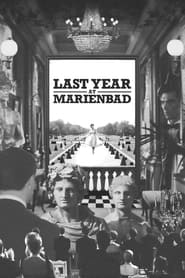
Last Year at Marienbad (1961) — Alain Resnais
Look at the famous garden shot: the hedges and statues throw long shadows, the people throw none. That's the film telling you, wordlessly, that you're not watching a record of events. A man insists he met a woman here last year; she doesn't remember; the camera supplies the remembered room — and then the room is wrong, a gown changes color mid-conversation. Watch Sacha Vierny's gliding tracking shots through ornate corridors that never quite add up to a map. Nothing settles, and the unsettledness is the subject.
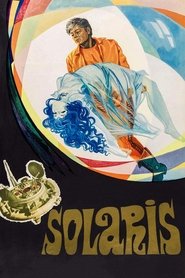
Solaris (1972) — Andrei Tarkovsky
A science fiction film that spends its opening minutes on weeds shivering in a stream and a horse standing in rain — and that's the whole argument. Where Kubrick's 2001 (which Tarkovsky was reportedly asked to answer) builds toward technological awe, Tarkovsky turns inward: memory, guilt, conscience. Notice how the alien ocean is never shown clearly enough to analyze — glimpsed through portholes, amber and swirling — because the film has no interest in solving its mystery, only in what it does to the people who face it.
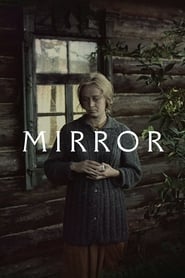
Mirror (1975) — Andrei Tarkovsky
Early on, a woman sits on a fence; a stranger passes; and then a long gust of wind runs through the buckwheat field and bows it toward her. Nothing in the story needs that wind — it's the film teaching you what to feel for. Mirror has no plot: its narrator is a dying man we hear but never see, and childhood, dream, wartime newsreel, and present grief all share the same texture, unlabeled. Watch Georgy Rerberg's candlelit, window-lit interiors, faces emerging from shadow like Rembrandt portraits, and let the film's memories arrive the way real ones do — whole, out of order, unannounced.
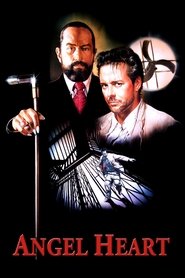
Angel Heart (1987) — Alan Parker
There's a ceiling fan turning at the top of almost every room, chopping the light into flicker. Harry Angel never looks at it; you should. Parker and cinematographer Michael Seresin film everything through smoke and dust — a cold, verminous New York, a humid, rotting Louisiana — and hybridize two genres usually kept apart: the 1940s private-eye picture and occult horror. Watch how the detective machinery seems to run normally while something underneath it has been quietly rewired, and keep an eye out for near-subliminal flashes cut into otherwise realistic scenes.
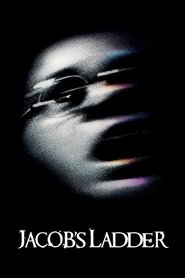
Jacob's Ladder (1990) — Adrian Lyne
A figure on a subway car shakes its head too fast — at a frequency the eye can't resolve. Lyne got the effect by having the actor whip his head while the camera ran slow, so the wrongness is printed into the photograph itself, not layered on top. Notice the two palettes: greenish swamp humidity for Vietnam, sickly fluorescent whites for the New York hospitals and subways. And notice what Jacob does about the horrors he sees: almost nothing. He looks. The film makes that looking the whole terror.
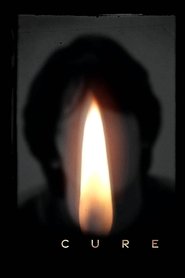
Cure (1997) — Kiyoshi Kurosawa
A man in a dim room flicks a cigarette lighter and asks, patiently, who are you? — and someone across from him agrees, somewhere below thought, to do the unthinkable. Kurosawa builds his hypnotist out of cinema's oldest tools: a point of light in the dark, a slow voice, a watcher emptied of resistance — and frames the flame and the dripping water so that you lean toward them too. Watch the distance: characters held in wide, gray, desaturated frames, dread accumulating in the space around them rather than in close-ups or violence.

Mulholland Drive (2001) — David Lynch
Save your closest attention for Club Silencio. An emcee announces, in two languages, that there is no band — and a trumpet plays on after the player lowers his horn; a singer pours out Roy Orbison's "Crying" in Spanish and the song survives her. Emotion that is real and manufactured at once: that's Lynch's engine, and Hollywood's. Notice how Peter Deming's camera gives the film two registers — a warm, golden, late-afternoon glow in some passages, something harsher in others — and let the cuts follow emotional rhyme rather than cause and effect.
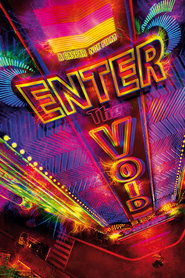
Enter the Void (2010) — Gaspar Noé
The screen blinks because the character is blinking: Noé and cinematographer Benoît Debie weld your sight to a single pair of eyes in neon Tokyo, complete with breath, sway, and the swim of a drug. First-person camera had been tried in 1947 (Lady in the Lake) and felt like a periscope; Noé fixes it by giving the gaze a body. Watch what the camera becomes after the first act — a free-floating consciousness gliding through walls in long, vertiginous movements — and how the film's circular structure borrows its shape from the Tibetan Book of the Dead.
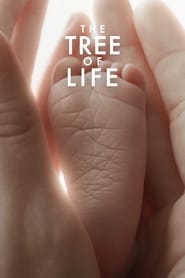
The Tree of Life (2011) — Terrence Malick
A curtain lifts in a sunlit room and the camera, low to the floor, drifts after it the way a child drifts after anything bright. You're inside someone's looking before you're given a single fact. Emmanuel Lubezki shoots almost entirely in natural light, wide lenses, camera always floating at a child's eye-level — and Malick sets a Texas boyhood against nothing less than the birth of the cosmos, built with the photochemical effects tradition of 2001. Listen for the opening opposition — "the way of nature and the way of grace" — and watch how every image takes a side.

Kaili Blues (2016) — Bi Gan
Somewhere in a Guizhou village, the camera climbs onto the back of a motorbike and doesn't get off for forty minutes — crossing a river by boat, riding a cable car up a green hillside, doubling back through the same crooked streets, meeting people who shouldn't share the same afternoon. You stop asking when you are, and that surrender is the film. Bi Gan works in the lineage of Tarkovsky's Mirror and the slow-cinema long take, letting past, present, and possible future coexist inside a single unbroken shot. Diffuse mist, wide framings, characters embedded in landscape: let it carry you.
Watched together, these films teach one another. Ozu's empty chimney shots prepare you for Tarkovsky's wind in the buckwheat; Bergman's handless clock prepares you for Resnais's shadowless garden; the ceiling fan in Angel Heart and the shaking head in Jacob's Ladder show the same idea turned to dread — the image knowing more than the person inside it can bear to know. The through-line is a wager about attention: that if a film stops rushing you toward the next event, time itself becomes visible — moving through fields and corridors and faces, with no errand to run. Give these films your patience and they give you back a different way of seeing, one that lingers long after the screen goes dark.