Sightlines · a mini film course
The Ones Who Watch: A Course in Cinema That Stopped Chasing
Most movies run on a simple engine: someone sees a problem, does something about it, and the cutting hurries you from the seeing to the doing. The eleven films here belong to a different tradition — one that took hold after the Second World War, when filmmakers began to suspect that engine no longer told the truth. In these films, the camera watches rather than chases. Characters look and listen and endure more than they act. Time is allowed to stretch until you can feel it moving through a room, a field, a corridor. Watching them together, you'll see a whole alternate history of cinema — one built not on what people do, but on what they can no longer do, and what the image gives us instead.

Rome, Open City (1945) — dir. Roberto Rossellini
This is where the break happens. Shot in the actual streets of Rome as the war ended, with off-center framings and figures caught mid-gesture, the film feels discovered rather than staged — light and depth follow what's actually there, not what would look elegant. Watch for the moments when the film refuses the comforts of movie grammar: it will not always protect what you love or resolve what it raises, and that refusal is precisely its honesty. Everything else in this series descends from it.
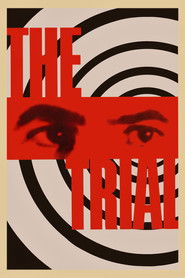
The Trial (1962) — dir. Orson Welles
Welles lost his set budget and, stranded in Paris, found his entire film one night in an abandoned railway station. Watch how Edmond Richard's extreme wide-angle lenses and deep focus make sheer volume the antagonist: ceilings bear down, corridors stretch to vanishing points, and a hurrying man becomes a speck in a space too large to cross. The hurry is both the joke and the horror — this is a film about motion that gets nowhere, in rooms that behave like a verdict.
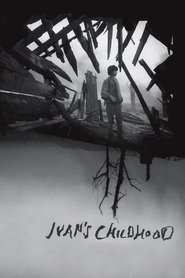
Ivan's Childhood (1962) — dir. Andrei Tarkovsky
Tarkovsky's first feature is built on a fault line between two kinds of cinema: taut wartime missions filmed low and tense against threatening skies, and dreams of birch trees, water, and light shot in a completely different register. Watch the cuts between them — hard, flat, with no dissolve or consoling music to ease the crossing. The seam between the boy who acts and the boy who dreams is the film's real subject.
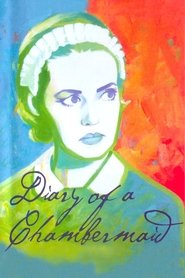
Diary of a Chambermaid (1964) — dir. Buñuel
Buñuel films everything — a dinner, a fetish, a cruelty — in the same level, plain grey light, at eye level, with no music to instruct your feelings. That evenness is a method: he refuses, absolutely, to be surprised by the bourgeoisie, and so exposes the savage appetites moving under the polished surface of a Normandy manor. Watch the objects — boots, leather, account books — carrying meanings the camera declines to explain.
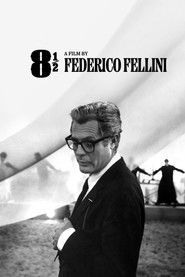
8½ (1963) — dir. Federico Fellini
Fellini removes the seam between the world and the head. Ordinarily a film warns you when a memory or fantasy begins — a dissolve, a harp, a mist. Here, present, memory, and daydream are cut together with the same hard, matter-of-fact join, shot on the same continuous silver, so you can never quite say which is the real moment and which is its reflection. Don't fight it; the vertigo is the experience.
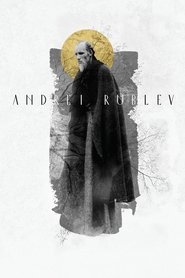
Andrei Rublev (1966) — dir. Andrei Tarkovsky
A film about a painter in which the painter mostly watches — history, violence, other people's labor — and the watching becomes the event. Vadim Yusov's camera moves in long, patient takes that refuse to cut away from discomfort or punctuate revelation with an edit. Watch how the film quietly dismantles the heroic historical epic from the inside: no great-man grandeur, just the question of what art costs in a catastrophic time, paid in advance.
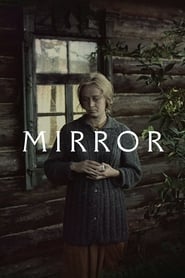
Mirror (1975) — dir. Andrei Tarkovsky
There is a moment early on when a gust of wind runs through a field for no reason the story needs — and it's the film's first lesson: this is time itself, moving through things, with no errand to run. The narrator is a voice, never a body; the past doesn't arrive as tidy flashback but survives whole, erupting into the present with equal weight. Watch how Georgy Rerberg lights faces by window and candle, like Rembrandt — and let the film circle its unresolved materials rather than expecting it to resolve them.
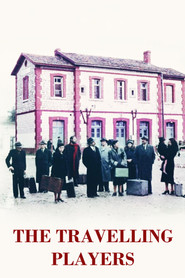
The Travelling Players (1975) — dir. Theo Angelopoulos
Roughly eighty shots, four hours. Watch the famous one: the camera follows marchers down a street, waits on the wet stone — and when people return, the year has changed. Nobody cut; the street did the time-travelling. Angelopoulos makes time a property of space instead of editing, and inside that camera move is a whole theory of how history repeats itself over the heads of the people trying to live through it.
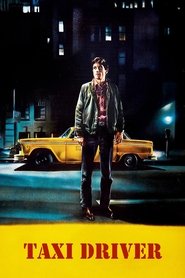
Taxi Driver (1976) — dir. Martin Scorsese
Almost everything this film knows, it knows from inside a cab. Michael Chapman's camera rides close enough to Travis's point of view to infect you — fogged windshields, neon smeared on wet glass — then steps outside to watch him from across a diner, so you're never allowed to simply be him or simply judge him. Watch the loop: a man who perceives everything and can convert none of it into anything adequate. He drives. He drives some more.
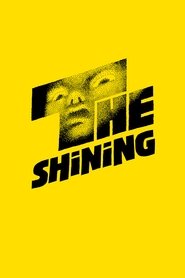
The Shining (1980) — dir. Stanley Kubrick
Watch with your ears: as the Steadicam glides inches off the floor behind a boy on a tricycle, the wheels go loud on hardwood, soft on carpet, loud again — and you find yourself bracing at every corner. Then try to map the hotel. You can't; its geography is famously impossible, corridors folding back on themselves, and that failure is the point. The Overlook isn't a setting the characters move through. It's more like a mind they're moving inside.
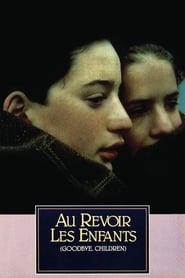
Au Revoir les Enfants (1987) — dir. Louis Malle
Malle rebuilt his own boyhood in a wartime boarding school, and Renato Berta shoots it in cold, narrow winter tones — greys, browns, bluish light — with disciplined restraint. Watch the young lead: he performs almost entirely through watchfulness rather than deed, because a child perceiving the machinery of the Occupation can do nothing with what he sees except look. Every frame is built to make that looking matter.
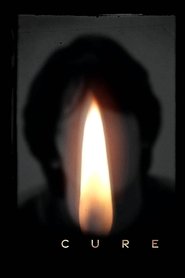
Cure (1997) — dir. Kiyoshi Kurosawa
A detective story assembled out of subtraction: no grand design, no charismatic mastermind theatrics, just muted greys, held wide shots that keep figures small in their environments, and a question — who are you? — that sounds like nothing and unmakes everyone it touches. Watch how the film's hypnosis is built from cinema's own oldest tools: a point of light in the dark, a patient voice, a watcher emptied of resistance. Then notice what the film is doing to you with a flame and a drip of water.
Watch these together and something remarkable happens: your attention retrains itself. You stop waiting for the next event and start reading light, duration, the sound of a floor, the shape of a room, the length of a gaze. Each film teaches the next — Rossellini's rupture prepares you for Tarkovsky's wind in the field; Welles's crushing architecture prepares you for Kubrick's unmappable hotel; Fellini's missing seams prepare you for Angelopoulos's time-shifting street. This is a cinema that trusts you to sit inside an image rather than be pushed through it. Give it that trust back, and these eleven films will change what you notice in every movie you see afterward.