Sightlines · a mini film course
The Cinema of Watching: When Doing Fails and Seeing Takes Over
Most movies run on a simple engine: a character sees a problem, acts, and the world bends to the act. The twelve films on your list — Soviet masterworks, Hollywood classics, a nightmare comedy, a horror chamber-piece, a neo-noir loop — all belong to a stranger, richer tradition. In each of them, that engine stalls or breaks or is deliberately smashed. Characters look at their worlds and find that action is unavailable, useless, or worse than useless. And when doing fails, the films discover something extraordinary: seeing itself becomes the drama. The camera watches rather than chases. Time is allowed to stretch. What a face registers matters more than what a hand accomplishes. Watched together, these films form a secret history of cinema's greatest counter-tradition — the cinema of the witness.
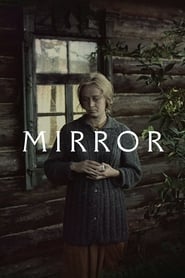
Mirror (1975)
Watch the wind. Early on, a gust moves through a field of buckwheat with no one to cause it and no story reason to exist — and it's the film teaching you how to watch it: time itself, moving through things, with no errand to run. There is no plot here; a dying narrator, heard but never seen, circles his memories of mother, father, wife, and son without resolving anything. Notice Georgy Rerberg's light — interiors lit by windows and candles, faces emerging from shadow like Rembrandt portraits — and notice how the past doesn't arrive in tidy, labeled flashbacks but floods in whole, as alive as the present.
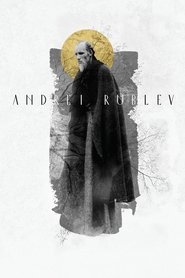
Andrei Rublev (1966)
The prologue gives you the whole method: a man rigs a crude balloon, briefly flies above a river, and falls — and the camera does not cut away to spare us, does not rescue him, does not punctuate. It watches. Tarkovsky's film about a medieval icon painter is built almost entirely from watching: Rublev endures history rather than steering it, and the question underneath — can art be made in good conscience amid catastrophe? — is asked through duration, in extremely long takes that refuse to look away from discomfort. Vadim Yusov's camera moves constantly, but its movement observes rather than drives.
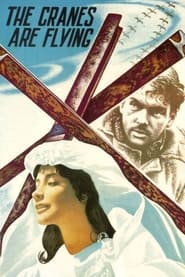
The Cranes Are Flying (1957)
This is the hinge film of the set — the moment Soviet cinema turned from monuments to private feeling, and the very template later films would push against. Watch for two legendary camera movements by Sergei Urusevsky: a single spiraling ascent up a staircase that compresses longing and architecture into one breath, and a sequence in a birch wood where, at the instant a body falls still, the camera tilts up and the treetops begin to wheel against the sky — the world taking over the motion a human being has surrendered. Everything that matters happens after action can do anything.
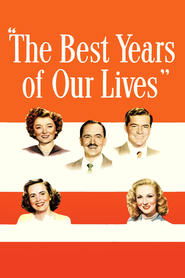
The Best Years of Our Lives (1946)
Three veterans ride home in the glass nose of a bomber — a compartment built for nothing but looking down — and watch America slide beneath them. Men trained for years to convert seeing into doing are handed back a world that only asks them to look at it. Watch how Gregg Toland's deep focus stages this: foreground and background both razor-sharp, so that in the famous drugstore scene one drama plays close to the lens while another unfolds, tiny and devastating, at the far end of the room — no cut telling you where to look. You must choose. That choice is the film.
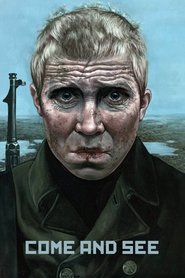
Come and See (1985)
Klimov's film takes the humanist war movie of The Cranes Are Flying and deliberately demolishes it. The camera stays centimeters from young Florya's face with wide-angle lenses, so that atrocity reaches you through his eyes before — or instead of — direct depiction. Watch the face itself: no years pass in the story, yet the boy visibly ages decades, an aging Klimov reportedly shot into the actor's body through months of stress. The film's inheritance runs back to Dreyer's The Passion of Joan of Arc: a single traumatized face made to carry the entire weight of institutional violence.
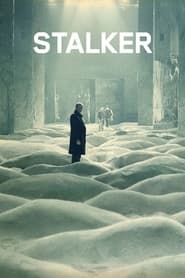
Stalker (1979)
Three men risk prison to enter a forbidden Zone — and then, having arrived, they mostly stop. They sit in wet grass. They argue. They lie down. Tarkovsky keeps science fiction's premise and evacuates all its pleasures: no spectacle, no explanation, no monster to fight. Watch the extraordinary shot where the camera lies down in shallow water and drifts over submerged debris — coins, a syringe, a torn scrap of a religious painting — refusing to resolve into a clue or a symbol. The looking slowly becomes the substance of the film rather than a delay before it. Note too the color design, inherited from Antonioni's Red Desert: sepia and color trading places to map an inner landscape.
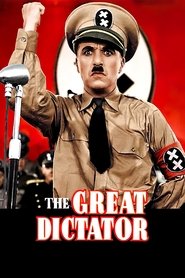
The Great Dictator (1940)
The centerpiece to watch is the balloon: the dictator Hynkel alone in his chancellery, dancing with a globe painted like the earth for nearly four minutes while Wagner swells — nothing advancing, a man rapt and weightless while the world floats around him. Chaplin, the great engine of comic action, deliberately stills his body here and lets it be a diagnosis of what megalomania feels like from inside. Notice too the architecture: monumental halls for the powerful, warm cramped rooms for the ghetto — a visual grammar borrowed from Metropolis, with the rally scenes built as shot-for-shot parody of Riefenstahl's Triumph of the Will.
Dr. Strangelove (1964)
Kubrick's joke is structural: this is a film where everyone perceives the catastrophe with perfect clarity and no one can react adequately to it. The gap between seeing and doing — tragic in the other films here — becomes the engine of comedy. Watch Gilbert Taylor's three distinct visual worlds: quasi-documentary handheld at the military base, claustrophobic procedure in the B-52, and the vast theatrical dark of the War Room. And watch for the one figure who still operates on the old cowboy grammar of see-problem, fix-problem — and ask yourself what his competence is worth.

Salò, or the 120 Days of Sodom (1976)
Approach with care: this is deliberately the most extreme film on the list, and it earns its reputation. But watch how Pasolini films horror — not with a horror film's grammar at all. Tonino Delli Colli's cinematography is cool, even, painterly; the camera holds libertines and victims in composed medium and wide shots, like an official document. The structure comes from Dante — a graded descent through circles rather than a plot — and the film's true subject is spectatorship itself: the civilized distance from which power arranges its view of what it consumes. It asks what your own watching is made of.
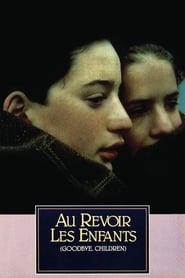
Au Revoir les Enfants (1987)
Malle's autobiographical film about a wartime boarding school is built around watchfulness — a boy, Julien, played almost entirely through what his eyes register rather than what he does. Renato Berta's disciplined naturalism gives you the cold gray-brown palette of an unheated school in winter, and the film inherits its method from The 400 Blows: an unknown child lead, an observational camera held at a distance, no melodrama. Everything converges on a single glance in a classroom — a look lasting less than a second, whose consequence the film, forty years later, still cannot determine. Watch for it.
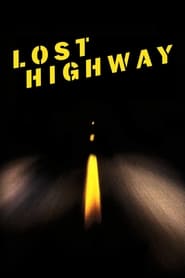
Lost Highway (1997)
Lynch takes the noir — femme fatale, gangster, murder, surveillance — and strips out motive, explanation, and detection. What's left is pure watching without a solution. Peter Deming photographs the Madison house as engulfing darkness; characters walk into blackness and simply dematerialize. Watch how the film refuses the cut that would tell you whether what you're seeing is present, memory, or dream — whether two women played by one actress are two women or one woman dreamed twice. Its structural grammar comes from Last Year at Marienbad: repetition without stable chronology, a loop rather than a line.
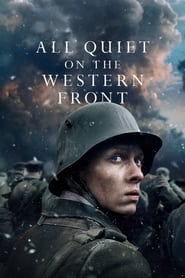
All Quiet on the Western Front (2022)
Berger opens not with heroism but with logistics: a soldier dies in a charge, and the film follows his coat — stripped, laundered, stitched, folded, reissued to a boy still excited to wear it. No music; observational cuts; the rhythm of inventory. Before a word of disillusionment is spoken, you've seen the whole war as a machine that consumes bodies and recycles the packaging. Watch how Berger cross-cuts between comfortable rooms where the war is administered and the mud where it is suffered — a structure inherited directly from Kubrick's Paths of Glory — and how the protagonist, like so many figures on this list, can only be processed by what he perceives.
Why watch these together? Because they teach each other. The Cranes Are Flying invents a lyric camera that Come and See deliberately turns inside out. Toland's deep focus in Best Years and Tarkovsky's long takes are two answers to the same question: how do you make an audience look instead of merely follow? Chaplin's balloon dance and Kubrick's War Room are comedy discovering the same broken circuit that Tarkovsky and Klimov render as tragedy. And across all twelve, one demand recurs: these films will not do your watching for you. They hold the shot, stretch the moment, refuse the explaining cut — and trust you to sit inside the image until it opens. That trust is rare. Repay it with attention, and this list becomes one long, astonishing film about what it means to see.