Sightlines · a mini film course
The Cinema of Watching: Twelve Films Where Looking Becomes the Event
Most movies run on a simple engine: a character sees a problem, does something about it, and the story moves forward. The films on this list quietly unplug that engine. In each of them, someone reaches a situation that action cannot touch — grief, exile, memory, a haunted building, a question with no answer — and the film stops chasing and starts watching. The camera lingers past the useful moment. Time is allowed to stretch. A shot of wind in a field, or smoke over rooftops, or coal buckets crossing a grey sky, is held not because it advances anything but because it is the thing. Watching these films is less like following a story and more like learning a new tempo — and once you feel it, you'll see how each director bends that tempo to a completely different end: prayer, dread, tenderness, vertigo.
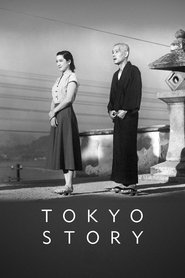
Tokyo Story (1953)
Start here, with the gentlest version of the idea. Ozu mounts his camera low — about the sightline of a person seated on a tatami mat — and almost never moves it, so every domestic scene feels observed from inside the room rather than staged for you. Watch for the "empty" shots between scenes: chimneys, laundry, a passing train, held a few seconds past any narrative use. They tell you nothing, and that's the point — they let transience itself become the subject, an ache the film never has to announce out loud.
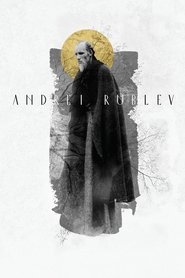
Andrei Rublev (1966)
Tarkovsky opens his film about a medieval icon painter with a man strapped to a homemade balloon, briefly airborne over a river — a prologue about the cost of making things, paid in advance. Notice how the extremely long takes refuse to cut away from discomfort or punctuate revelation with an edit; the camera watches rather than rescues. Rublev himself spends much of the film as a witness to history rather than an actor in it, and the film asks — without ever lecturing — whether art can be made in good conscience amid catastrophe.
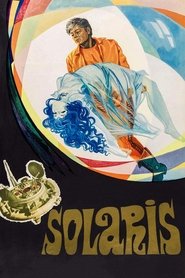
Solaris (1972)
A science fiction film that begins with fifteen minutes of grass, water, and a horse in the rain — and means it. Made in the wake of 2001, Tarkovsky inverts Kubrick's priorities: instead of the technological sublime, moral reckoning; instead of a mystery to decode, an ocean glimpsed only through portholes, swirling amber, deliberately kept beyond the reach of analysis. Watch how Vadim Yusov's lighting draws on the Old Masters — warm pools of gold against darkness — so a space station comes to feel like a house of memory and conscience.
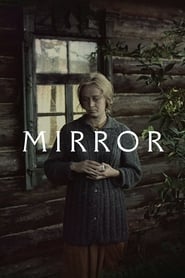
Mirror (1975)
Tarkovsky's most personal film has no plot in the ordinary sense — its dying narrator is heard but never seen, and the film moves the way remembering actually moves: circling, doubling back, mixing eras without warning. Watch for Georgy Rerberg's light — interiors lit by windows and candles, faces emerging from shadow like Rembrandt portraits — and for moments when nature seems to act on its own, like a gust of wind bowing an entire field toward a woman for no reason the story requires. Don't try to solve the chronology; let the film teach you its rhythm, image by image.
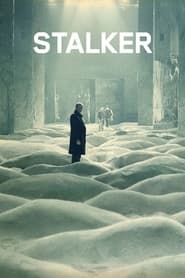
Stalker (1979)
Three men risk everything to enter a forbidden zone said to grant one's deepest wish — and then, having arrived, they mostly sit in wet grass and argue. Tarkovsky strips science fiction of spectacle and explanation, leaving belief and doubt facing each other in a rain-soaked landscape. Watch the deep-focus frames — a glass of water or a syringe anchoring the foreground while figures move far behind — and the celebrated shot where the camera drifts over a riverbed of submerged objects, refusing to resolve into a clue or a symbol. The looking itself becomes the substance.
The Shining (1980)
Kubrick brings this sensibility into horror: symmetrical corridors receding to a single vanishing point, spaces rendered with bright, unnerving clarity rather than gothic murk. Listen to the Steadicam shots — brand new technology in 1980 — as they glide behind a boy on a tricycle, the sound of wheels going loud on hardwood, soft on carpet, loud again, making you brace before every corner. Try to draw a map of the hotel as you watch. You'll fail, and that failure is one of the film's deepest design choices: the building behaves less like a place than like a mind.
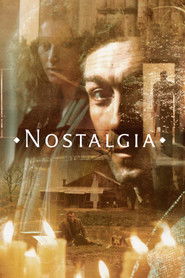
Nostalgia (1983)
Tarkovsky's film of exile, made in Italy, about a Russian who can neither work, nor love, nor go home. Its centerpiece is one of cinema's great endurance shots: a man carrying a small candle flame across a drained pool, nine minutes, one take, the flame genuinely at the mercy of the air — real precariousness, not the simulation of it. Watch how the film shifts between color for the present and sepia for memory, and how the camera builds pressure through slow, patient movement rather than cutting. Nothing is "happening"; everything is at stake.
Damnation (1988)
Béla Tarr's black-and-white landmark opens on coal-conveyor buckets crawling across a ruined sky — then the camera reverses to find a man at his window, watching the same buckets we were. That pivot is the film in miniature: a world of rain, mud, and entropy, observed by someone who sees everything and can change nothing. Tarr takes Tarkovsky's long takes and drains them of transcendence — where Tarkovsky's duration reaches toward the spiritual, Tarr's sinks into the material: rain, plaster, dogs, decay. Foundational to what would later be called slow cinema.
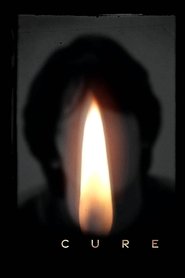
Cure (1997)
Kiyoshi Kurosawa answers the glossy serial-killer thrillers of the '90s by subtraction: no grand design, no charismatic mastermind, just a slow-speaking stranger, a cigarette lighter, and a question — who are you? — that dissolves people from the inside. Watch the framing: wide, desaturated shots that hold characters at a distance inside their environments, so dread seeps in from the edges rather than being delivered in close-up. And notice how the hypnosis scenes are built from cinema's own raw materials — a point of light in the dark, a patient voice, a watcher — so the film seems to be quietly practicing on you what its villain practices on his victims.
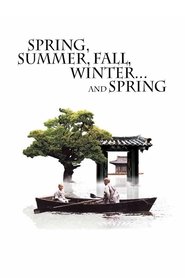
Spring, Summer, Fall, Winter... and Spring (2003)
A floating temple on a lake, a master, a pupil, and four seasons that carry the entire architecture of a life. Kim Ki-duk, trained as a painter, composes in frontal, symmetrical tableaux — the temple centered on the water, mountains held in long still shots — and lets the landscape do the talking: there is almost no dialogue, and meaning is pushed onto water, wind, birds, the creak of a rowboat. Watch for how lessons are taught through weight — stones, burdens, things physically carried — rather than through words. Consequence, here, is something the body wears.
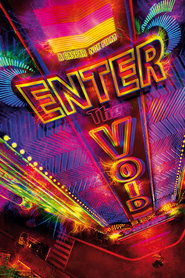
Enter the Void (2010)
Gaspar Noé takes the cinema of watching to its most extreme, literal conclusion: the camera is the protagonist. In the opening act you see only through one man's eyes — the screen blinking when he blinks, swimming when he's high — a first-person experiment attempted back in 1947 (Lady in the Lake) that failed because a gaze that never blinks reads as a machine. Noé fixes it with breath, sway, and eyelids. Then the camera comes loose entirely, floating over neon Tokyo in vertiginous unbroken movements, its circular structure drawn from the Tibetan Book of the Dead. Overwhelming where the others are austere — the same idea, played fortissimo.
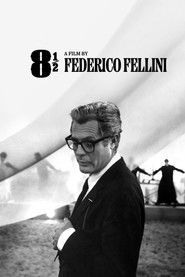
8½ (1963)
Save this one for when you've tuned your eye, because Fellini plays the subtlest trick of all. His blocked film director drifts between present, memory, and fantasy — and the film refuses every courtesy that would tell you which is which. No dissolves, no dreamy music cues, no change in the image: Gianni Di Venanzo shoots reality and daydream on the same crisp black-and-white silver, and the editing joins them with the same hard cut it would use between two rooms of a house. Watch the famous opening — a man trapped in a car in a traffic jam, then suddenly airborne — and notice that you cannot name the moment the world became the dream. The seam is gone on purpose.
Watched together, these twelve films stop feeling like a collection of "slow" or "difficult" movies and start feeling like a conversation across sixty years and half the globe — Ozu's low camera answered by Tarr's rain, Tarkovsky's candle answered by Noé's neon, Kubrick's impossible corridors answered by Kurosawa's patient flame. Each director found a different reason to let the camera watch rather than chase: grief, faith, dread, memory, exile. What they share is a wager on your attention — the belief that if a shot is held long enough, past its usefulness, something happens that no cut could deliver. Give them that attention and the reward is real: you come out the other side seeing duration itself as expressive, the way a musician hears silence. Then watch anything else, and notice how loud the cutting suddenly sounds.