Sightlines · a mini film course
The Art of Waiting: Twelve Films Where Watching Is the Event
Most movies run on a simple engine: someone sees a problem, does something about it, and the doing carries us forward — the cut hurries us from cause to effect. The films on this list unplug that engine. Their characters see their worlds with painful clarity, but seeing doesn't convert into fixing; the camera watches rather than chases, space presses in instead of opening up, and time is allowed to stretch until you can feel it passing in your own body. That sounds austere. It isn't. When a shot outlasts its "reason," something remarkable happens — attention itself becomes the drama, and nothing happening starts to feel like everything at stake.
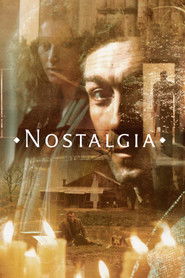
Nostalgia (1983)
Tarkovsky builds pressure through duration, not editing: the camera drifts slowly sideways or pushes gently forward, isolating figures against an atmospheric murk. The film's real subject is untranslatability — a man exiled from a homeland he can't return to, unable to truly reach the woman beside him, because inner life itself is a kind of country no one else can visit. Watch for a legendary long take involving a small flame and a great deal of patience: real precariousness, not a simulation of it, where simply keeping something alight becomes an act of faith. Oleg Yankovsky's performance is built entirely on withholding — a man moving as if underwater, his grief too habitual to be acute.
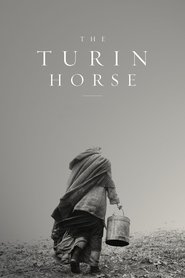
The Turin Horse (2011)
Shot in some of the most sustained black-and-white cinematography of this century, Tarr's film is structured as six days of a father, a daughter, a horse, and the wind. Watch how the repetitions — the well, the lamp, the daily boiled potato — are never explained and never abbreviated; you wait the way the characters wait, and the waiting is the film. The long take here isn't a flourish, it's the argument: you don't receive information about a world running down, you inhabit it.
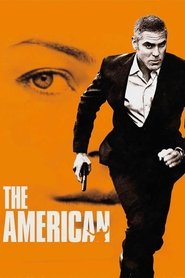
The American (2010)
A hitman film that refuses the chase. Corbijn and cinematographer Martin Ruhe frame Clooney small inside converging medieval stone streets, so the beautiful town doubles as a slowly tightening trap — watch the sightlines. In the tradition of Melville's laconic professionals, character is built from gesture and routine: exercises, coffee, the near-silent filing of a piece of steel. Leone's Once Upon a Time in the West even screens within the film, and its lesson is everywhere — stillness before violence is the dramatic event, not the violence.
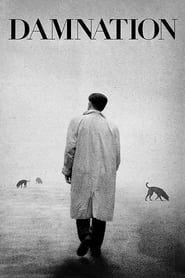
Damnation (1988)
The opening shot is one of the most celebrated in Tarr's work: coal-conveyor buckets crawling across a ruined grey sky in an unhurried lateral track — then the camera reverses and finds a man at a window, watching what we were just watching. That pivot is the whole film: not a person who acts, but a person condemned to look. This is where Tarr's mature style is born — rain as a near-cosmic principle of dissolution, buildings and bodies all slowly returning to mud, filmed with a patience that turns bleakness strangely hypnotic.

L'Eclisse (1962)
Antonioni's grammar here is negative space and geometry: characters framed against walls, glass, and vast modernist plazas that subdivide and dwarf them. The theme isn't heartbreak in the usual sense but the failure of feeling to last — the inability to hold an emotion in place long enough for it to become what you hoped. Watch how often the environment holds the center of the frame while the people drift to its edges. And when the final minutes arrive, pay very close attention to what the camera chooses to look at — it's one of the most audacious closing passages in cinema, and the less said the better.
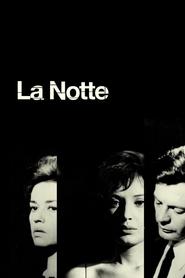
La Notte (1961)
Milan's glass towers and half-built peripheries aren't backdrop here — they're photographed as active presences, psychological weather. The film's subject is incommunicability: a celebrated writer with nothing left to say, a wife who understands him too well, language reduced to charm and performance. Watch the extended sequence of Lidia simply walking through the city — a walk that leads nowhere, decides nothing, and is somehow the film's beating heart.
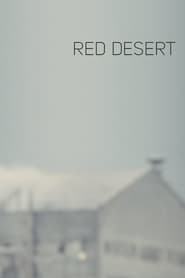
Red Desert (1964)
Antonioni had the grass along the refinery road literally painted grey, so nothing growing could look alive — the landscape authored down to the chlorophyll to match the inside of a woman's head. Monica Vitti plays Giuliana not as numb but as flooded: a face in constant micro-attention, registering steam, sound, engine-throb, taking in more than she can discharge. Her distress is presented not as private pathology but as an accurate response to an environment humans weren't built to inhabit — watch how the industrial Ravenna of pipes and toxic color is made both monstrous and weirdly beautiful.
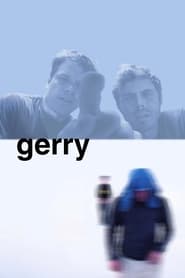
Gerry (2002)
Van Sant's directly acknowledged model is Béla Tarr: extended walking takes in which the sheer duration of putting one foot in front of another becomes the drama. Watch the famous tracking shot of two men trudging in near-lockstep, heads bobbing, until walking stops being walking and becomes something like a pulse. Harris Savides shoots the desert with long lenses and natural light as an abstract field, not a postcard — a place where the usual survival-movie machinery (ticking clock, rescue subplot, competent heroics) has been quietly removed.
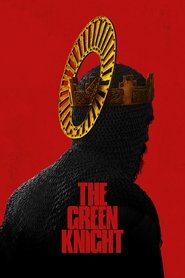
The Green Knight (2021)
A fantasy quest with the action emptied out of it — a young man riding for a year toward an appointment he cannot fight his way out of, which turns the whole film into a meditation on how to meet an appointed end. Shot in mist, moss, gold, and rot, with centered, frieze-like framings borrowed from The Color of Pomegranates and the muddy, tactile medieval texture of Andrei Rublev. Watch for a single slow 360-degree camera rotation at the Green Chapel that compresses seasons of the world's indifference into one breath — time showing itself, the way it almost never does in movies.
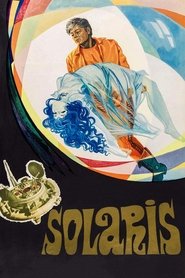
Solaris (1972)
Before any space station appears, Tarkovsky spends long minutes with weeds shivering in a stream, water plants combed by the current, a horse in the rain — shots that outlast their reason for existing, which is precisely the point. Commissioned as a Soviet answer to 2001, the film inverts Kubrick's priorities: not the technological sublime but memory, guilt, and conscience. Watch how the alien ocean is never shown clearly enough to analyze — glimpsed through portholes, swirling amber — the mystery not saved for a reveal but simply left mysterious.
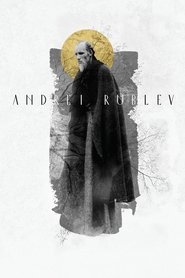
Andrei Rublev (1966)
Tarkovsky opens his film about Russia's great icon painter with a prologue about a man who builds something that briefly, gloriously works — the cost of making, paid in advance. The film's question is whether art can be made in good conscience amid historical catastrophe, and its method is duration: extremely long takes that refuse to cut away from discomfort or to punctuate revelation with an edit. Notice how the painter himself mostly watches — the film builds a portrait of an artist almost entirely out of what he witnesses and endures.
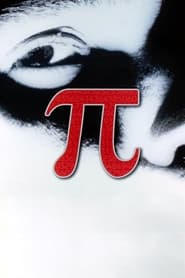
Pi (1998)
The outlier — and the perfect stress test. Where the others let the camera stand back and watch, Aronofsky bolts it to his protagonist: the SnorriCam rig locks Max's face dead center while the Chinatown street pitches and slides around him like a ship's deck. Look closely — nothing is wrong with the street; something is wrong with the man. Shot in harsh high-contrast black and white with a droning bed of dread inherited from Eraserhead, it traps you inside a single deteriorating perception, so that seeing itself — not action — becomes the whole nervous, migraine-lit event.
Watched together, these films retrain your eye. The Antonionis teach you to read architecture as emotion; Tarr teaches you to feel time as weight; Tarkovsky teaches you that a shot held past its "purpose" can become an act of faith; Van Sant, Corbijn, and Lowery show that tradition crossing into American genres — the survival film, the thriller, the quest — and hollowing out their machinery from the inside; and Pi shows the same obsession with pure perception running at panic speed instead of a crawl. The reward is cumulative: by the fourth or fifth film you'll stop waiting for something to happen and start noticing that something already is — in the frame, in the duration, in you. That shift in your own attention is what this course is really about.