Sightlines · a mini film course
The Cinema of Watching: When Looking Becomes the Event
Most movies run on a simple engine: a character sees a problem and does something about it. The films on this list are what happens when that engine is switched off. Their people — an exiled poet, an old professor, a novelist with nothing left to say, a director building a replica of his own life — can see their worlds with painful clarity, but nothing they see can be converted into an act that would fix anything. So they watch. And the films watch with them: the camera holds rather than chases, time is allowed to stretch until you can feel it passing in your own body, and the "empty" moments — a walk, a meal, a face held in even light — turn out to be where everything is at stake. This is a course in a different kind of suspense: not what will happen, but how long can a moment be held, and what floods in when it is?

Wild Strawberries (1957)
Bergman opens with an image that announces the whole project: a dream-street in white glare, a clock with no hands, a pocket watch with a blank face. Time has been unhooked from measurement — it's no longer the thing that tells you when to act, but something you stand inside and look at. Watch how Gunnar Fischer's photography quietly shifts its tonal register between the present-day car journey and the memory sequences, and notice the debt to Sjöström's silent The Phantom Carriage: an old man permitted to stand inside his own past as a ghost-spectator, watching rather than intervening.
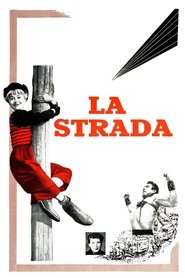
La Strada (1954)
Watch Giulietta Masina's face in the first minutes, before you know anything about her character. Fellini holds it in plain, even light — no shadow telling you how to feel — and the expression refuses to resolve into comedy or grief. This is a film built on the held close-up as an event in itself: where an action film would cut from the face to what the face will do, Fellini simply lets wonder and hurt persist on the surface. Masina's whole vocabulary comes from Chaplin's gestural economy and Dreyer's grammar of the sustained, unrescued face — a body that carries spiritual weight without a single dramatic cut to save it.
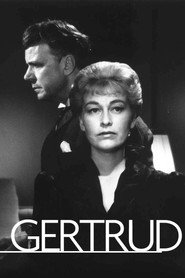
Gertrud (1964)
Dreyer's last film repeats one gesture until you can't stop seeing it: two people on a sofa, one saying the word love, and neither looking at the other. Declarations delivered to the empty air, confessions made to the floor. Built from remarkably few shots — one of the longest average shot lengths in narrative cinema — the film unfolds in extended, tapestry-like takes where the slow gliding camera detaches from the drama entirely. Watch where Gertrud looks: at something in the middle of the room that we cannot see and she cannot quite reach.
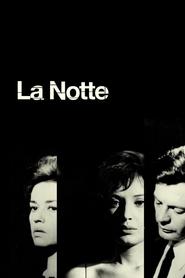
La Notte (1961)
The famous set piece here is simply a walk. Lidia leaves a party and drifts through Milan, and Antonioni lets the city take the center of the frame — glass curtain walls, half-built structures, waste ground — while she moves to the edge, small, almost incidental. You keep waiting for the walk to lead somewhere; that waiting is the film's engine. Notice how Di Venanzo photographs modernist architecture not as backdrop but as an active presence, and how the neorealist habit of shooting real places gets redirected inward: the body in space rather than the body in society.

L'Eclisse (1962)
Antonioni again, one year later, pushing further. The romance that would power a melodrama is already over before the titles; we arrive at the sorting-through. Watch Di Venanzo's grammar of negative space — figures framed against walls, windows, reflective surfaces that subdivide the image, a woman reduced to a small shape in a vast plaza. And be ready for the ending, which I won't describe except to say it is the purest demonstration in cinema of a camera continuing to watch after the story has stopped asking it to.
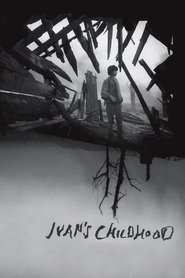
Ivan's Childhood (1962)
Tarkovsky's debut is built across a fault line, and he wants you to feel the seam. On one side: the war — missions, night river-crossings, deep-focus photography pressing a boy's small figure against vast threatening skies. On the other: his dreams — birch trees, light through leaves like water, a lyricism borrowed from Dovzhenko's Earth. Tarkovsky welds the two with the hardest cuts he can make, no dissolves, no consoling music. The dreams aren't flashbacks that explain anything; they're another country entirely, and the cut between them is the subject.
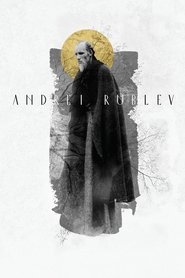
Andrei Rublev (1966)
Tarkovsky opens his film about a medieval icon painter with a man lashed to a balloon of stitched hide, briefly airborne over a river. Notice what the scene doesn't do: no rescue, no cut to spare us. The camera watches. That's the visual grammar of the whole three-and-a-half hours — extremely long takes that refuse to cut away from discomfort or punctuate revelation with an edit, and a protagonist who is mostly a witness, taking Dreyer's Passion of Joan of Arc as its model: a saint rendered through what she endures and sees, not what she does.
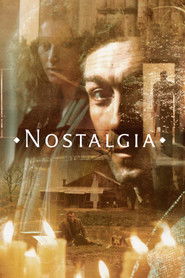
Nostalgia (1983)
The film's most celebrated sequence is nine minutes, one shot: a man trying to carry a lit candle across a drained pool, the flame guttering, going out, forcing him back to start again. Real precariousness, not a simulation of it — by the far wall you've stopped watching a man cross a pool and started watching duration itself become an act of faith. Watch also for the chromatic shifts Tarkovsky developed in Mirror (color for the present, sepia for memory) and for figures placed at the far edges of vast frames, a technique connecting back through co-writer Tonino Guerra to Antonioni himself.
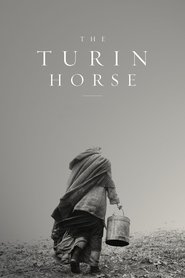
The Turin Horse (2011)
Watch them eat the potato. A father, a daughter, a boiled potato, day after day, and the camera holds until you wait the way they wait. Tarr builds his film from a small number of monumental takes in some of the most sustained black-and-white cinematography of the contemporary era — the opening shot alone is justly celebrated. Structured across six days, the film doesn't tell you about a world winding down; it makes you inhabit the winding-down as lived time. The lineage runs through Jancsó's choreographed long takes and Bresson's suffering, unsentimentalized animals.
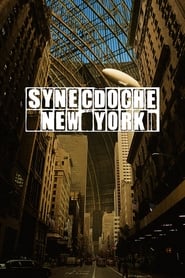
Synecdoche, New York (2008)
Kaufman's trick is that the impossible is never flagged. A woman tours a house that is actually on fire and buys it anyway; nobody treats this as strange. Frederick Elmes — who shot Eraserhead and Blue Velvet — photographs it all with restrained, autumnal calm, which is exactly what makes the strangeness so porous. Watch the film's central structure: a theater director building a full-scale replica of his life, hiring an actor to play himself, then an actor to play that actor — the copy and the original slowly becoming impossible to tell apart. The models are 8½ and, pointedly, Wild Strawberries: a man walking through restaged tableaux of his own past.
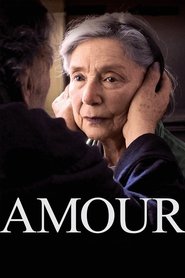
Amour (2012)
Haneke announces his method in a single early setup: at a piano recital, the camera faces the audience instead of the stage, filling the screen with strangers, and no reverse shot ever arrives to let us off. We sit in the dark looking at people who are looking. From there the film unfolds almost entirely inside one Paris apartment — static camera, respectful middle distance, naturalistic window light, shots long enough that a prepared meal or a lifted body takes on the weight of real time. The models are Ozu's Tokyo Story and Bresson's disciplined restraint: love rendered as an inventory of small daily gestures.
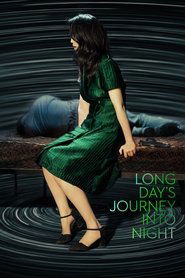
Long Day's Journey Into Night (2018)
Bi Gan builds a film in two kinds of cinema and marks the hinge with a physical instruction: an hour in, the title card finally appears and you're told to put on 3D glasses. Then the camera doesn't cut for fifty-nine minutes. The first half is memory that refuses to behave like memory — a lyric voiceover over images that won't anchor to a timeline, borrowed from Tarkovsky's Mirror, with hotels and corridors haunted by Resnais's Last Year at Marienbad. The second half is something you enter rather than watch. That small gesture — fingers to temples in a dark room — is the truest thing the film asks: you are putting on a dream.
Why watch them together? Because they teach the same skill from twelve angles. Once Wild Strawberries shows you a clock with no hands, you'll recognize the drained pool in Nostalgia, the empty street corner in L'Eclisse, the potato in The Turin Horse — moments where the film stops asking its images to accomplish anything and simply lets time become visible. The lineages here are real and traceable: Dreyer's held faces feed Fellini and Tarkovsky; Antonioni's drifting walks feed Tarr and Bi Gan; Bergman's ghost-in-his-own-past feeds Kaufman directly. Watched in sequence, these films retrain your patience — and then reward it. Nothing is "happening." Everything is at stake.