Sightlines · a mini film course
The Art of Watching: Twelve Films Where Looking Becomes the Event
Most movies run on a simple engine: a character sees a problem, does something about it, and the story moves forward. The films on your list run on a different fuel entirely. Their people — a homesick poet, a restless wife, an old professor, a knight home from war — see their worlds with almost painful clarity, but they can't convert what they see into a deed that fixes anything. So they watch. They endure. And the films slow down with them, letting shots run long, letting rooms and landscapes and weather take center frame, letting time stretch until you feel it passing in your own body. Nothing is "happening" — and everything is at stake. Here's what to watch for in each.
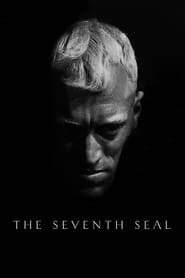
The Seventh Seal (1957)
Begin on a grey beach where a knight sits at a chessboard, and notice how little anyone moves. Gunnar Fischer shoots with fierce contrast — faces against blown-out skies, figures against deep shadow — drawing on the old Swedish tradition of Death as a physical presence walking among the living. Watch the knight's face when he searches other people's eyes for answers: the searching look, with no action behind it, is the film's real drama.

Wild Strawberries (1957)
Bergman opens with a dream: a deserted street, a clock with no hands, a blank pocket watch. Time has been unhooked from measurement — it's no longer the thing that tells you when to act, but something you stand inside and look at. Watch how Fischer's photography quietly shifts its tonal register between the present-day car journey and the older strata of memory, and how the film lets its protagonist stand inside his own past as an observer — a device inherited straight from Sjöström's silent masterpiece The Phantom Carriage.
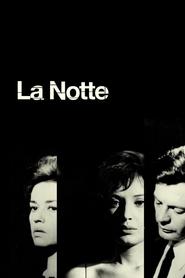
La Notte (1961)
Watch what holds the center of the frame. Di Venanzo photographs Milan's glass towers and half-finished buildings as active presences, while the human beings drift to the edges — small, almost incidental. There's a long walk through the city that keeps promising to lead somewhere and pointedly doesn't; let it teach you the film's rhythm. Antonioni took neorealism's tools — real locations, patient observation — and pointed them inward, at the body in space rather than the body in society.

L'Eclisse (1962)
Antonioni's grammar here is negative space: characters framed against walls, windows, and reflective surfaces that subdivide the image, a woman reduced to a small figure against a vast plaza colonnade. The film borrows from Bresson the trick of cutting between states without explanation, trusting you to supply the connective tissue. And stay for the final minutes, which are famous precisely because of what the camera chooses to look at — one of cinema's boldest demonstrations of what an image can do when it stops serving a plot.
Red Desert (1964)
Antonioni had the grass along the refinery road painted grey by hand — the landscape literally authored to match the inside of a woman's head. Watch Monica Vitti's face: not numb but flooded, in constant micro-attention to steam, sound, engine-throb, registering more sensation than she can discharge. The film asks whether a human nervous system can adapt to an environment it never evolved to inhabit, and it asks this through color, texture, and telephoto compression rather than dialogue.
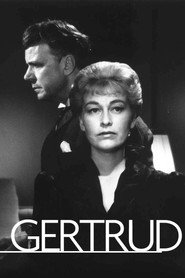
Gertrud (1964)
Two people sit on a sofa discussing love — and neither looks at the other. Dreyer repeats this gesture across his entire last film: declarations delivered to the empty air, confessions addressed to the floor. Built from remarkably few shots for a two-hour film, with a camera that glides slowly and detaches from the action (a habit Dreyer had been refining since Vampyr), it becomes a study of where a person looks when she has stopped expecting the world to answer. Watch the eyelines. They're the whole story.
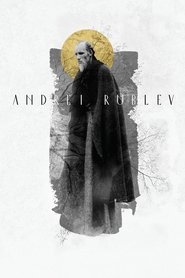
Andrei Rublev (1966)
Tarkovsky opens his film about a medieval painter with a man strapped to a crude balloon of stitched hide, briefly airborne over a river. Notice what the camera does not do: it doesn't cut to spare you, doesn't punctuate revelation with an edit. Yusov's long takes refuse to look away from discomfort. The whole film is a meditation on whether art can be made in good conscience amid catastrophe — and it quietly dismantles the Soviet historical epic from the inside, replacing Eisenstein's glorious great men with a witness who mostly watches.
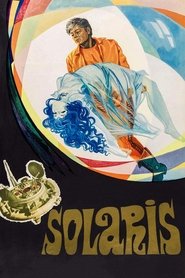
Solaris (1972)
Before any space station appears, the camera sits with weeds shivering in a stream, a horse standing in rain — for a very long time. The shot outlasts its reason for existing, and that overstaying is the argument: inhabit time rather than spend it. Made partly as a Soviet answer to 2001, the film accepts Kubrick's setting and inverts his priorities — less technological sublime, more conscience, memory, and guilt. Notice how the alien ocean is only ever glimpsed through portholes, withheld from the clarity that would let science get a grip on it.
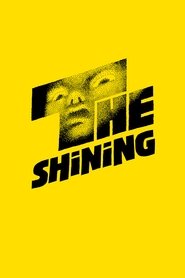
The Shining (1980)
A boy pedals a trike through an empty hotel, the Steadicam floating behind him inches off the floor, and the sound does the work: carpet, hardwood, carpet, wheels going loud and soft and loud. Garrett Brown's brand-new rig was invented to smooth out shaky shots; Kubrick turned it into a way of thinking. Try, as you watch, to draw the hotel's floor plan — you'll fail, and the failure is deliberate. The Overlook isn't a setting the family moves through so much as a mind they're moving inside.
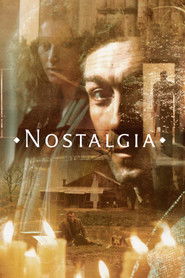
Nostalgia (1983)
The film's most celebrated sequence involves a man, a candle, and a drained pool — nine minutes, one shot, real precariousness rather than a simulation of it. By its end you've stopped watching a task and started watching duration itself become an act of faith. Watch also for the shifts between color and sepia that Tarkovsky developed in Mirror: present and memory rendered as different chromatic worlds, because for this exile, home is a place that can't be reached even in imagination.
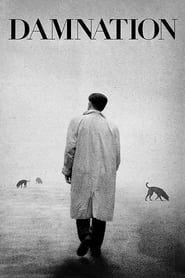
Damnation (1988)
The opening shot is one of the great ones: coal-conveyor buckets crawling across a grey sky in a slow lateral track — then the camera reverses and finds a man at his window, watching the same buckets we were just watching. That pivot is the whole film. Rain functions here almost as a law of the universe, everything returning slowly to mud, and Medvigy's black-and-white long takes are the foundational statement of what would later be called slow cinema. Where Tarkovsky makes ruin transcendent, Tarr makes it material — feel the difference.
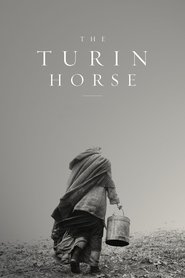
The Turin Horse (2011)
Watch them eat the potato. A father tears at it one-handed, too fast, too hot; his daughter eats slowly; the camera holds; no one explains why this is always the meal. Tarr builds the film from a small number of enormously long takes across a six-day structure, and Kelemen's black-and-white photography is among the most sustained achievements in contemporary cinema. You don't receive information about a world running down — you inhabit the running-down, waiting the way the characters wait.
Watch these together and something shifts in how you see. Each film trains you a little further out of the habit of asking "what happens next?" and into the richer question of "what am I looking at, and how long am I willing to look?" You'll start noticing lineages — Sjöström's ghosts flowing into Bergman, Antonioni's empty architecture flowing into Tarr, Tarkovsky's water and ruin passed hand to hand across decades — and you'll notice your own attention becoming an instrument. These are films that reward the viewer who stays in the shot after the "point" has been made, because in this cinema, staying is the point. Give them your patience and they give you back time itself, made visible.