Sightlines · a mini film course
Watching as an Act of Faith: Twelve Films Where the Camera Refuses to Blink
There's a kind of film that doesn't chase its story — it sits with it. In each of the films below, someone sees something they cannot fix, change, or flee: a dying world, a returned ghost, a lost formula, a clock with no hands. And instead of cutting away to the next event, the camera stays. Time is allowed to stretch until you feel it passing in your own body. What connects this set isn't plot or genre (you'll find science fiction, folk drama, neo-noir, a witch-trial film) but a shared wager: that if a shot is held long enough, watching itself becomes the drama. These are films about people reduced to looking and enduring — and they turn you into one of them. That sounds punishing. It's the opposite. It's some of the most transporting cinema ever made.

Wild Strawberries (1957)
Start here — it opens with one of cinema's great dream sequences, a white-glare street where a clock has no hands, announcing everything the film is about. Notice how Gunnar Fischer's photography quietly shifts its tonal register between the present-day car journey and the strata of memory and dream, so you always feel when you are even when the film won't say. An old man travels through his own past like a ghost visiting his living self — a device Bergman inherited from Sjöström's silent cinema — and the road trip becomes a journey inward.
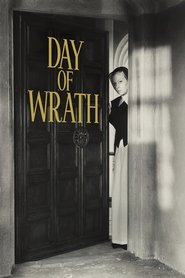
Day of Wrath (1943)
Dreyer's camera holds faces the way Rembrandt holds them: emerging from darkness, lit like Dutch painting, kept on screen long past the point where the scene's "business" is done. Watch what happens when the cut you expect doesn't come — a face stops being information and becomes an event, tiny shifts of mouth and eye gathering intensity under total stillness. In a story of persecution and desire in a fearful community, the held close-up is where everything actually happens.
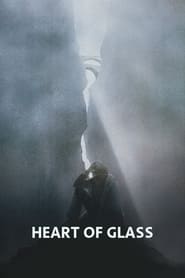
Heart of Glass (1976)
The strangest experiment in this set: Herzog put nearly his entire cast under clinical hypnosis and filmed them in trance. Watch how the actors occupy a room — bodies present, persons somewhere behind them, never quite cheating toward the lens. A village loses the secret formula for its ruby glass (the one warm color in a world of grey and mist) and circles the hole where that knowledge used to be. The film is less a story its actors performed than an event that happened to them.
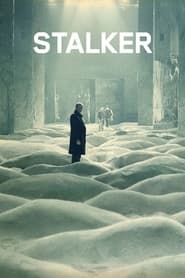
Stalker (1979)
Three men risk everything to enter a forbidden Zone — and then, mostly, they stop. They sit in wet grass, argue, lie down. Tarkovsky keeps the science-fiction premise but strips out spectacle and explanation, leaving long tracking shots that glide through flooded corridors at the pace of geological time. Watch for the astonishing passage where the camera lies down in shallow water and drifts over submerged objects, refusing to resolve into a clue or a symbol. The looking is the film.
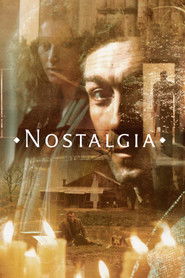
Nostalgia (1983)
Tarkovsky in exile, making a film about exile — shot in Italy, outside the Soviet system, its displacement part of its very subject. Watch how the camera builds pressure through slow lateral pushes rather than cuts, and how color separates present from memory. The centerpiece is a nine-minute single take of a man carrying a candle across a drained pool, its flame genuinely precarious, no simulation: by the end, nothing has "happened" and everything is at stake.
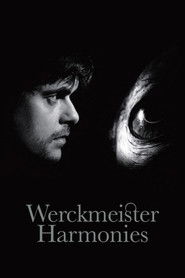
Werckmeister Harmonies (2001)
The opening is one of cinema's great overtures: at last call in a provincial bar, a wide-eyed postman arranges drunken men into a working model of a solar eclipse — sun, earth, moon, orbiting across a sticky floor in one unbroken take of nearly ten minutes. That's the whole film in miniature: bodies set in motion, time allowed to pass, meaning arriving through movement rather than plot. Watch Lars Rudolph's face — a surface on which events register rather than a mind that schemes.
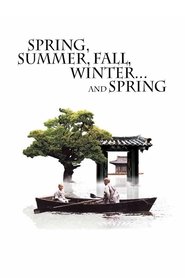
Spring, Summer, Fall, Winter... and Spring (2003)
Kim Ki-duk trained as a painter, and it shows: a floating temple on a lake, encircling mountains, frontal symmetrical compositions held in long, still shots, the palette shifting with the seasons. There is almost no dialogue — meaning is carried by water, wind, and weight. Watch how the film's opening lesson (a boy, a stone, a cruelty) establishes weight itself as the nearest thing to a plot, something carried in the body across an entire life.
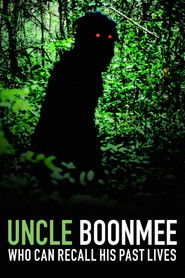
Uncle Boonmee Who Can Recall His Past Lives (2010)
A camera that watches rather than chases, interiors lit to preserve real darkness, and the supernatural arriving without a single music sting. Watch the dinner on the veranda: a chair that was empty is no longer empty, a ghost surfaces out of the dusk by slow degrees like a photograph developing, and a lost son returns transformed — and the family simply passes the food. The wonder lands precisely because no one on screen treats it as wonder.
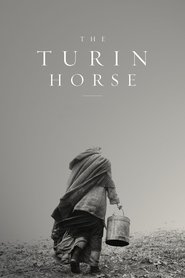
The Turin Horse (2011)
Six days, black and white, wind that never stops, and one of the most sustained achievements in modern monochrome photography. Watch them eat the potato: the daily meal, filmed whole, nothing explained, the camera holding until you wait the way they wait. Tarr builds the film from long takes not as a flourish but as its whole argument — you don't receive information about a world winding down, you inhabit the winding down.
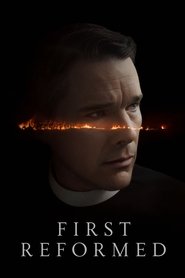
First Reformed (2018)
Schrader locks the camera off in frontal, symmetrical, almost liturgical frames — so still that when the camera finally moves, the movement lands like an event. A pastor keeps a handwritten journal he has sworn to burn; the film teaches you a posture before it shows you an act: sit still, look, endure. Watch the long counseling scene built as two figures in a fixed frame — no reverse shots, no reaction inserts — where an argument about despair is allowed to unfold whole.
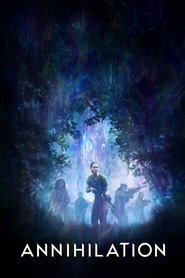
Annihilation (2018)
Proof this sensibility can live inside a studio science-fiction film. Rob Hardy shoots the Shimmer as a soap-bubble membrane tinting a lush, toxic world, and Garland keeps interrupting the expedition-thriller machinery with moments of stalled, helpless attention — like two deer moving in perfect mirrored unison, watched and never explained. It borrows Stalker's forbidden-zone architecture and pushes toward a near-wordless finale where image and sound take over from story entirely.
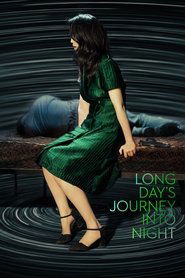
Long Day's Journey Into Night (2018)
Bi Gan's film is built in two halves that are two different kinds of cinema. The first is memory that refuses to behave — a lyric voiceover drifting over images that won't anchor to a timeline, the past and present sharing one visual grammar. Then, an hour in, the title card finally appears and the film asks you to put on 3D glasses — a small physical gesture that makes you complicit in what follows: a single unbroken shot lasting nearly an hour. You are, quite literally, putting on a dream.
Watch these together and you'll start to feel your own attention change shape. The first long take might test your patience; by the fifth film, you'll be leaning into held shots, scanning faces and rooms and weather for the small shifts that these directors trust you to find. That's the real reward of this set: it trains a different kind of seeing. These filmmakers — across Denmark, Sweden, Russia, Hungary, Thailand, Korea, China, Germany, and America, across seventy-five years — all made the same bet, that duration is not empty time but charged time, and that a viewer who stays with an image will find more in it than any cut could deliver. They were right. Nothing is happening. Everything is at stake.