Sightlines · a mini film course
The Watching Body: Eleven Films About Growing Up When Nothing Can Be Done
Coming-of-age stories are supposed to be about doing — the first fight, the big escape, the decisive kiss. This set is different. Across seventy years, four countries, and every register from Yorkshire grey to golden-hour Americana, these films share a quieter conviction: that growing up is mostly a matter of watching — of perceiving a world you can't yet change, and letting that perception mark you. Again and again the camera refuses to chase. It stands back, hangs around, holds on a face. Time is allowed to stretch. Bodies — slouching, stamping, swallowing, going still — say what the characters can't. Watch these films for the moments when nothing happens and everything registers. Those are the load-bearing scenes.
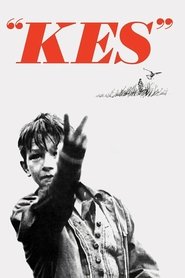
Kes (1970)
Chris Menges's camera keeps its distance on purpose — long lenses across a room or a field, so the young non-professional actors are never pressed by the machinery and behaviour unfolds unselfconsciously, a style inherited straight from Bicycle Thieves and the Free Cinema documentaries. Watch Billy's body: a boy who flinches through home and school goes utterly still when the kestrel comes to his fist, and his shut face opens. The bird is the film's whole argument in miniature — a wild thing that can't be owned, only worked with, granting a mastery denied him everywhere else. Notice how little the film consoles you; that refusal is its integrity.
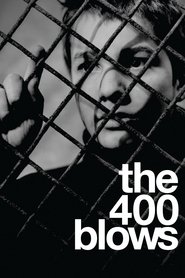
The 400 Blows (1959)
The founding film of the French New Wave, and the great portrait of a boy who perceives everything sharply — the curtained flat with no corner for him, the teacher's arbitrary rules — while nothing he does lands proportionately. Watch how every adult institution processes Antoine through categories that misfit him; the psychologist's methodical interview is the sharpest demonstration. Henri Decaë shoots Paris winter light with real austerity, and Truffaut, following Vigo's Zéro de conduite, refuses to grant the authority figures any inner life. The camera's loyalty is entirely to the child.
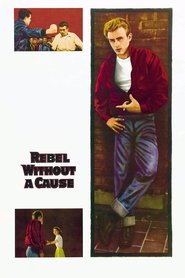
Rebel Without a Cause (1955)
Watch the very first minute: what James Dean does with a discarded wind-up toy, before a single line of plot, tells you everything about tenderness with nowhere to go. This is a film of postures — Dean slouches, curls, drapes himself over furniture, and Nicholas Ray gives each held attitude room in the CinemaScope frame, keyed to that famous red windbreaker. It's the film that relocated teenage trouble from the poor side of town to the comfortable suburb, rooting it in parents rather than poverty — and the French New Wave critics adored Ray for exactly this personal command inside a studio picture.
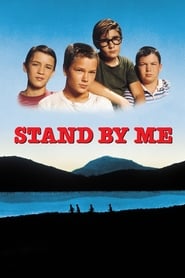
Stand by Me (1986)
Four boys walk a railroad line toward something grim, but watch what the film actually values: the walking, the talking, the dawn moment one boy keeps for himself. Thomas Del Ruth's hazy late-summer light and wide single-point-perspective compositions — small figures against converging rails — carry the elegy, while the adult narrator's frame (borrowed from To Kill a Mockingbird) turns boyhood into memory even as you watch it. The quest structure is a decoy; the journey is the substance.
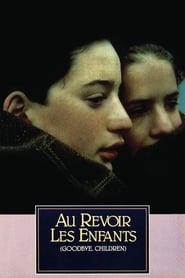
Au Revoir les Enfants (1987)
Louis Malle rebuilt a morning from his own childhood, and the whole film is engineered around acts of looking — watch how the young lead plays almost everything through watchfulness rather than deed. Renato Berta's photography is cold and tonally narrow: greys, browns, the bluish white of winter light in an unheated wartime school. Notice the film's careful gradations between courage, complicity, and the involuntary — how much moral weight it hangs on things as small as a glance.
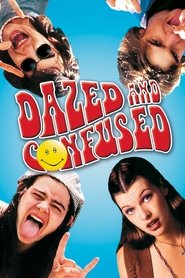
Dazed and Confused (1993)
The opening minute is the manifesto: a car noses into a parking lot, a song comes up as if from the next car over, nobody is introduced, and the camera just drifts among bodies, picking up a face and letting it go. Linklater idles the engine deliberately — the party keeps not happening, the pledge keeps not getting signed — inheriting the one-night ensemble form of American Graffiti and the aimless-young-men drift of I Vitelloni. Watch how the fluid tracking shots make hanging out itself the event.
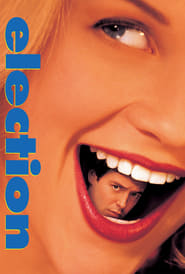
Election (1999)
Four narrators tell you this story, each supplying a flattering account of the same school election, each contradicted by the picture on screen — the voice is always lying, and it almost never knows it. Payne shoots petty stakes in anamorphic widescreen, surrounding his strivers with ironic institutional grandeur: fluorescent corridors, linoleum. Watch the freeze-frames and editorializing narration, a device revived from Tom Jones and the New Wave, and notice how the film never grants anyone the authority to say what really happened.

American Beauty (1999)
Conrad Hall's Oscar-winning photography builds an almost architectural trap — centred compositions, doorframes and blinds boxing characters into their own suburban geometry, a language inherited from The Graduate. Watch the film run two speeds at once: one character furiously acting to remake his life, and another who only watches, camcorder in hand, insisting that attention itself is a gift. The famous shot of a plastic bag in the wind is the hinge — nothing happens, nothing is required, and whether the moment lands or curdles depends on whether you've let the film teach you its way of seeing.
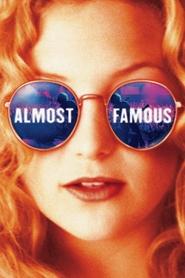
Almost Famous (2000)
Cameron Crowe fictionalizes the backstage vérité grammar of Don't Look Back and Gimme Shelter — hotel rooms, tour buses, unguarded corridors — and John Toll bathes it in warm, late-afternoon light. Watch the bus scene everyone talks about: a song comes up, and the camera simply drifts from face to face while nothing in the plot advances. The film wears the skeleton of a classic education-of-a-young-man story, but its best moments are pure dwelling — time felt rather than time spent getting somewhere.
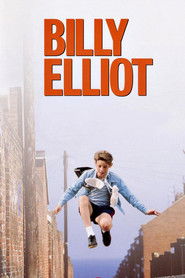
Billy Elliot (2000)
This is Kes's direct descendant — working-class boy, dead-end colliery future, one private passion as the escape route — but watch what Daldry changes: where Loach withholds consolation, Daldry lets the body erupt. The set piece to study is the Angry Dance, a boy hammering his feet against a brick wall at the end of an alley, rage he can't name discharged into pure movement. The whole weight of a striking mining town in 1984 gets pressed into eleven-year-old legs. Brian Tufano's photography links the wintry realist tradition to a more kinetic 1990s energy, and the film lives in that tension.
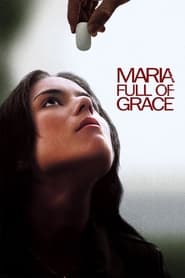
Maria Full of Grace (2004)
Marston takes the most action-hungry genre there is — the drug-trafficking picture — and drains the action out until only a body carrying its cargo remains. Watch her throat: the film is organized around the small muscular act of swallowing and enduring, treated as labour, not crime spectacle. Jim Denault's handheld camera stays close to faces in tight rooms — greenhouse, sealed airline cabin, fluorescent customs hold — in the manner of the Dardennes' Rosetta, wringing suspense from stillness and waiting rather than plot.
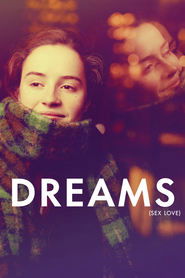
Dreams (2024)
The newest film here is also the most radical about this set's shared idea: the love story is essentially over before the film's real subject begins, and what we watch is the reading of the romance — a manuscript passed between a girl, her mother, and her grandmother, criticism becoming the drama. Watch the long, patient two-shots of people simply talking in muted Oslo light, a chamber grammar descended from Rohmer's moral tales and Bergman's confessional duets. It asks the question hovering behind every film on this list: who owns an experience once it's been turned into a story?
Why watch them together? Because the connections run in every direction. Loach's kestrel becomes Daldry's dance; Truffaut's watchful boy becomes Malle's; the drifting ensemble of Dazed and Confused echoes back to Stand by Me and forward through Almost Famous; Election and Dreams both ask whether the person telling you the story can be trusted with it. Seen in sequence, these films train you in a particular kind of attention — to stillness, to posture, to the held shot, to the moment when a character can only look. By the end you'll have developed the very skill these films are about: the patience to watch, and to let watching be enough.