Sightlines · a mini film course
The Gap Between Seeing and Doing
Here's the secret thread running through this dozen: these are science-fiction films — full of monsters, machines, and cities on fire — but almost all of them locate their real power in the moment before action, or in its absence. A foot hovering over a floorboard. A detective who can look at an image but not act on it. A camera that watches rather than chases. A voice that keeps climbing while the plot politely waits. Even the pure action machines in this set (and there are a couple, gloriously) earn their place by showing you what the others are refusing. Watch these together and you'll start to feel the difference between a movie that runs on cause-and-effect — see the danger, act on it, cut — and a movie that stretches, breaks, or forges that chain on purpose.
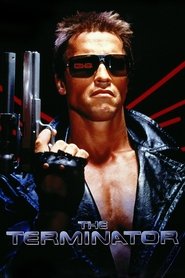
The Terminator (1984)
Start here, because this is the baseline: a film where seeing flows into doing with almost no delay — Sarah sees the machine, Sarah runs; Reese sees the machine, Reese fires — and there is no dead time at all. Watch how Adam Greenberg shoots Los Angeles as pure night-noir: rain-slicked streets, hard colored light, the machine introduced in fragments — a silhouette, a hand, a red glint of eye. Notice how a slasher-movie engine has been transposed into science fiction, and how relentless forward motion becomes the film's whole identity. Everything else on this list is in conversation with this kind of momentum.
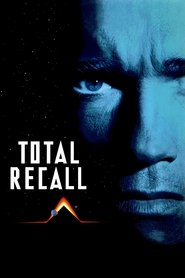
Total Recall (1990)
Now the chain gets sabotaged. Verhoeven builds the film so that two completely incompatible explanations of what's happening are both internally consistent — and he shoots it so the camera never tells you which is true. Watch Jost Vacano's restless handheld work (he brought it straight from Das Boot): the destabilized frame is doing the same thing the story is, refusing to give you solid ground. This is a film that breaks the old contract — the camera doesn't lie — and turns the breaking into the point.
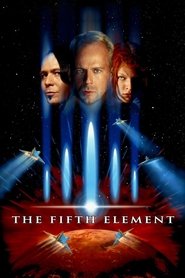
The Fifth Element (1997)
Besson's film keeps stopping to show you things — and lives happily in that mode where most films only visit. Watch for the moment a blue diva sings a real Donizetti aria that climbs past what any human throat can do, while Besson intercuts it with action elsewhere: the movie pauses mid-plot to present pure spectacle and dares you to mind. Notice Thierry Arbogast's saturated oranges and blues, and Gaultier's costumes anchoring the frame — a French comics sensibility crashing the Hollywood blockbuster and redecorating it.
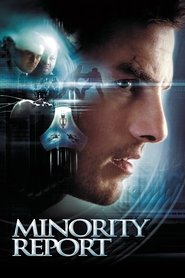
Minority Report (2002)
The film's truest image is a man in front of a wall of glass, sorting translucent fragments of a crime that hasn't happened — a thriller whose hero can do everything to an image except act on it. Watch how detection becomes reading: the visions arrive fragmented, out of order, demanding to be deciphered rather than chased. And watch Janusz Kamiński's bleach-drained palette — overexposed, silvery, crushed toward cold blues — giving the future the texture of an old photograph.
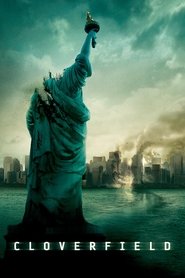
Cloverfield (2008)
A giant-monster movie is normally the purest see-it-and-fight-it cinema there is: city leveled, army mobilized. Cloverfield keeps the monster and quietly amputates the heroics — what we get isn't a hero's response to catastrophe but a recording of one, shot badly, by an amateur who lowers the camera at the worst moments. Watch how partial visibility does all the work: whip-pans, motion blur, the creature caught in half-seconds. History as something that happens to you while you're pointing a camera at it.
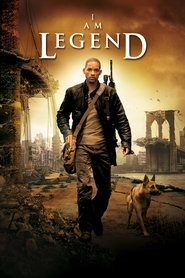
I Am Legend (2007)
There's a clock in every daylight shot, even when you can't see one — sundown is a deadline, and the tension in the film's gorgeous empty-city drives comes from nothing you can point at except time draining out of the day. Watch how Andrew Lesnie's anamorphic widescreen dwarfs one man against a Manhattan gone green and quiet: real streets, real light, closed for the camera at dawn. The achievement isn't the creatures; it's a city that has stopped being a stage for human action and become a wilderness that simply is.
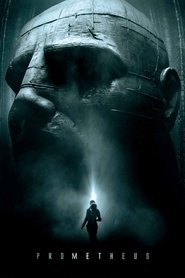
Prometheus (2012)
Before a single human wakes, the film gives you an android alone for two years — riding a bicycle, watching Lawrence of Arabia, bleaching his hair to match a movie star, deciding who to be. Nobody programmed that. Watch how Scott and cinematographer Dariusz Wolski build a blockbuster around a question rather than an answer: a believer travels to meet the beings who made us, and the film's vast, architecturally precise images are engineered to stage the problem, not resolve it. A thinking machine about thinking machines.
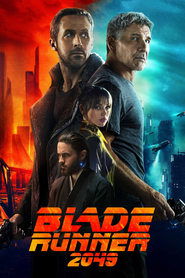
Blade Runner 2049 (2017)
Deakins shoots a detective story as a film of watching: K at the bottom of the frame while the world towers over him, single shafts of light, sculpted emptiness where the 1982 film had smoky clutter. Watch how each environment gets one bold color field — sodium-orange Las Vegas, sickly corporate amber, blue-grey rain — and how the film holds shots long enough that duration itself becomes expressive, in the lineage of 2001. You keep waiting for these spaces to become settings where something happens; mostly they just go on being themselves, and Gosling's near-silent stillness lets you feel time pass as itself.
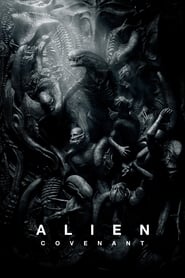
Alien: Covenant (2017)
Wolski's photography draws a hard line between two worlds — the cool, sterile light of corporate spaceflight versus the soft natural light of an unknown planet — and the film's horror lives in the crossing. Watch for a plaza of ash-grey figures frozen mid-stride, staged like Pompeii: a civilization turned into sculpture in a single breath. This is a film about makers and made things — a chain of creation running through the whole Alien mythology — and about a mind that treats life the way a Renaissance master treats an altarpiece. Trust the images carefully.
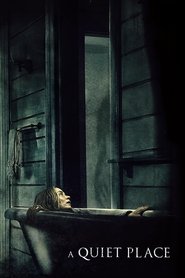
A Quiet Place (2018)
Watch the feet. Almost everything here lives in the half-second before weight settles — a heel on raked sand, a bare sole testing a floorboard — the instant when a body has sensed danger and hasn't yet finished deciding what to do. Krasinski pries open that gap between perceiving and reacting and lives inside it for the whole film; the engine isn't the monster, it's the withheld reaction. Notice Charlotte Bruus Christensen's warm, autumnal naturalism, which makes the farmstead feel like a home worth this much vigilance, and how the sound design (in the lineage of The Birds) makes silence itself the suspense instrument.

Alien: Romulus (2024)
Before you see anything, you hear the motion tracker's slow beep — and you're already afraid, because you've heard that sound before, in a corridor you never walked but somehow remember. Watch how completely the film is built from inherited signals: Goldsmith's 1979 musical cues quoted in the score, the low-key work-lamp lighting, the practical creature effects — images that mean something because you complete them. Notice too the sharpened class premise: indentured laborers whose lives are company property, the franchise's oldest allegory made literal. A horror film that frightens you with your own memory.

Leviathan (1989)
Finish with the B-side, and watch it knowing everything you've now seen. Most of Leviathan runs on brisk, functional monster-movie logic — see threat, fight threat — inherited wholesale from Alien and The Thing. But underneath the borrowed surfaces is something rawer: a world of appetite and compulsion, where bodies lose their boundaries and the ordinary workplace hides something primal beneath the shop floor. Watch Alex Thomson's handsome, cool industrial lighting — far better than the budget tier suggests — and notice which moments break free of formula.
Watched together, these twelve films become a course in tempo — in what a movie does with the space between an eye and a hand. You'll see the chain run hot (The Terminator), get forged (Total Recall, Covenant), get pried open half a second at a time (A Quiet Place), snap entirely (2049, Minority Report, Cloverfield), or dissolve into pure display (The Fifth Element). You'll notice cinematographers doing the heavy lifting — Deakins's sculpted emptiness, Kamiński's drained silver, Wolski's two worlds, Vacano's lurching frame — and a family tree of debts running from Metropolis and 2001 through Alien to films that quote their ancestors like scripture. Mostly, you'll come out watching differently: attentive not to what happens next, but to how long a film is willing to make you wait for it — and what it shows you in the meantime.