Sightlines · a mini film course
Masters of the Job: Twelve Films About Watching People Work
There's a secret hiding inside the heist film, and this set of twelve lays it bare: these are movies about labor. Skilled hands, patient planning, a code of conduct, a job done correctly — and then the question of what all that competence is actually worth. The through-line here runs from a 1950 Hollywood template through French crime cinema and back into America, and what connects every film is a fascination with process: the camera watching rather than chasing, letting a task unfold in real time, trusting that skill itself is suspense. Watch how each director handles the pause — the moment when the plan meets the world, and time is allowed to stretch.
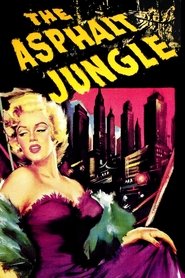
The Asphalt Jungle (1950)
This is the template — the film that assembled the crew-of-specialists caper so confidently that everything after it is in conversation with it. Watch Harold Rosson's photography: it's noir, but cooler and more observational than the baroque shadows of the era, closer to a documentary of criminal labor. Notice how each man in the ensemble is defined by what he's good at — and how the film quietly suggests that being good at something is never the whole of a person. That gap is where everything lives.
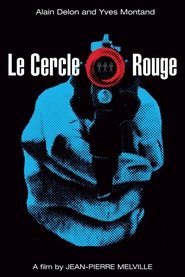
Le Cercle Rouge (1970)
Melville announces his fatalism before a single image appears, then spends 140 patient minutes demonstrating it. Watch how long the shots are held — well past where another director would cut — and how the camera observes rather than participates. The centerpiece robbery runs roughly twenty-five minutes with no dialogue and no score: just breathing, creaking metal, and men who communicate entirely through ritual and conduct. It's the purest version of the "watch the work" tradition in this whole set.
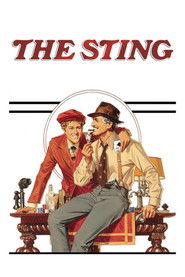
The Sting (1973)
Here the vault disappears and the con takes its place — no guards, no getaway, deception itself as the craft. Robert Surtees shoots it with invisible old-Hollywood elegance, all motivated light and camerawork in service of performance. The thing to notice is your own position: the film makes you feel like an insider, watching the mark be played, and then plays with exactly how much of an insider you really are. Stay alert to who knows what, and when.
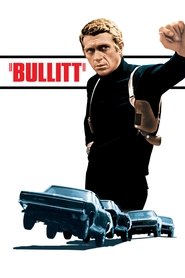
Bullitt (1968)
Everyone remembers the chase; watch what surrounds it. Peter Yates treats the "boring" parts — a man driving, waiting in a corridor, buying frozen dinners at 2 a.m. — as the actual movie, shot in available light on real San Francisco streets. There's a tiny gesture just before the chase begins, wordless and undramatic, that tells you everything about who this man is. This is where the location-shot, morally murky cop film of the seventies gets its grammar.
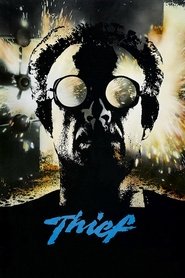
Thief (1981)
Mann's debut invents his nocturnal visual world: wet streets that return light, neon smearing across asphalt, deep blacks against saturated color, a Tangerine Dream pulse keeping time like a machine breathing. The centerpiece safecracking — built from real tools on the advice of real thieves — is shot the way you'd shoot a master craftsman, every step legible, the heat and duration real. Watch how the film celebrates competence while quietly asking what a life built entirely on it costs.
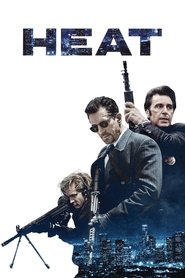
Heat (1995)
The mirror-study perfected: a cop and a thief, each supreme at his work, each having paid everything else for it. Dante Spinotti photographs Los Angeles in wide anamorphic frames of cold blue and grey-green — freeways, glass towers, the dark Pacific — so the city itself becomes the pressure both men are answering. Watch for the famous coffee-shop scene: in a nearly three-hour crime film, the most electric passage is two men sitting still, talking honestly, with no music at all.
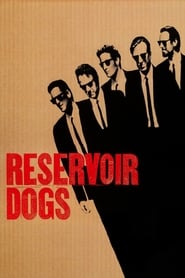
Reservoir Dogs (1992)
Tarantino's radical move is structural: this is a heist film that withholds the heist, keeping only the before and after, mostly in one unglamorous warehouse of concrete and corrugated steel. Watch how the framing keeps bodies in careful spatial relation — proximity itself encodes threat — and how color-coded names, meant as professional security, become a study of men who can't trust what they can't know. The genre runs on doing; this film builds itself around waiting, and the tension is extraordinary.
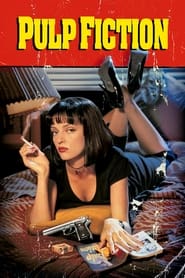
Pulp Fiction (1994)
The famous shuffle: three chapters and a bookend deliberately out of order, so "before" and "after" become rooms you can enter in any sequence. Notice how restrained the actual photography is — long takes, drifting frames, medium shots that let conversation breathe — while the structure does the fireworks. Watch how the film holds mundane ritual and mortal stakes in the same hand: fast food and foot massages discussed with the same gravity as life and death.
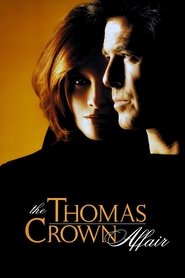
The Thomas Crown Affair (1999)
The gentleman-thief strain of the tradition: theft as style, the heist as flirtation. Tom Priestley Jr. shoots it as a study in burnished surfaces — glass, marble, tailored cloth, water — and the film inherits a whole lineage of split-screen and surveillance imagery, the frame tiled so watcher and watched share the screen. The thing to track is looking: nearly every scene is about two guarded people interrogating each other, and watching carefully is both the romance and the game.
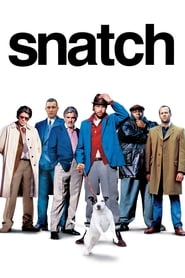
Snatch (2000)
The surface is pure velocity — freeze-frames, title cards naming characters like punchlines, fights slowed to a crawl — but the engine underneath is quieter: you, the viewer, holding connections that no character on screen possesses. Watch how wide lenses cram London's underworld into oppressively close spaces, and how every meticulous plan collides with trivial chance. It's the tradition's comic inversion: a world where competence is constantly ambushed by dumb luck.

Ocean's Eleven (2001)
Soderbergh, shooting his own photography under a pseudonym, gives the caper a warm, lamp-lit gloss — long lenses, rack focus, Vegas neon as romance. Watch how the film replays its own robbery from deliberately withheld angles, a chronology that doubles back on itself so the con includes you. And notice the moments of stillness the film earns amid all the motion; in a genre about doing, they land like grace notes.
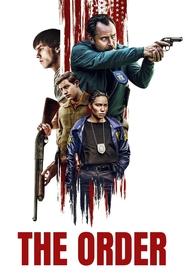
The Order (2024)
Kurzel closes the circle: an Australian outsider's cold, estranged gaze on American violence, openly inheriting Mann's cop-and-criminal mirror structure and Thief's patient rendering of criminal work under weak, practical light. Adam Arkapaw shoots the Pacific Northwest as wet green and slate grey, depopulated and overcast. The most unsettling choice is tonal: hate is staged calmly, folded into domestic routine, and the film trusts you to feel the horror in how ordinary it looks.
Watched together, these films become a single long conversation across seventy-five years — Huston's blueprint absorbed by Melville, Melville absorbed by Mann and Tarantino, all of it refracted through Soderbergh's gloss, Ritchie's chaos, and Kurzel's chill. You'll start noticing the inheritances: the near-silent set piece, the crew of specialists, the professional's code, the city as a character pressing down on everyone in it. But more than that, you'll start noticing time — how each director decides when to hurry and when to hold, when to let a task play out in full, when to sit two people at a table and simply watch. That's the real curriculum here: twelve variations on the question of what it means to be good at something, and what the world does with people who are.