Sightlines · a mini film course
When Seeing Is Not Enough: Twelve Films About Watching, Waiting, and the Weight of the World
The films on this list come from different decades, different countries, different genres — a Belgian street drama, a Soviet revolutionary poem, a British teenager's bedroom, a Hungarian farmhouse at the end of everything. But they share a conviction that runs against nearly all commercial storytelling: they refuse to let their characters simply act their way out. In most movies, a person sees a problem, does something, and the world changes. These films are interested in what happens when that engine stalls — when people can see their situation with total clarity but cannot move it an inch. And so the camera changes its job. It stops chasing the action and starts watching: holding on faces, hands, bodies, and rooms longer than the plot requires, letting time stretch until you feel it in your own body. Watch these films for their patience, their trust in gesture over dialogue, and the many inventive ways a frame can become a trap — or, occasionally, a window.
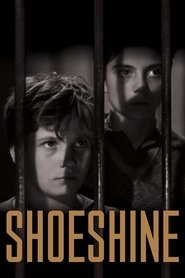
Shoeshine (1946)
Start with the founding gesture: real war-scarred Roman streets, boys recruited from those streets rather than a casting office, and a camera that observes rather than dramatizes. De Sica opens on an image of pure joy — a white horse the two boys have saved every coin to buy — and then measures everything after against it. Notice how the film sets up situations where the boys can perceive exactly what's being done to them but have no move available in response; the tragedy isn't losing a fight, it's that no fight is offered. This is the template a half-century of filmmakers on this list will inherit.

La Terra Trema (1949)
The most rigorous of the neorealist films — real Sicilian village, real fishermen, their own dialect — and paradoxically the most beautiful. G.R. Aldo composes in long, deep-focus takes: dark doorways framing figures, the geometry of nets, women in silhouette on black volcanic rocks watching the sea for late boats. Notice how Visconti holds these images of watching far longer than the story needs; the film keeps pausing its drama of a man trying to break a rigged economy to simply look at the people who can only look. That tension — decisive action versus enduring witness — is the whole film's pulse.
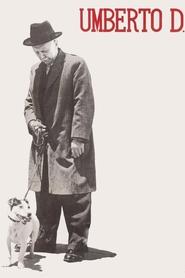
Umberto D. (1952)
De Sica strips away even the clear narrative motor of his earlier films: no theft, no chase, just a retired man, his dog, and a rent bill he cannot pay. Watch the hands — there is a moment on a Roman street where a single small movement of a palm contains an entire drama of shame and dignity, with no dialogue at all. This is a film about a man reduced to watching and enduring, and De Sica trusts the smallest physical gestures to carry what other films would give to speeches.

I Am Cuba (1964)
Here the camera itself becomes the untethered watcher. Urusevsky's shots do things no human eye could do — most famously gliding across a rooftop party and sliding, without a cut, beneath the surface of a swimming pool, all engineered with custom pulleys and waterproof housings a decade before the Steadicam existed. Watch for the moments when the seeing seems to belong to no one — the world filming itself. It's a revolutionary epic told as a floating, dreamlike poem, and the impossible camera movements are its argument.
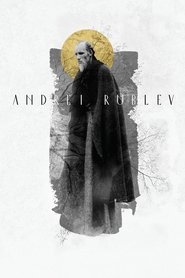
Andrei Rublev (1966)
Tarkovsky opens his film about a painter with a man, a homemade balloon, and one minute of flight — and note what the scene doesn't do: no rescue, no reversal, no merciful cut. The camera watches. Rublev himself is the great example of the witnessing protagonist: a man who spends most of the film looking at what history does to people, and whose central crisis is whether making art is even possible amid catastrophe. Watch how Yusov's long, slowly craning takes refuse to punctuate revelation with an edit — duration itself becomes the drama.

Salò, or the 120 Days of Sodom (1976)
Approach with caution and full knowledge of its reputation — this is the most demanding film here. Pasolini's method is a deliberate paradox: the most decorous surface imaginable (a rationalist villa, polished floors, Delli Colli's cool, even lighting, like an official document) laid over a world of pure appetite. Watch how the film keeps making watching itself the subject — spectators arranging their distance from what they observe — and how the measured, undramatic framing implicates the act of looking. It's structured like Dante's descent, in tableaux rather than plot.
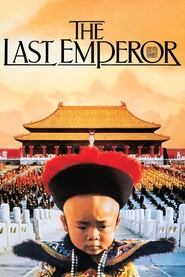
The Last Emperor (1987)
The one film here that turns waiting into a question about time rather than space. Bertolucci and editor Gabriella Cristiani almost never cut hard between the film's eras — they dissolve, so the grey prison of 1950 bleeds into the golden palace of 1908 until you can't say which time is real and which is remembered. Watch Storaro's color grammar: epoch rendered as temperature, amber and ochre for imperial childhood, cooling as history advances. And keep an eye on the small objects — a cricket cage — that fold decades together in a single image.
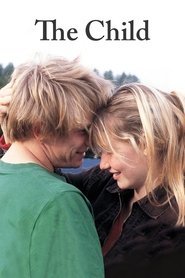
Rublev's heirs, at street level — The Child (2005)
The Dardennes keep the camera a few feet behind Bruno's neck and shoulders as he moves through the Belgian city of Seraing — close enough to be bound to his body, never far enough ahead to read his face. No backstory, no explanation of why he is as he is; you get his gait, his hands, and you must infer the world from the deeds. Watch the hands especially — the Dardennes inherit Bresson's method of building moral drama from gestures and passed objects rather than expressive faces.
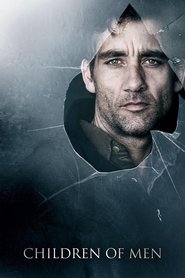
Children of Men (2006)
Cuarón smuggles this whole tradition into a thriller. The film is built like an ordinary chase — get someone precious to safety — but Lubezki's famous long takes remove the cuts exactly where a genre film leans on them hardest. Watch for the moment blood spatters the lens and stays there: no cut wipes it clean, and for a few seconds you watch catastrophe through the smear of another person's body. The refusal to edit turns suspense into something heavier — you feel time passing rather than plot advancing.
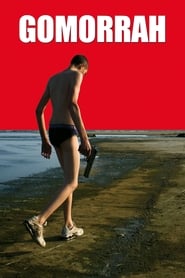
Gomorrah (2008)
A crime film that dismantles the crime film. Garrone braids five strands that never converge into a single hero's story, and Onorato's roving handheld camera keeps its distance even during violence — a killing happens and the lens is already drifting elsewhere, no swelling strings, no slow motion. Watch the scene where two teenagers imitate Scarface in the surf: the film stages the Hollywood gangster fantasy precisely to puncture it. Everyone here perceives their situation perfectly; the film's bleakness is that perception leads nowhere.
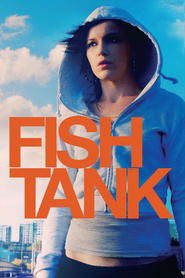
Fish Tank (2009)
Arnold's governing decision is the boxy, nearly square frame: it crops the world away laterally, sealing fifteen-year-old Mia inside tall, narrow compositions — the fish tank of the title made visible in every shot. Robbie Ryan's camera trails her the way the Dardennes trail Bruno. And watch how the film trusts the body over dialogue: Mia has no words for her situation, so her dancing carries everything — class, hunger, the wish to be truly seen — and the meaning of the same movements shifts entirely depending on who is watching her.
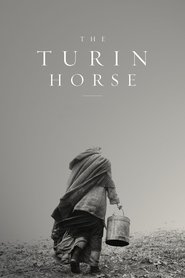
The Turin Horse (2011)
The endpoint of the whole line: a father, a daughter, a horse, a farmhouse, six days, and some of the most sustained black-and-white photography in contemporary cinema. Watch them eat the boiled potato — nothing is explained, the camera simply holds, and you wait the way they wait. Tarr makes duration itself the subject: the long take is not a flourish but the entire argument, and the film asks you to inhabit slow collapse rather than receive information about it. Come rested. Let it be slow.
Watched together, these films teach a different way of paying attention. The lineage is real and traceable — De Sica and Visconti invent a cinema of real streets and real bodies; Tarkovsky and Tarr stretch its patience toward the metaphysical; the Dardennes, Garrone, and Arnold return it to the pavement; Cuarón and Bertolucci smuggle it into the thriller and the epic. What connects them all is a wager: that watching someone endure can be as gripping as watching someone win, that a hand or a posture can say more than a speech, and that when a film stops rushing you toward the next event, time itself becomes something you can see. Start anywhere. But once you've seen a few, you'll notice the others answering each other across the decades — the same held gaze, passed from camera to camera.