Sightlines · a mini film course
Watching the Watchers: A Century of Looking Dangerously
Every film in this set is, on the surface, about a killer. But watch them closely and you'll notice they're really about looking — who gets to look, what looking costs, and how a camera can make you complicit in a gaze you never asked to hold. These twelve films, spanning ninety years, keep passing the same questions down the line: Can you understand a monster without becoming one? What happens when seeing clearly isn't enough? Again and again, the filmmakers turn the lens into the subject — sometimes literally bolting it to the story. Watch them in order, and you can see a genre being invented, refined, weaponized, and finally turned back on the audience.
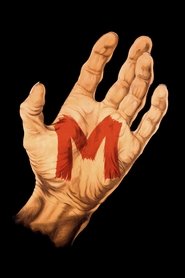
M (1931)
This is where it all begins — and its first great lesson is what Lang doesn't show. A child's ball rolling to a stop, a balloon caught in telephone wires: the film hands you the edges of a terrible event and trusts you to assemble the center yourself. Listen, too, for the killer's whistled tune — Lang teaches you a rule (hear the melody, feel the dread) and then plays you like an instrument. Notice how the shadowed, angular style of German silent cinema is cooling here into something more like documentary: the street itself becomes a character.
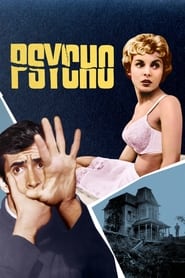
Psycho (1960)
Hitchcock builds the first act with ruthless momentum — a woman who sees, decides, acts, with every cut serving her flight — and part of the film's genius is how deliberately it establishes that rhythm before playing with it. Watch how often characters are watched: by employers, by a highway patrolman staring wordlessly through a car window, through frames within frames. Hitchcock keeps handing you points of view you'd rather not occupy, quietly implicating you in all that looking. Shot fast and lean with a television crew in black and white, it proves how much dread you can build from economy.
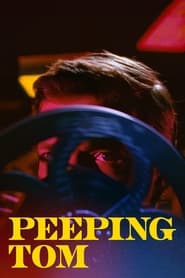
Peeping Tom (1960)
Released the same year as Psycho, this one goes further: the camera itself becomes the weapon, and the film tells you so almost immediately. Powell's method is sustained dramatic irony — you know from early on what the warm, kindly characters cannot see, and the dread lives entirely in that gap between their reading of a shy man and yours. Otto Heller's photography is beautiful in ways that feel faintly wrong — airy rooms, lovely color — which is exactly the point. This is a film about why we watch films, made by a man willing to burn his career asking the question.
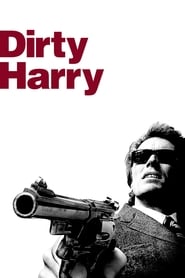
Dirty Harry (1971)
Siegel opens by putting you behind the killer's rifle scope, comfortable there before you realize what you've accepted — the rest of the film runs on that discomfort. Watch how the widescreen frame uses San Francisco vertically: the killer perched godlike on rooftops above the populace, the detective shoved to the margins. It's the purest engine in the set — a man sees, a man acts, the city bears down and demands a decisive response — which makes it the perfect baseline against which the later films register their doubts.
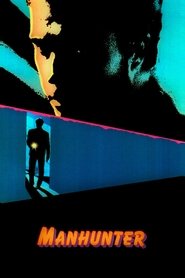
Manhunter (1986)
Michael Mann and cinematographer Dante Spinotti build a world of cold blues, teals, and clinical whites — hard horizons, symmetrical frames, wide empty space — where surface and atmosphere carry as much meaning as plot. The drama here is perception itself: a profiler whose gift is standing where the killer stood and seeing what he saw, narrating another man's reasoning in the present tense as though renting his eyes. The camera is forever watching a watcher. This is the foundational modern serial-killer film, the template everything after 1991 borrows from — see it first and The Silence of the Lambs becomes a conversation.

Henry: Portrait of a Serial Killer (1986)
The same year as Manhunter, made in Chicago on a shoestring, this film strips the genre of everything: suspense scaffolding, explanation, catharsis. Its signature device is the still tableau — static shots of aftermath, posed like evidence photographs, while the soundtrack carries audio from another moment entirely. The gap between what you see and what you hear is where the film lives. It refuses to explain its killer, and in refusing, it indicts your hunger for explanation.
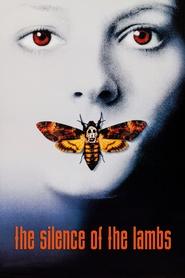
The Silence of the Lambs (1991)
Watch the eyelines. Demme and cinematographer Tak Fujimoto have characters address Clarice Starling almost straight down the lens, so that for the length of each shot you stand where she stands, absorbing every condescending, clinical, or predatory look aimed at her. The device is rationed carefully, saved for the moments of sharpest scrutiny, so it never goes slack. It's the rare thriller whose central technique is its argument: a film about a woman refusing to be reduced to an object, built so you feel the reduction being attempted.
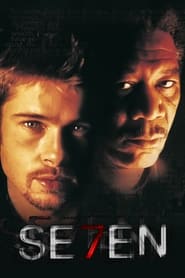
Se7en (1995)
Fincher's detective story wants you to do homework, not watch a chase: each crime arrives with a caption, and the film's real suspense is learning to read the murders as a single authored text. Darius Khondji's photography is systematic — every light source visible and motivated, a bare bulb, a flashlight beam, rain on a window — with the camera positioned to allow maximum shadow. Notice the library scene: index cards, Dante, Bach playing while guards ignore the books. This is a film that deputizes you as an interpreter, and it became one of the most influential visual documents of its decade.

Dark City (1998)
A detective story dipped in dream logic: Dariusz Wolski shoots in near-total night, hard low light carving figures out of darkness like 1940s noir pushed toward the grotesque, in a vertical city built from the visual DNA of German silent cinema — looming shadows, hat-and-coat silhouettes, architecture as menace. Watch how the film treats memory and identity as slippery, doubled things, and how the city itself feels sealed, with no sun, no edge, no reliable past. Listen for the name "Shell Beach" — a sunlit elsewhere everyone can name and no one can navigate to.
Memories of Murder (2003)
Bong's camera refuses the genre's usual grammar of urgent close-ups. Instead: wide, patient, slowly drifting shots that give the landscape the same weight as the people in it — a crime scene shot the way you'd survey a field. Watch what happens to the confident see-then-act rhythm of the police procedural when it meets rural mud, bureaucratic squalor, and evidence that won't behave: a system that brutalizes its suspects cannot produce reliable knowledge, and the film lets you feel that failure in its very pacing. A landmark of the Korean new wave, in open dialogue with Se7en — and quietly rewriting its terms.
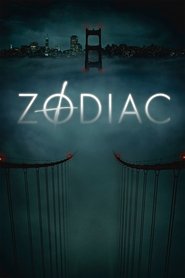
Zodiac (2007)
Fincher again, older and stranger: a procedural about a real case, built from the visual language of 1970s paranoid cinema — Harris Savides's practical light, faces falling into darkness, actors pooled in desk lamps against black voids. The subject is obsession itself: what it means to pursue certainty past the point where anyone else will follow, and what that pursuit extracts from a life. Watch the hardware-store scene when you get to it — a man looking at another man under fluorescent light — and notice how much the film can do with nothing but a gaze and the terrible weight of knowing without being able to act.

X (2022)
West and cinematographer Eliot Rockett resurrect the grammar of 1970s rural horror — golden dusty exteriors, lamp-lit interiors, slow zooms, wide patient frames — and let dread pool in the space between a look and an act. Watch how often the film holds a beat too long on someone watching: the whole picture turns on the gaze of the no-longer-desired directed at the young, and on youth's terrified refusal of what age looks like from the outside. Pay attention to mirrored staging and split compositions; the film is making an argument with its frames, and it's a genuinely melancholy one for a slasher.
Watched together, these films become a single long conversation about the ethics of attention. You'll see techniques handed down like heirlooms — Lang's offscreen violence resurfacing in Henry's tableaux, Powell's weaponized camera flowing into Demme's frontal gazes, Manhunter's empathy-as-contagion feeding Se7en and Zodiac's obsessives. You'll also see the genre's confidence erode, film by film: from detectives who act and resolve, toward watchers who can only see, and finally toward films that turn around and watch you watching. That's the reward of taking them as a set. Each one trains your eye a little; by the end, you'll notice how every camera placement is a moral choice — and you'll never sit quite as comfortably behind a lens again.