Sightlines · a mini film course
The Watcher in the Frame: A Mini Film Course
Every film in this set is a thriller about murder — but not one of them is really about catching a killer. They are about watching: how a camera looks, how a detective borrows another person's eyes, how a killer stages a scene for an audience, and how you, sitting in the dark, become part of the machinery. Across four decades and four countries, these directors keep circling the same unnerving discovery — that seeing is never innocent, that the frame itself can trap, seduce, or accuse, and that the scariest thing in a movie is often the question of where the looking is coming from. Watch these twelve films as a single conversation and you'll start noticing the grammar of dread itself: what's left offscreen, how long a shot is held, who is placed where in the frame, and what the camera refuses to do.
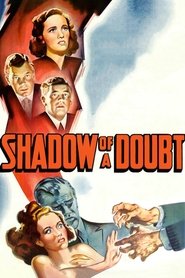
Shadow of a Doubt (1943)
Start here — this is where the game is codified. Hitchcock shoots a sunny California small town with almost documentary plainness, then lets shadow creep laterally into the bright family home whenever a certain uncle enters the room. Notice that the suspense almost never lives in an action: it lives in who knows what, and what each person knows about the other's knowing. Your knowledge is pinned to a young woman's, and the menace stays private — a terror that needs exactly two people to exist. Watch also for objects (a ring, especially) that carry more meaning than any line of dialogue.
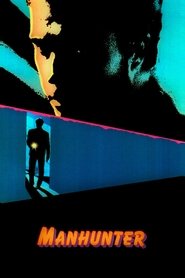
Manhunter (1986)
Michael Mann and cinematographer Dante Spinotti build a world of cold blues, teals, and clinical whites, all hard horizons and symmetrical negative space. The drama is not deduction but occupation: an FBI profiler whose method is to stand where a killer stood and narrate what the killer saw, aloud, in the present tense — renting another man's eyes. The camera is forever watching a watcher. Notice how empathy is treated as both gift and contagion, and how much of the film's meaning is carried by surface, architecture, and light rather than plot.
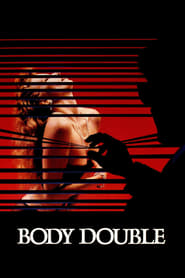
Body Double (1984)
De Palma's Los Angeles is glossy, saturated, and openly shameless about what you're doing there. Watch the telescope sequences: he keeps the round black vignette and the wobble of magnification in the frame, so you can never forget you're looking through a device — a vision that knows it is a vision, and is a little embarrassed about it. Built openly on the bones of Rear Window and Vertigo, the film doubles everything: bodies, actors, and Hitchcock himself. Look for the split-diopter shots holding a foreground face and a deep-background doorway both razor-sharp — an eye that refuses to choose.
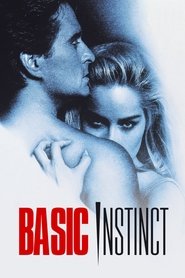
Basic Instinct (1992)
Jan de Bont's camera glides and circles and will not sit still — and pay close attention to the famous interrogation scene, where the lens orbits one woman in white while five men do the asking and, somehow, the interrogation runs backward. Verhoeven's coup is a femme fatale who may be authoring the story she's inside, so that confession, evidence, and even sex become performances that can't be sorted into true and false. A slick studio blockbuster smuggling in an art-cinema question: what if the story doesn't uncover the truth, but manufactures it?
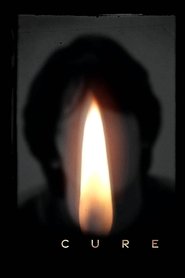
Cure (1997)
Kiyoshi Kurosawa answers the flashy 1990s serial-killer cycle by subtraction: no grand design, no charismatic mastermind, almost nothing shown. The camera keeps its distance — wide, held frames in drained greys and sickly fluorescents, figures small in their environments — so dread has room to pool. Watch how the hypnotist's tools are made of cinema's own oldest parts: a flame in a dark room, a patient voice, a watcher slowly emptied of resistance. The film is quietly doing to you what its villain does to his subjects. Notice also how the murders express nothing implanted — only what was already buried.

Dark City (1998)
Alex Proyas builds a metropolis of near-total night — hard, sourced light carving figures from darkness, canted angles inherited straight from German Expressionism, with towers that visibly rebuild themselves. Watch for the image of a whole city falling asleep at midnight while the streets rearrange: a sealed world with no sun, no edge, no history you can trust, where present and memory become impossible to tell apart. Then listen for the one word everybody can name and nobody can reach — a crack of an outside in a world built to have none.
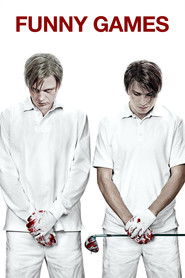
Funny Games (1997)
Haneke's home-invasion film is built as an attack on the home-invasion film. Jürgen Jürges shoots in long, static, evenly lit takes that refuse every visual pleasure the genre trades on; everything terrible happens offscreen. Watch for the shot the film is famous for: after violence, the camera simply stays in the room, far past comfort, holding on people who can no longer act — only endure their own seeing. You'll wait for the cut that releases you. It doesn't come. That refusal is the whole argument.
Funny Games (2008)
Haneke's own near shot-for-shot English-language remake — and the differences are the point. Recognizable stars arrive trailing all your trained expectations (the star suffers but survives; the family man mounts a rescue), and the film loads every one of those genre promises deliberately, so you can feel yourself making them. Watch for a single small gesture involving a television remote that turns the film inside out and catches you in the act of wanting what thrillers usually deliver. Made in the middle of the torture-horror boom, it's a mirror held up to the ticket you bought.
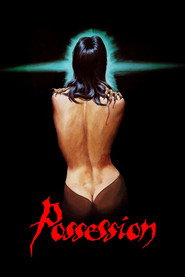
Possession (1981)
Bruno Nuytten's handheld camera doesn't observe — it participates, circling actors, chasing sudden movement, warping domestic rooms into pressurized boxes with wide lenses. Żuławski directed his performers to the edge of collapse and treated that operatic pitch as a system, not excess. Watch the famous underpass scene knowing this: nothing in it advances a plot. A body simply undergoes something, past any point a story would need — and that going-past is the content. A marriage rendered as cosmic catastrophe, shot in a divided Cold War Berlin by a director in exile.
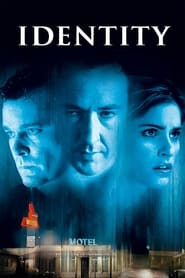
Identity (2003)
A storm, a Nevada motel, ten strangers, and a countdown — Agatha Christie's closed-circle puzzle crossed with slasher grammar. Phedon Papamichael shoots the motel in sodium-amber and cold blue, rain silvering every surface, identical numbered doors lined up like a multiple-choice question. Watch how deliberately artificial and hermetic the space feels — stagey, sealed, wrong in a way you can't name at first. The keys left on the bodies seem to be keeping score in a murder mystery. Keep watching what they're really counting.
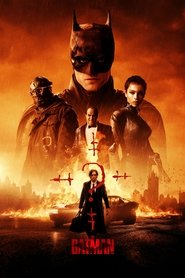
The Batman (2022)
Greig Fraser shoots this famously under blockbuster lighting standards — faces falling into shadow, the frame near-monochrome with sodium orange and blood red — in a lineage running back through The Godfather's darkness. Notice that the plot is built out of watching: a killer who addresses clue-laden crime scenes directly to the detective, ciphers you decode over the hero's shoulder, a city where everyone is under someone's gaze. It plays less like a superhero film than a rain-soaked procedural, and watch how the mirror between the vigilante and his quarry — two grievances, one method — becomes the moral question.
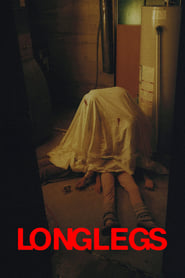
Longlegs (2024)
Watch where Osgood Perkins puts his villain: almost never centered, but pressing in from the top edge of the frame, cut off, slightly soft — so your eye goes hunting before your mind admits it's afraid. Andrés Arochi's compositions are wide, symmetrical, drained to institutional grey, and mostly empty, leaving dead zones you can't stop scanning. The film's real subject is the question of where, exactly, the bad thing is — a killer who is never on the scene of his own crimes, a dread with no address. It gathers the whole profiler tradition of this list and turns it toward the offscreen.
Why watch these together? Because they teach each other. Hitchcock shows you suspense built from shared and withheld knowledge; Mann and De Palma push that into films where the act of looking is the plot; Verhoeven and Mangold rig the frame so the story itself can't be trusted; Kurosawa, Haneke, and Żuławski slow everything down until watching becomes something you endure rather than consume; Proyas, Reeves, and Perkins build entire worlds out of what the frame conceals. By the end, you'll find yourself watching differently — noticing where the camera stands, how long it stays, what it leaves outside the edges — and realizing that in every one of these films, the most important character was always the one holding the gaze: you.