Sightlines · a mini film course
The Case That Won't Close: Twelve Films About Watching, Waiting, and Failing
There's a promise buried in every detective story: someone will see the clue, act on it, and put the world back in order. The films on this list are all, in one way or another, about what happens when that promise breaks. Some of them show investigators who see everything and can change nothing — locked out of the rooms where decisions get made, carried through their own cases like passengers. Others show us images we can't trust: flashbacks that lie, forgeries lit like the real thing, borrowed eyes we wear without knowing whose they are. Together they trace a long conversation across five decades of crime cinema about seeing versus doing, and about whether the camera is a witness or an accomplice. They talk to each other constantly — Chinatown's shadow falls across half of them, one cinematographer shoots two of them back to back, and one film here is the very thing another one critiques. Watch for the connections. They're everywhere.
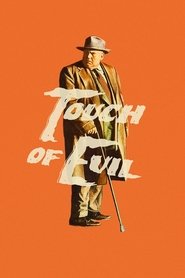
Touch of Evil (1958)
Start at the end of an era: the film often called the last word of classic noir, pushing every element of the style to its limit. The famous opening is a single unbroken crane shot — over rooftops, down into traffic, weaving through a border town for three full minutes before the cut — and it's worth watching twice, because it binds a whole town into one breathing motion. Then notice the opposite move: a corrupt cop shot from floor level, wide lenses distorting him, ceilings pressing down on his head. Welles builds scenes not from cutting but from actors moving toward and away from the lens, so proximity itself does the dramatic work. The film's real subject is a hard question: what is a lawman's perfect record worth if his methods poison it?
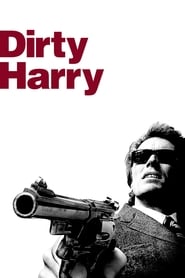
Dirty Harry (1971)
Here is the machine running at full power — the cop picture where seeing leads directly to doing, and one decisive man answers a whole city's fear. But notice how uncomfortable Siegel makes that machine from the very first frame: the opening puts you behind the killer's rifle scope, looking down at a rooftop pool, before you've been introduced to anyone. Watch how the widescreen frame keeps placing the sniper above San Francisco and Harry at the margins, the city photographed as a hunting ground of towers and plazas. The film's tension between the lone enforcer and the institutions that constrain him made it controversial then, and several later films on this list are, in effect, arguments with it.
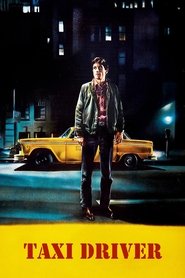
Taxi Driver (1976)
Almost everything this film knows, it knows from inside a cab. Watch how Michael Chapman's camera rides with Travis — the neon smeared across wet windshields, pedestrians caught and lost in headlight beams — then steps outside to observe him coolly from across a diner, so you're infected by his point of view without ever fully trusting it. Schrader built the script on a diary read aloud in voiceover while the images run alongside, sometimes agreeing with the words, sometimes quietly contradicting them. Underneath sits the skeleton of a classic Western rescue mission — but hollowed out, driven by a man who circulates through the city without being able to connect to it, and whose narration you should handle with gloves.
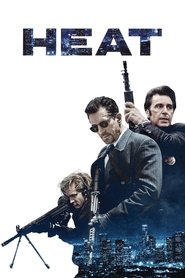
Heat (1995)
Mann's Los Angeles is not the mythic corrupt paradise of older noir — it's freeways, glass towers, container terminals, the dark Pacific, shot by Dante Spinotti on anamorphic lenses in deep blues and grey-greens while domestic interiors glow warm and fragile. Watch how the city itself becomes the pressure bearing down on both the cop and the thief, two men who've achieved mastery at the cost of everything else a life might hold. The film descends from Melville's ascetic French crime pictures and the real-time procedural rigor of Rififi, and its most famous scene is simply two men at a coffee shop table, music pulled out, saying exactly what they mean. In a long action film, notice that this — a conversation — is the still center everything orbits.
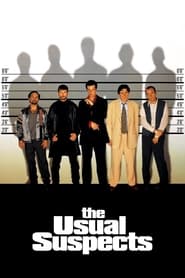
The Usual Suspects (1995)
A man sits in a stripped-down, fluorescent-white interrogation room and talks, and the film shows you what he describes — fully lit, fully scored, fully convincing. That's the game: this is a movie about whether a story can be talked into existence, and it weaponizes the oldest habit of film grammar, our instinct to believe a flashback. Notice how deliberately drab Sigel's photography keeps the "present" — desaturated grays, institutional light — so that the narrated past feels richer, more cinematic, more true. The whole film is a lesson in which visual and behavioral cues we trust when we read a person, and why. Go in knowing as little as possible.
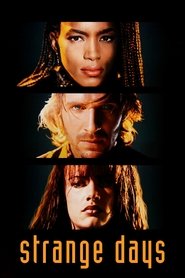
Strange Days (1995)
You don't watch this film's opening — you wear it: a robbery experienced entirely through someone else's eyes, shot on custom rigs Bigelow built years before GoPro or VR made first-person vision commonplace. The film runs on a black-market technology that records a person's full sensorium for playback inside another skull, and its hero deals these clips like stolen feeling. Watch the deliberate split between two kinds of looking: the grimy, neon-soaked "real" Los Angeles, and the seamless, seductive recorded clips — and notice how the film keeps asking whether watching a recording of something terrible makes you complicit in it. Its ancestors are Peeping Tom and Lady in the Lake; its descendants are everywhere now.
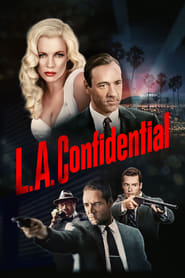
L.A. Confidential (1997)
Watch the light. Spinotti (again, fresh off Heat) trades cool blues for warm amber and gold — sun through venetian blinds, lacquered bars, mid-century sprawl — the glamour lighting of 1940s Hollywood applied to a story about manufactured surfaces. The key image: a call girl surgically altered to resemble a movie star, lit with full studio-portrait reverence, the film knowing she's a forgery and refusing to choose between the beauty and the fake. Everything here runs on the gap between official narrative and institutional reality — a police force managing its image, a city selling its myth. Three very different cops, three different relationships to that gap. It sits squarely in Chinatown's lineage, and it earns the company.
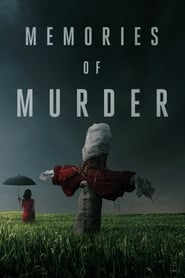
Memories of Murder (2003)
A landmark of the South Korean new wave, and a serial-killer procedural that quietly refuses everything the genre promises. Watch how the camera behaves: wide, patient, often static or slowly drifting, granting the landscape the same weight as the people in it — a body in a ditch given no more visual emphasis than the embankment above it. Most thrillers isolate the corpse; Bong lets the rice fields absorb it. The film is in open dialogue with Se7en, and its deepest subject is institutional failure — what happens to truth when the system charged with finding it can't be trusted to produce it. Its patience is the point. Let the film set the pace, and notice what the wide frame keeps including that a close-up would have cut away.
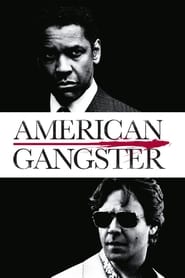
American Gangster (2007)
Watch the wardrobe. A drug lord dresses in grey, mid-priced, forgettable cloth — invisibility as business principle — until a chinchilla coat, a gift, gets him seen, and Scott stages the moment not as drama but as a quiet clerical error: the camera finds the watchers before the watched knows he's been clocked. Savides shoots the film as a chromatic argument — amber warmth and fur-coat luxury on one side, institutional grey and street cold on the other — and the script treats the heroin trade in frankly entrepreneurial terms: branding, quality control, market share. Notice how Scott, an outsider to American mythology, analyzes the American Dream rather than celebrating or mourning it. A Thanksgiving table can be the most telling shot in a crime film.
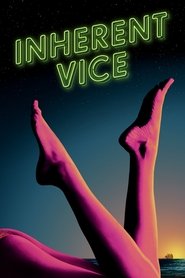
Inherent Vice (2014)
The detective here writes himself a note — not hallucinating — because he can no longer tell a clue from a contact high. That's the film: a private eye carried through his own case, baked and bewildered, while the conspiracy swells past anything he or we can hold in one head. Don't fight the murk; it's inherited proudly from Altman's The Long Goodbye, where mood and milieu outrank plot. Watch instead how Elswit shoots it — relaxed, naturalistic, often through doorways, windows, and smoke, keeping Doc's bemused face at the center — and listen for the elegy underneath the comedy. The title is an insurance term for a flaw built into a thing from the start, and the film extends it to an entire era.
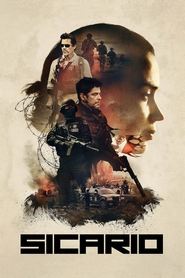
Sicario (2015)
Watch where Villeneuve puts Emily Blunt: in doorways, in back seats, at the edges of briefings where the real decisions are being made somewhere she is not. The blocking is the argument — a fully competent agent, seeing clearly, positioned so that things happen near her rather than because of her. Deakins shoots the border landscape geologically, wide frames dwarfing human figures, drawing on the Western's visual tradition while refusing its heroic register. The film's deepest subject is complicity: how institutions recruit people into actions they'd refuse if told the whole plan. Its procedural DNA runs back to The Battle of Algiers — the exact bureaucratic mechanics by which a state authorizes violence — and its structure of exclusion comes straight from Chinatown.
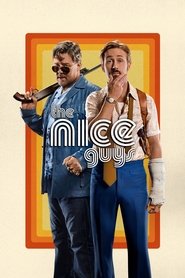
The Nice Guys (2016)
And here the broken detective becomes farce. Black's private eye perceives everything and can act on nothing — he sees the body and falls down screaming, trousers around his ankles; leads arrive by accident; guns go off into the wrong rooms. The whole hardboiled machine is kept lovingly on screen and shown, hilariously, to have seized. Rousselot shoots 1970s L.A. in saturated smog-amber and pool-blue, lit with period neon and tungsten visible in the frame — the warm opposite of modern thriller steel. Underneath the comedy sits a genuinely bitter conspiracy in the Chinatown mold: institutional corruption too entrenched to defeat. Watch it last and you'll catch it winking at nearly everything above.
Why watch these together? Because they form an argument, not just a list. Dirty Harry builds the perfect machine of the man who sees and acts; Taxi Driver, Sicario, Inherent Vice, and The Nice Guys each break that machine in a different key — tragedy, dread, melancholy, farce. Touch of Evil, L.A. Confidential, The Usual Suspects, and Strange Days pose the companion question: if we can't trust the doer, can we trust the image — the flashback, the glamour lighting, the recorded clip, the confession? Heat and Memories of Murder slow everything down until watching itself becomes the drama, and American Gangster shows how a single coat can carry a film's whole moral argument. Watched together, you'll start noticing where each camera chooses to stand — behind the rifle, inside the cab, at the threshold, drifting over a field — and you'll realize that in crime cinema, that choice is never neutral. The question these films keep asking, in twelve different voices, is the one every detective faces: what do you actually do with what you've seen?